Cart
0
TL;DR: As a general starting point, fine or damaged hair does best around 150-180°C, normal or medium hair around 180-200°C, and thick, coarse or very curly hair around 200-230°C. The rule that matters more than any single number: start at the lowest setting that gets the job done, and only increase the temperature if the lower setting genuinely isn't straightening the hair after two or three passes. Always check your specific straightener's manual, since heat-up speed and plate technology vary between models.
Hair straighteners with digital temperature controls make it easy to just pick the highest number and go, on the theory that more heat means less effort. In practice, that's the fastest way to dry out and damage hair that didn't need anywhere near that much heat in the first place. Matching the temperature to your actual hair type gets you the same smooth result with less damage and, usually, less time spent going back over sections that got frizzy again an hour later.
Why hair type changes the right temperature
Hair takes and holds heat differently depending on its thickness, porosity and condition, which is why there isn't one correct number for everyone.
Fine or thin hair has less mass to heat through, so it reaches styling temperature faster and holds a lot less heat before it starts to dry out. Fine hair is also more prone to heat damage generally, since there's less natural oil and structure protecting each strand.
Thick or coarse hair needs more heat to actually penetrate through to the middle of each strand, which is why the same low setting that works fine on fine hair often just doesn't straighten thick or very curly hair properly, no matter how many passes you do.
Damaged, colour-treated or chemically processed hair should generally be treated like fine hair regardless of its natural thickness, since the damage has already compromised the hair's structure and it will take heat damage more easily than healthy hair of the same type.
A temperature guide by hair type
| Hair type | Suggested starting range |
|---|---|
| Fine, thin, or damaged/colour-treated hair | 150-180°C |
| Normal or medium hair | 180-200°C |
| Thick, coarse, or very curly hair | 200-230°C |
Treat these as starting points rather than fixed rules. The goal is always the lowest temperature that gets your hair straight in one or two passes — if you're doing five or six passes at a low setting and it's still not working, that's the signal to move up, not to keep repeating the same pass at the same temperature.
Signs you're using too much heat
A few signs tend to show up before more serious heat damage sets in, and they're worth paying attention to rather than pushing through.
- Sizzling or a burning smell. This usually means there's too much moisture in the hair for the temperature you're using, or the temperature itself is too high for the hair type. Either way, it's a sign to stop and lower the setting.
- Hair feels dry or straw-like immediately after straightening, even though it looked smooth. This is often a sign the temperature was higher than the hair actually needed.
- Split ends appearing faster than usual. Consistent high-heat styling is one of the more common contributors to split ends over time.
- Colour fading faster than expected, for colour-treated hair specifically — high heat can accelerate colour loss.
If you notice any of these, it's worth dropping the temperature by 20-30°C and doing an extra pass or two rather than sticking with the higher setting.
Getting good results without maxing out the heat
A few habits make more difference to the final result than the exact number on the dial.
Always start from completely dry hair. Straightening damp or partially dry hair forces you to use more heat and more passes to get the same result, and it's significantly more damaging than straightening fully dry hair at a lower, appropriate temperature.
Use smaller sections. Trying to straighten a large chunk of hair in one pass means the plates can't apply even heat all the way through, so you end up doing repeat passes at the same temperature. Smaller sections straighten properly the first time.
A slower, single pass beats a fast pass repeated five times. Heat needs a moment of contact to actually do its job. Moving too quickly and then repeating the pass multiple times exposes the hair to more total heat than one slower, deliberate pass would.
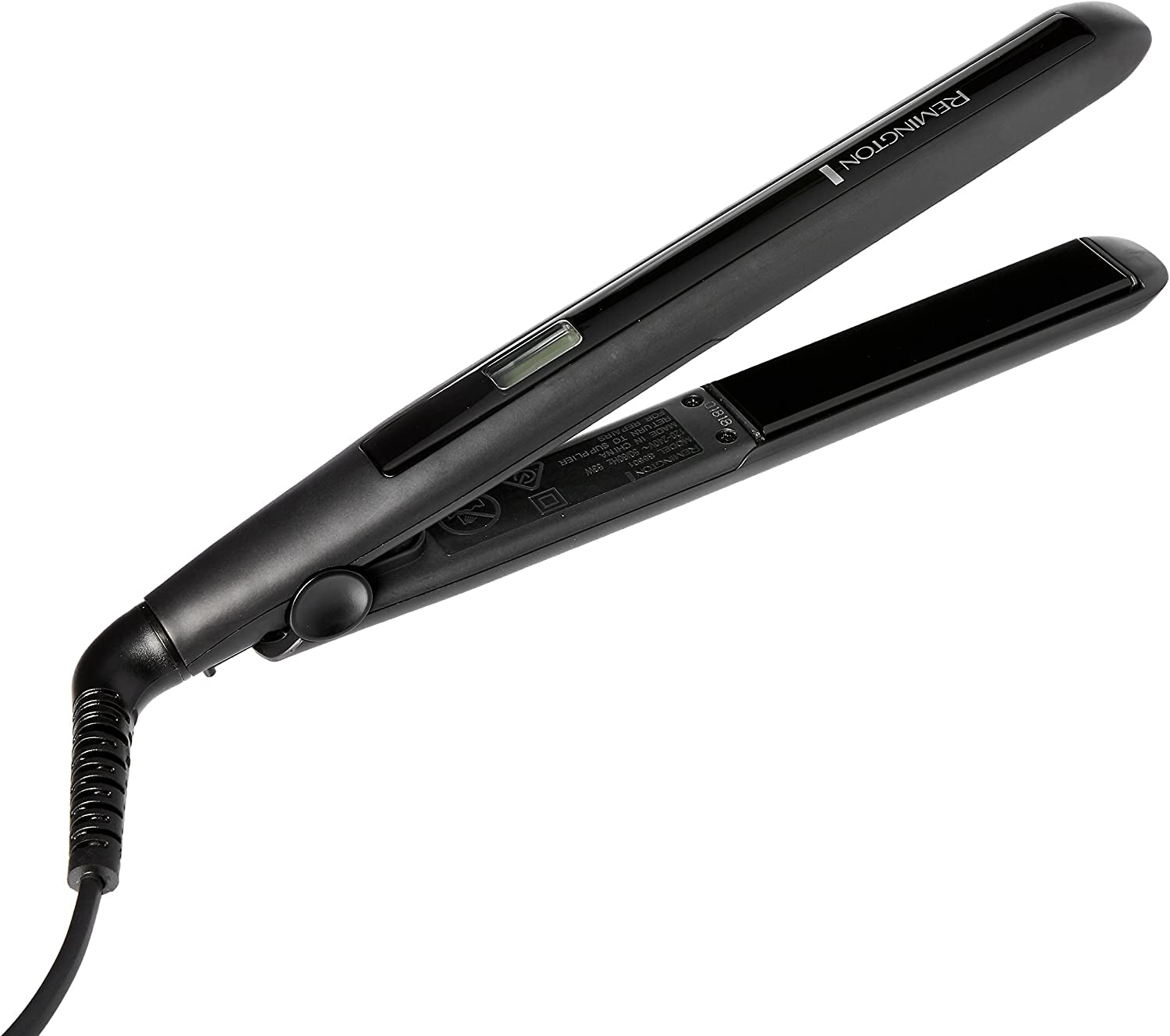
The Super Glide ceramic hair straightener has digital variable heat settings from 150°C to 230°C with an LCD display, which makes it straightforward to dial in the specific range for your hair type from the table above rather than guessing at a dial with no numbers. Its tourmaline ceramic plates are designed to distribute heat evenly across the plate, which is part of why smaller, single passes tend to work well with this style of plate rather than needing repeat passes to catch missed spots. For hair styling more broadly — including days when you want volume rather than straight, sleek hair — the 3-in-1 hot air styling brush is worth having alongside a straightener, since it combines drying and styling in one step and generally runs at a gentler heat level than a dedicated straightener.
Frequently asked questions
What temperature should I use for fine hair?
Fine or thin hair generally does best at 150-180°C. Fine hair heats through quickly and has less natural protection against heat damage, so there's rarely a need to go higher.
What temperature should I use for thick or curly hair?
Thick, coarse, or very curly hair usually needs 200-230°C to straighten properly in one or two passes, since more heat is required to penetrate through the full thickness of each strand.
Is it bad to use the highest setting on a hair straightener every time?
Yes, if your hair doesn't actually need that much heat. Using more heat than necessary is one of the main contributors to dryness, split ends and, for colour-treated hair, faster colour fade. Start low and only increase if the lower setting genuinely isn't working.
Should I straighten damp hair to save time?
No — straightening hair that isn't fully dry generally requires more heat and more passes to get the same result, and is more damaging overall than straightening fully dry hair at an appropriate temperature.
How do I know if my hair straightener is too hot for my hair?
Signs include sizzling or a burning smell, hair that feels dry or straw-like right after styling, and faster-than-usual split ends or colour fade. If you notice these, lower the temperature by 20-30°C.