Cart
0
TL;DR: The short version of how to organise a jewellery box: separate pieces by category first (rings, earrings, necklaces, bracelets), then by how often you actually wear them, keeping daily pieces in the most accessible compartment and special-occasion jewellery further back or in a separate layer. Hang or lay necklaces flat and separated rather than piled together, since that's what causes tangling, and use a lined, multi-compartment organiser rather than a single open tray.
Most jewellery ends up disorganised for the same reason: it gets put away in whatever container is closest, without much thought for how it will need to come back out again. The result is a drawer or box where you can see everything is there but still can't find the one pair of earrings you actually want, and a chain necklace that's somehow wound itself around three others. A better system takes ten minutes to set up and saves you that daily hunt.
Start by sorting into categories, not just "jewellery"
Before anything goes into a box or organiser, tip everything out onto a flat surface and sort it into rough categories: rings, stud earrings, drop or hoop earrings, bracelets, and necklaces. This single step does most of the organising work before you've even touched storage.
Within each category, it also helps to separate by material or colour — gold-toned pieces from silver-toned, for instance — since jewellery of the same finish is what you're usually reaching for together, and grouping by tone makes it faster to build an outfit without pulling out ten pieces to find the two that match.
Group by how often you actually wear it
The categories above sort what a piece is. The second sort — and the one that actually saves time day to day — is by how often you wear it.
Everyday pieces (a wedding ring, simple studs, a watch) should sit in the most accessible spot: the top layer of an organiser, or the compartment nearest the lid. You should be able to grab these without moving anything else.
Occasional pieces (jewellery for work functions, going out, specific outfits) can sit in a second layer or a slightly less accessible compartment.
Special-occasion and sentimental pieces (fine jewellery, heirlooms, anything you wear only a few times a year) are the safest further back or in a separate, closed compartment, partly because you need them less often and partly because it's worth keeping genuinely valuable pieces a little more protected from daily handling.
This two-step sort — category, then frequency — is the entire system. Everything below is really just different ways of physically holding that sort in place.
Why necklaces tangle (and the fix)
Necklace tangling almost always comes down to one thing: multiple chains piled in the same open space with nothing keeping them apart. Even two necklaces left loose in a bowl will find a way to knot themselves together within a day or two.
The fix is to keep each necklace physically separated, either by hanging them individually on hooks or a necklace stand, or by laying them flat in a lined organiser with dividers so no two chains can touch. If you're using a flat organiser rather than hooks, close the clasp of each necklace before laying it down — this alone stops a huge amount of accidental tangling, since an open clasp is what a neighbouring chain catches on.
For fine or delicate chains specifically, a compartment lined with soft fabric (velvet or felt) rather than bare plastic or wood reduces scratching, since fine gold and silver chains mark more easily against a hard surface than heavier jewellery does.
Choosing a jewellery organiser that actually works
A single open tray looks tidy in the shop but rarely stays that way in daily use, because it doesn't do anything to keep the category-then-frequency sort in place once you start pulling pieces out and putting them back.
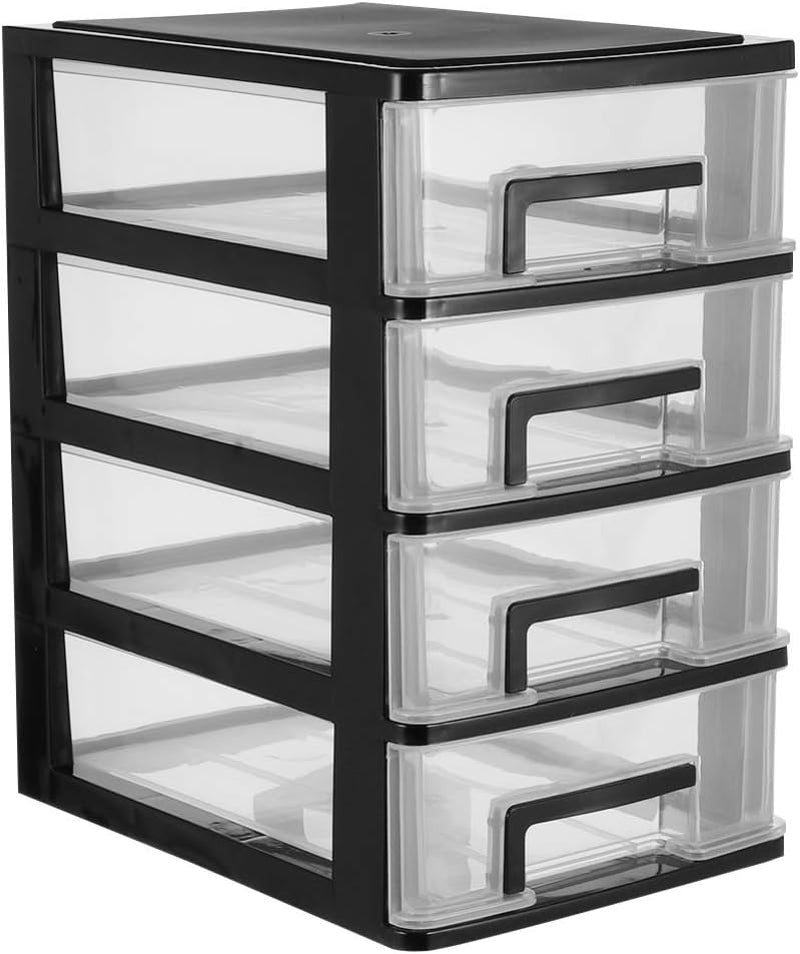
The four-layer storage cabinet with drawer-type organiser is a good fit for this system in practice: the multiple drawers give you a natural place to put the frequency sort into action — top drawer for daily pieces, middle for occasional, bottom for special-occasion — while the drawer fronts mean everything stays visually contained rather than becoming one more open surface that collects clutter. Its compact footprint also makes it easy to keep on a dresser or in a wardrobe without taking over the whole surface, which matters if you're working with a small bedroom or a shared vanity.
A simple jewellery organising checklist
| Step | What to do |
|---|---|
| 1. Sort by category | Rings, earrings, bracelets, necklaces — separate first |
| 2. Sort by frequency | Everyday pieces most accessible, special-occasion pieces further back |
| 3. Separate necklaces | Hang individually or lay flat with dividers, clasps closed |
| 4. Choose lined compartments | Soft fabric linings protect fine chains and plated finishes |
| 5. Revisit seasonally | Re-sort every few months as what you wear changes |
Common jewellery storage mistakes
A handful of habits are behind most disorganised jewellery collections.
- One big pile. The single most common mistake — everything in one open tray or bowl, with no separation between pieces.
- Necklaces left loose together. This is the direct cause of tangling; even two chains in the same space will knot given enough time.
- Storing everyday and occasional pieces together. If your daily rings and studs are mixed in with fine jewellery you wear twice a year, you end up disturbing the special-occasion pieces every single day, which increases the chance of loss or damage.
- No lining on compartments. Bare plastic or wood can scratch softer metals and plated finishes over time.
- Never re-sorting. What you wear daily changes with the seasons and with your wardrobe — a system set up once and never revisited slowly drifts back into a pile.
Frequently asked questions
How do I stop my necklaces from tangling in a jewellery box?
Keep each necklace physically separated from the others, either on individual hooks or laid flat in a compartment with dividers, and close the clasp before putting it away. Piling multiple chains in the same open space is what causes tangling.
Should I organise jewellery by type or by how often I wear it?
Both — sort by type first (rings, earrings, necklaces, bracelets), then within each type, separate everyday pieces from occasional and special-occasion jewellery so the pieces you reach for most are the easiest to access.
What's the best material for lining a jewellery organiser?
A soft fabric lining, such as velvet or felt, protects fine chains and plated jewellery from scratching better than bare plastic or wood, which can mark softer metals over time.
How often should I reorganise my jewellery box?
Every few months is a reasonable habit, since what you wear daily shifts with the seasons and your wardrobe. A quick re-sort keeps the everyday pieces genuinely accessible rather than buried under things you no longer wear often.
Is a drawer-style organiser better than an open jewellery tray?
For most people, yes — a drawer-style organiser makes it easier to keep the category-and-frequency sort in place over time, since each drawer naturally stays separated, where an open tray tends to collect everything back into one pile.