Cart
0
TL;DR: The fastest way to keep stainless steel kitchen accessories rust-free is to rinse and dry them properly after every use, avoid bleach and abrasive scourers, and store them somewhere dry rather than in a damp corner. It helps to be precise about the wording too: stainless steel is rust-resistant, not rust-proof, so good everyday habits are what protect the thin, invisible layer that gives it that resistance in the first place. Get the basics right and most surface rust never gets the chance to start.
If you've ever pulled a stainless steel colander, garlic press or towel rail out of the cupboard and noticed small orange freckles on it, you're not imagining things — and it doesn't automatically mean the item is faulty. Stainless steel earns its name because it resists staining far better than plain steel, not because it's completely immune to it. This guide covers why those spots show up, a simple cleaning stainless steel kitchen tools routine you can stick to without much effort, and the drying and storage habits that make the real difference over months and years of use.
Why Stainless Steel Can Still Rust or Stain
Stainless steel isn't a single uniform material — it's a family of steel alloys containing chromium, which reacts with oxygen to form an ultra-thin, invisible layer on the surface called the chromium oxide layer. This layer is what gives stainless steel its resistance to corrosion, and it's self-healing to a point: if it gets scratched, oxygen in the air usually helps it reform. The trouble starts when that self-healing process is interrupted or overwhelmed. A few common causes:
- Chlorides. Table salt, brine, stock, and bleach-based cleaners all contain chloride ions that attack the protective layer. This is why a saucepan that's soaked in salty water overnight is more likely to spot than one rinsed straight after cooking.
- Moisture left sitting. Water on its own usually isn't the problem — it's water left to sit, especially where it pools in a seam, joint or the base of a utensil, that creates the conditions for surface rust.
- Lower-grade steel. Not all stainless steel is equally resistant. Higher grades (often labelled 18/8 or 304) contain more chromium and nickel and hold up better than budget 200-series steel, which is more prone to spotting over time.
- Scratches and abrasion. Steel wool, wire brushes and harsh scourers can physically remove the protective layer, and can even leave behind tiny fragments of ordinary steel that rust on the surface — making it look like the stainless item itself is rusting.
Understanding this is the difference between panicking over the first mark you see and knowing it's a normal, manageable part of owning stainless steel kitchenware.
Your Everyday Cleaning Routine
The good news is that cleaning stainless steel kitchen tools properly doesn't take any special products. What matters more is consistency.
What to use:
- Warm water and a mild dish soap for everyday grime
- A soft cloth or non-scratch sponge, wiped in the direction of the metal's grain where visible
- A bicarb soda paste (bicarb and a splash of water) for stuck-on food or light marks
- A weak white vinegar solution for watermarks or mineral build-up, followed by a clean water rinse
What to avoid:
- Bleach and chlorine-based cleaning sprays, which introduce the chlorides that damage the protective layer
- Steel wool, wire brushes and abrasive scouring pads
- Leaving salty, acidic or marinade-heavy food sitting on the surface for extended periods
- Using the same cloth you've just used on a bleach-based bathroom clean
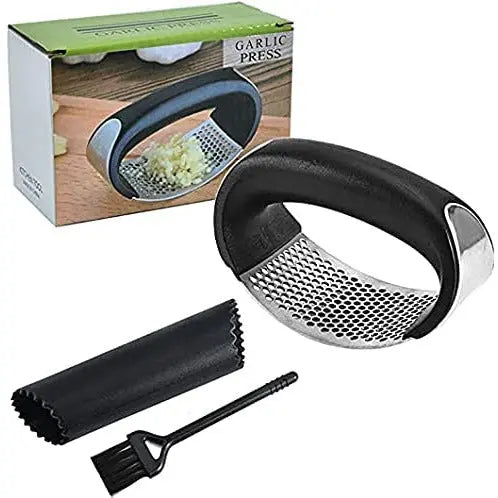
A stainless steel garlic press is a good example of where this matters in practice — it's handled wet, used with acidic ingredients like garlic, and has small crevices where moisture likes to hide. A quick rinse and dry after use keeps tools like this looking and performing the way they should for years, rather than letting residue sit until the next wash.
Drying and Storage Habits That Prevent Rust Spots
If there's one habit that prevents more rust than any product, it's drying stainless steel properly and promptly, rather than leaving it to air dry in a pile of other wet dishes. Water left standing — particularly where two wet items touch — is one of the most common everyday causes of surface spotting.
A few habits worth building in:
- Hand-dry after washing. A soft towel or microfibre cloth takes seconds and removes the standing moisture that causes most spotting.
- Don't stack wet items. Nesting damp stainless steel bowls, trays or utensils together traps moisture between the surfaces.
- Store in a dry spot. A cupboard near the sink that collects condensation, or a spot directly under a leaking pipe, isn't ideal for anything metal.
- Keep items off damp benchtops and floors. Long-handled tools are especially prone to standing in a puddle if left leaning in a corner. A wall-mounted stainless steel broom organiser keeps mops and brooms up off the floor and away from damp skirting, which is a simple example of storage design doing some of the rust-prevention work for you.
- Avoid prolonged contact with other rusting metal. A stainless item resting against an already-rusting wire rack or plain steel tool can pick up rust transfer, even though the stainless steel itself isn't the source of the problem.
If storage space is part of what's driving the spotting — tools crammed into a damp under-sink cupboard, for instance — it's worth a broader look at layout too. Our guide to small kitchen storage ideas covers ways to free up dry, ventilated space for exactly this kind of gear.
Do's and Don'ts at a Glance
| Do | Don't |
|---|---|
| Rinse and dry after every use | Leave items to air dry in a wet pile |
| Use warm water with mild dish soap | Use bleach or chlorine-based cleaners |
| Wipe in the direction of the grain | Scrub with steel wool or wire brushes |
| Use a bicarb paste for stuck-on marks | Let salty or acidic food sit on the surface |
| Store in a dry, ventilated cupboard or rack | Store in a damp corner or under a slow leak |
| Buff light surface marks with a soft cloth | Assume any mark means the item is faulty |
Dealing With Hard Water Spots and Cloudy Marks
Not every mark on stainless steel is rust, and it's worth telling the two apart. Rust typically looks orange or reddish-brown and can feel slightly rough or pitted if left untreated. Hard water spots and mineral deposits, on the other hand, usually look cloudy, white or chalky, and sit on top of the surface rather than in it — they're common in areas with harder tap water, and they're not a sign of corrosion at all.
For water spots, a wipe with a weak white vinegar solution followed by a clean, dry cloth is usually enough. For light surface rust, the same approach often works, sometimes with a light buff using a bicarb paste and a soft cloth. If a mark doesn't lift after a couple of gentle attempts, it's better to stop rather than reach for something abrasive — repeated hard scrubbing does more damage to the protective layer than the original mark did.
Caring for Different Types of Stainless Steel Kitchen Accessories
Not every stainless steel accessory in the kitchen sees the same kind of use, so the care habits that matter most will vary a little depending on what you're looking after:
- Handheld tools — things like a garlic press or a stainless steel fork-style vegetable helper — go through the most wet-and-dry cycles of anything in the kitchen. Their crevices, prongs and moving parts are where moisture hides longest, so a proper dry after washing (rather than a quick shake) matters more here than almost anywhere else.
- Fixed or wall-mounted pieces, such as towel rails and tool organisers, are more about ongoing exposure than one-off wetting. Keeping them away from constant condensation or splashback, and giving them an occasional wipe down, is usually enough.
- Outdoor and BBQ-adjacent tools deal with the toughest conditions — smoke, marinades, salt and being left outside — so a more thorough clean and dry after each use pays off more than it does indoors.
None of this requires special-purpose products. It mostly comes down to noticing which of your stainless steel pieces are exposed to moisture, salt or acid the longest, and giving those particular items a little more attention when you're drying up.
Frequently asked questions
Is stainless steel rust-proof?
No. Stainless steel is rust-resistant, not rust-proof. It resists corrosion far better than plain steel thanks to a thin protective chromium oxide layer, but that layer can still be damaged by scratches, salt, bleach or prolonged moisture, which is when surface rust can appear.
What causes stainless steel to rust?
Rust usually appears when the protective oxide layer is broken down by chlorides such as table salt or bleach, scratched away by steel wool or abrasive scourers, or left under standing moisture for extended periods. Lower-grade stainless steel is also more prone to it.
Can I use steel wool on stainless steel kitchen tools?
It's best avoided. Steel wool and other abrasive scourers can scratch away the protective layer and leave behind tiny iron particles that rust on the surface. A soft cloth or non-scratch sponge with warm, soapy water is a safer everyday choice.
How often should I clean stainless steel kitchen accessories?
Wipe them down and dry them after every use rather than leaving them to air dry. A closer clean with mild soap or a bicarb paste once a week helps stop food residue and mineral deposits from building up over time.
Why does my stainless steel have small orange spots?
Those spots are usually surface rust caused by chlorides, moisture sitting too long, or contact with another rusting metal. It's typically light and can often be buffed off with a bicarb paste or non-abrasive cleaner, then dried thoroughly.
Is it safe to put stainless steel kitchen tools in the dishwasher?
Many are dishwasher safe, but leaving them sitting wet in the machine after the cycle finishes is where problems start. Remove and dry stainless items promptly, and avoid dishwasher products with high chlorine content where possible.