Cart
0
TL;DR: The short version of how to style a console table: work in odd-numbered groupings (three tends to look more natural than two or four), vary the height of each piece so the eye moves across the surface, and mix at least one functional object — a lamp, a tray, a bowl for keys — with one or two purely decorative ones. Anchor the arrangement off-centre rather than dead in the middle, and leave clear space so the table can still be used, not just looked at.
A console table sits in one of the most-seen, least-planned spots in the house — the hallway, the entryway, the wall behind a sofa. Because it is small and against a wall, it is easy to either ignore completely or pile it up with whatever needs a home. Neither gets you a vignette that actually works. Worth flagging upfront: we don't stock console tables themselves at Pattan Australia, so this guide focuses on the styling principles and the decor accessories — lamps, mirrors and the rest — that make one look considered, whatever table you already have.
The styling formula: odd numbers, height and a mix of function and decor
Most console tables that look effortless are following three quiet rules, whether or not the person who styled them could name them.
Group in odd numbers. Three objects (or five, on a longer table) reads as more natural and less rigid than two matched items or four evenly spaced ones. Pairs look formal and can feel stiff on an everyday surface; odd numbers let you create a loose triangle that the eye enjoys more.
Vary the height. A flat row of same-sized objects is the single most common reason a console table looks unfinished. Build in a tall anchor (a lamp or a large mirror above the table), a mid-height layer (a vase, a small stack of books, a framed print leaning against the wall), and something low (a dish, a candle, a scattering of decor or greenery). The staggered silhouette is what makes the arrangement feel styled rather than placed.
Mix function with decor. A console table that only holds decorative objects can feel like a display shelf rather than a piece of furniture you actually use. Give it a job — a tray to catch keys and mail, a lamp for evening light, a bowl for loose change — and let one or two purely decorative pieces sit alongside it. That mix of purpose and polish is what separates entryway table styling that works in daily life from a display that only looks good in photos.
Keep the whole grouping off-centre. Push everything two-thirds of the way to one side and let the remaining third of the table breathe empty. A perfectly centred, symmetrical arrangement is harder to get right and tends to look more static than an asymmetrical one.
Console table height guide: getting the scale right
Before you style anything, it helps to know the scale you are working with. Most console tables sit around 80-85cm high — roughly standard bench height — which is taller than a bedside table (usually 50-60cm) and shorter than most kitchen benchtops.
That height matters for what you put on top. A lamp on a console table can afford to be a little taller than a bedside lamp, since the eye is meeting the table from standing height rather than from bed. As a rough guide, a table lamp of around 35-45cm tall tends to sit well on an 80-85cm-high console without overwhelming anything hung on the wall above it. If you are also hanging a mirror or art above the table, leave a gap of roughly 15-20cm between the top of the table styling and the bottom of what is on the wall, so the two layers read as connected rather than cramped.
Lighting the vignette: why a lamp does more work than you'd think
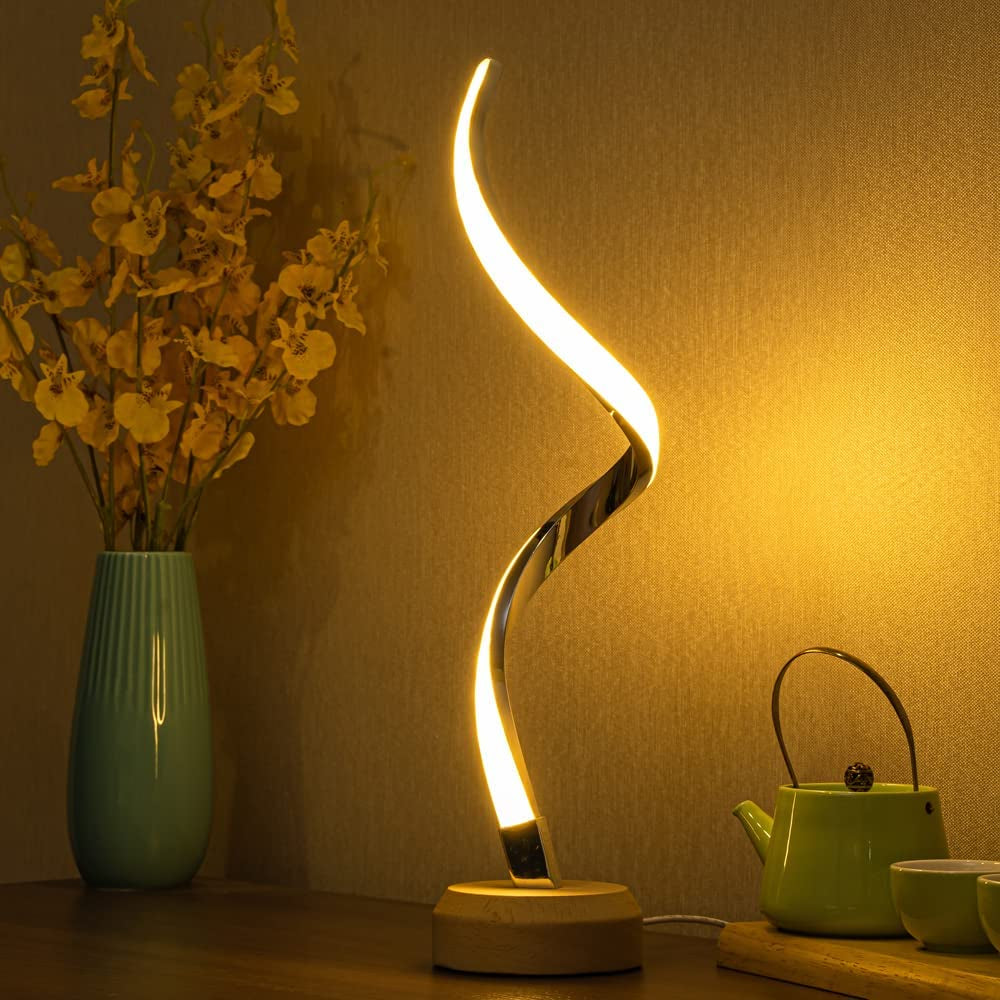
A console table without any light on it tends to go dark and forgotten once the sun goes down, especially in a hallway or entryway that does not get a lot of overhead lighting. A single table lamp fixes that instantly, and it does double duty as your tallest, anchor piece in the height-layering formula above.
The minimalist solid-wood LED table lamp is a good fit for this spot: its solid-wood base grounds a console visually, and the 5-level dimmable, colour-changing light means you can set a soft, warm glow for evenings and a brighter setting when you actually need to see your keys. The same height and scale principles that apply to choosing a bedside table lamp apply here too — match the lamp's height and visual weight to the table underneath it, and favour a shade or diffuser that softens the glow rather than exposing a bare globe.
Colour temperature matters more than most people expect in an entryway. A warm white light (roughly 2700-3000K) feels welcoming as you walk in the door, where a cooler, bluer light can feel closer to office lighting. If you want the full breakdown of which colour temperature suits which room, our warm white vs cool white light guide walks through the differences room by room.
A mirror above the table: depth, light and reflection
Hanging a mirror above a console table is one of the fastest ways to make a narrow entryway or hallway feel larger, because it bounces whatever light is in the room back into the space rather than absorbing it.
The round wall-mounted mirror with storage is worth a look here — it is designed for use in entrances as well as bedrooms and bathrooms, and it hides a shallow storage compartment behind the mirror face, which is genuinely handy for tucking away spare keys or small odds and ends in an entryway. It comes in a few diameters, so you can match the mirror's width to roughly two-thirds the width of your console table, which tends to look more balanced than a mirror that spans the full width of the table below it.
If a full mirror is more than the space calls for, even a single framed print or a small piece of leaning art above the table achieves a similar job of adding height and visual interest above the vignette.
Entryway table styling vs living room and hallway consoles
The styling formula stays the same wherever the table sits, but what you prioritise shifts depending on the room.
Entryway or foyer console. This is the hardest-working spot in the house, so function should lead. A tray or bowl for keys, a small dish for loose change or mail, and a lamp for light when you walk in after dark. Keep the surface mostly clear so there is room to actually put things down.
Narrow hallway console. Space is usually tight here, so scale everything down. A single tall, slim item (a narrow vase or lamp), one mid-height piece, and something low, rather than a full three-tier grouping that would crowd a narrow surface. A mirror above helps the hallway feel wider than it is.
Living room console (behind a sofa or against a feature wall). Here you have more licence to lean decorative, since the table is not doing the same catch-all job as an entryway piece. A stack of books, a vase, a piece of sculptural decor and a lamp for ambient light in the evening all work well, with less pressure to keep the surface fully clear.
A simple console table styling checklist
| Element | What to aim for |
|---|---|
| Grouping | Odd numbers — three or five objects, not two or four |
| Height | A tall anchor (lamp or mirror), a mid-height piece, a low piece |
| Balance | Off-centre, roughly two-thirds/one-third, not dead-centre symmetrical |
| Function | At least one useful object — a tray, a lamp, a dish |
| Lighting | A table lamp in a warm white, ideally dimmable |
| Wall above | A mirror or art, sized to roughly two-thirds the table's width |
| Breathing room | Some visible surface left clear, not fully covered |
Common console table styling mistakes to avoid
A few habits are responsible for most console tables that feel "off" without it being obvious why.
- Everything the same height. A flat row of matching-sized objects is the quickest way to make a styled table look unstyled.
- Perfect symmetry. A table with an identical object at each end and one dead-centre can look formal to the point of feeling sterile in a casual home.
- Too many small objects. A cluttered scatter of trinkets reads as messy rather than curated. Fewer, slightly larger pieces almost always look more intentional.
- No light source. A console table with nothing lit tends to disappear at night, especially in a hallway or entryway.
- Ignoring scale. A tiny lamp on a long table, or an oversized mirror above a narrow one, throws the whole vignette out of balance.
Frequently asked questions
What is the ideal height for a console table?
Most console tables sit around 80-85cm high, similar to standard bench height. This makes them tall enough to style comfortably while staying below eye level in a hallway or entryway.
How many items should you style on a console table?
Aim for an odd number, usually three, since odd-numbered groupings tend to look more natural than even ones. Vary the height of each piece rather than using items of a similar size.
Should a console table have a mirror above it?
It is not essential, but a mirror above a console table adds depth and bounces light back into the room, which is especially useful in a narrow hallway or entryway. Size the mirror to roughly two-thirds the width of the table.
What size mirror goes above a console table?
As a general guide, a mirror around two-thirds the width of the table below it looks the most balanced. A mirror the same width or wider can overwhelm a narrower console.
Do you need a lamp on a console table?
A lamp is not compulsory, but it solves two problems at once: it lights an often-dark spot after dark, and it acts as the tall anchor piece in a height-layered arrangement. A warm white, dimmable lamp works well in most entryways.
How do you style a narrow hallway console table?
Scale down the grouping to two or three smaller pieces rather than a full arrangement, and favour slim, vertical objects over wide ones. A mirror above the table helps a narrow hallway feel more open.