Cart
0
TL;DR: A good bedside table lamp comes down to height, light and control. For height, aim for the bottom of the shade to sit near eye level when you are sitting up in bed, which usually means a lamp around 50-70cm tall on a standard nightstand. For light, choose warm white with dimming so you can go low to wind down and brighter to read. For control, a touch switch is easiest to use in the dark, and a built-in USB port lets you charge your phone from the same spot. Match the size of the lamp to the nightstand so it looks balanced.
The bedside lamp is the last light you touch at night and the first in the morning, so it earns its keep more than almost any other fixture. Get it wrong and you are either squinting to read or blinded when you switch it on. This guide covers what actually matters when you choose one, so it is comfortable, practical and the right size for the room.
How tall should a bedside table lamp be?
The goal is simple: when you are sitting up in bed, the bottom of the shade should sit at roughly eye level. That way the light falls onto your book or phone, not into your eyes, and the globe stays hidden.
In practice, that points to a lamp around 50-70cm tall on a standard-height nightstand. Taller beds, higher headboards or a low nightstand push you towards the upper end; a tall nightstand or a lower bed towards the shorter end. If you can, measure from the top of your nightstand to your eye level while sitting up, and choose a lamp that lands the shade near that mark.
As a proportion guide, the lamp and the nightstand should feel balanced: a lamp that is too tall looms, and one that is too short disappears. A lamp roughly two-thirds the height of the nightstand's width is a safe visual starting point.
Get the light right: warm, and dimmable
A bedroom light does two opposite jobs: help you wind down, and give you enough light to read. The way to cover both is warm white light with adjustable brightness.
- Warm white (around 2700-3000K) feels restful and helps signal that the day is ending, which cooler, bluer light works against.
- Dimming lets you drop to a soft glow for winding down and lift to a brighter level for reading, from the same lamp.
- Selectable colour is a bonus: a lamp with a warm setting for rest and a brighter, cooler setting for reading covers every mood.
If you want the full picture on which light suits which room, our guide to warm white vs cool white breaks down colour temperature room by room.
Controls that make sense in the dark
You use a bedside lamp half-asleep, so the switch matters more than it sounds.
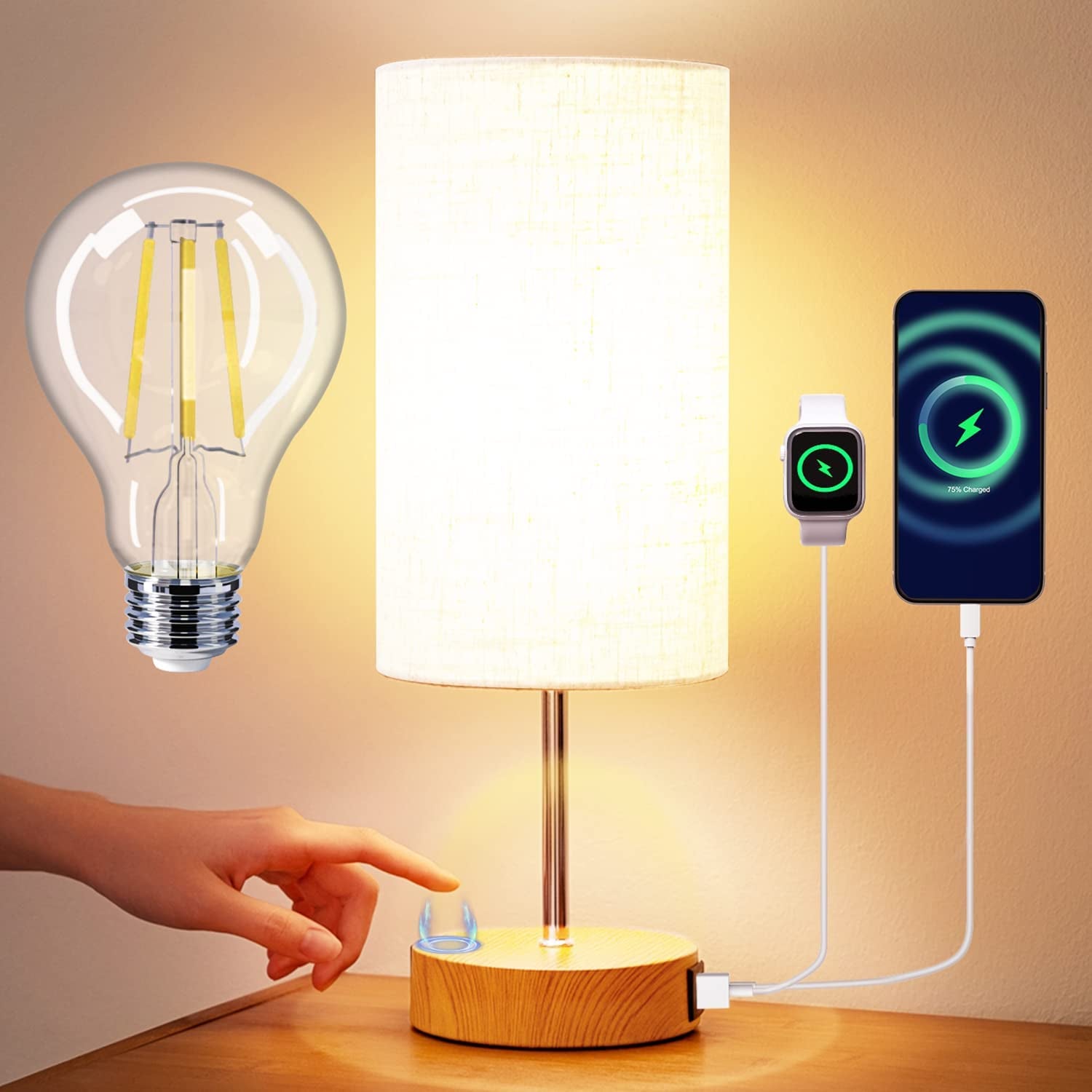
- Touch control lets you turn the lamp on and cycle brightness with a tap anywhere on the base, which beats fumbling for a tiny switch in the dark.
- A built-in USB port (or two) turns the lamp into a charging station, so your phone charges from the nightstand without a separate plug.
- Cordless or rechargeable lamps free you from being near a power point, and can move to the couch or a reading chair.
- A remote is handy if you would rather not reach the nightstand at all.
Shade and glow
The shade shapes the light as much as the globe does.
- A fabric or linen shade diffuses the light into a soft, even glow that is easy on the eyes at night.
- A frosted or opal diffuser softens a bare globe so it does not glare when you glance at it.
- An open-top shade throws some light upward for a brighter room, while a closed shade keeps the light pooled around the bed.
For bedtime reading, favour a soft, diffused glow over a bright, exposed globe.
Match the lamp to the nightstand and the room
A bedside lamp should sit comfortably on the nightstand with room to spare.
- Leave space for the things that share the surface: a glass of water, your phone, a book, glasses.
- Scale the base to the nightstand. A slim base suits a narrow table; a wider base can anchor a larger one.
- Pair them if you have two nightstands. A matching pair either side of the bed looks intentional and balanced.
Quick bedside lamp checklist
| Feature | What to look for |
|---|---|
| Height | Shade bottom near eye level sitting up; roughly 50-70cm on a standard nightstand |
| Light colour | Warm white (2700-3000K), ideally selectable |
| Brightness | Dimmable, with a low setting for winding down and a bright one for reading |
| Control | Touch switch for easy use in the dark; remote optional |
| Charging | Built-in USB port to charge your phone |
| Shade | Fabric or frosted diffuser for a soft, glare-free glow |
| Size | Balanced with the nightstand, with room for a glass and phone |
Choosing your bedside lamp
A few Pattan Australia bedside lamps that tick these boxes:
- The Touch-Control Bedside Lamp with USB Ports (3-way dimmable) pairs a soft linen shade with touch dimming and USB-A and USB-C charging, so it reads well and charges your phone from the nightstand.
- The LED Bedside Lamp with 5 Brightness Levels and 3 Light Colours lets you set a gentle glow for sleep or a brighter light for reading, in a minimalist solid-wood design.
- The Rechargeable Touch Night Lamp (warm white plus colour) is cordless with a warm 2800-3100K glow and dimming, easy to move and gentle at night.
- The Cordless Touch Reading Lamp with 3 Light Modes switches between warm, cool and daylight for focused reading, then dims down for rest.
Frequently asked questions
How tall should a bedside table lamp be?
Aim for the bottom of the shade to sit near eye level when you are sitting up in bed, so the light falls on your book rather than your eyes. On a standard nightstand that usually means a lamp around 50-70cm tall.
What is the best light for a bedside reading lamp?
Warm white (around 2700-3000K) with dimming is best. It feels restful for winding down and can be lifted to a brighter level for reading. A lamp with a selectable brighter or cooler setting for reading is even more versatile.
Should a bedside lamp be dimmable?
Yes. A bedroom light needs to do two jobs, a soft glow for winding down and a brighter light for reading, and dimming lets one lamp do both. Touch-dimming is especially easy to adjust in the dark.
What features make a bedside lamp easier to use at night?
A touch switch you can tap anywhere, a built-in USB port to charge your phone, and a soft fabric or frosted shade that avoids glare. Cordless or rechargeable designs also let you place or move the lamp freely.
Do bedside lamps need to match on both sides of the bed?
They do not have to, but a matching pair either side looks balanced and intentional. If you mix lamps, keep them a similar height and light colour so the two sides of the bed feel consistent.