Cart
0
TL;DR: For an everyday table setting, place the plate in the centre, the fork on the left, and the knife (blade facing in) on the right, with a spoon to the right of the knife if you need one. The napkin sits to the left of the fork or on the plate, and the water glass goes just above the knife. For guests, add pieces working from the outside in toward the plate: a bread plate top-left, dessert cutlery above the plate, and a wine glass beside the water glass. Whatever the occasion, the rule is simple: you use cutlery from the outside in.
A well-set table makes an ordinary dinner feel considered and a dinner party feel effortless, and it takes less than a minute once you know where everything goes. This guide covers the everyday setting you will use most, the fuller setting for guests, and the one rule that makes any table make sense.
The one rule that makes table setting simple
Diners work from the outside in. The cutlery furthest from the plate is used first, and each course moves you one piece closer to the plate. Set the table in that order and your guests never have to guess. That is the whole logic behind a formal setting, and once you see it, the fuller table stops looking complicated.
The everyday table setting
This is the setting for family dinners and casual meals, and it covers most nights of the week.
- Plate: centred in front of each chair, about 2cm from the table edge.
- Fork: on the left of the plate.
- Knife: on the right, with the blade facing in toward the plate.
- Spoon: to the right of the knife, only if the meal needs one (soup, dessert).
- Napkin: to the left of the fork, or folded on the plate.
- Water glass: just above the tip of the knife.
That is it. Fork left, knife right (blade in), glass above the knife. If you remember nothing else, remember that.
The setting for guests
When you are hosting, build out from the everyday setting by adding pieces for the extra courses, still working outside in.
- Entree cutlery goes on the outside: the entree fork to the far left, the entree knife or soup spoon to the far right, so they are used first.
- Main cutlery sits closest to the plate: main fork on the left, main knife (blade in) on the right.
- Bread plate goes above the forks, top-left, with a small butter knife laid across it.
- Dessert cutlery goes horizontally above the plate: dessert spoon on top with its handle to the right, dessert fork below it with its handle to the left.
- Glasses sit above the knife: water glass first, then a wine glass to its right, angled slightly.
- Napkin goes on the plate, or to the left of the forks.
Where does everything go? A quick reference
| Item | Where it goes |
|---|---|
| Plate | Centre of the place setting |
| Fork(s) | Left of the plate, used outside in |
| Knife(s) | Right of the plate, blade facing in |
| Soup / dessert spoon | Right of the knives, or above the plate |
| Bread plate | Top-left, above the forks |
| Napkin | Left of the forks, or on the plate |
| Water glass | Above the tip of the knife |
| Wine glass | To the right of the water glass |
Glasses, napkins and the finishing touches
Glasses are grouped above the knives, not scattered. Water glass nearest, wine glass to its right. If you are serving both red and white, the glass for the wine served first goes on the outside.
Napkins can be as simple or as dressed-up as the occasion. A napkin folded into a neat rectangle to the left of the forks suits any night; on the plate with a simple fold lifts a dinner party. Keep it uncomplicated and it always looks intentional.
The centre of the table is where a setting becomes a table people want to sit at. Leave room down the middle for serving dishes, and keep any centrepiece low enough to see over. A runner or a few candles reads as considered without crowding the food.
Lighting sets the mood over the table
The light above the table does as much for the meal as the setting itself. A pendant or chandelier centred over the table, hung at the right height, pools warm light onto the setting and draws everyone in. If you are planning that fixture, our guides to how high to hang a chandelier over a dining table and to choosing warm white vs cool white light cover the height and the light colour that make a dining table feel warm rather than clinical.
Dressing the table
A cohesive set of cutlery pulls the whole table together and saves you assembling odd pieces.
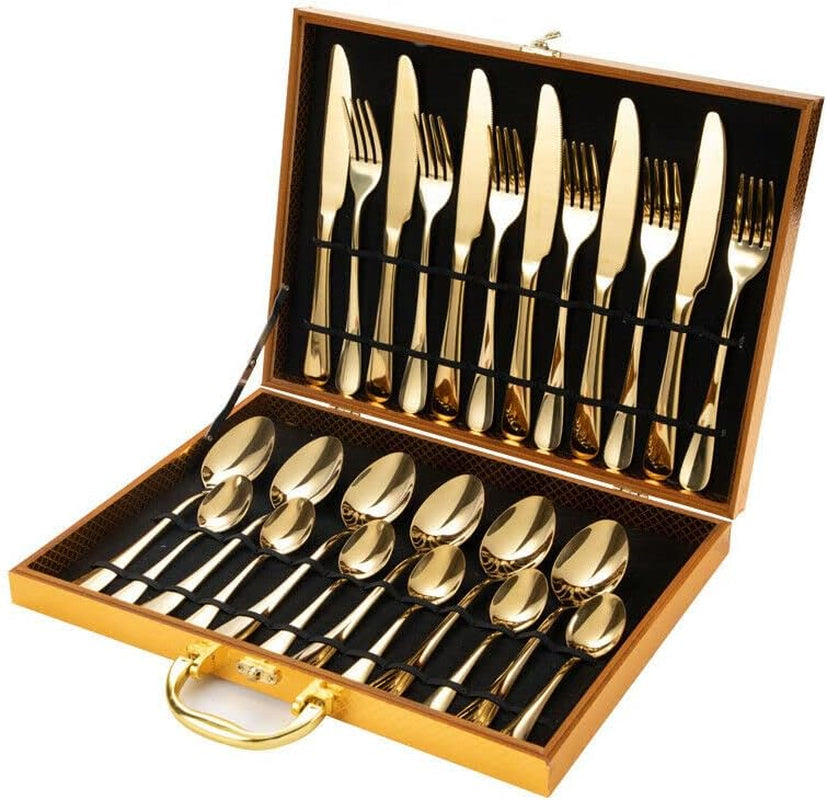
- The 24-Piece Gold Cutlery Set gives you six each of dinner knives, forks, spoons and teaspoons in a matching finish, enough to set the table for six with a consistent, dressed look for a dinner party.
- For the light above the table, the LED Modern 3-Ring Chandelier offers selectable warm-to-cool light, so you can go warm for the meal.
Frequently asked questions
Which side does the fork go on when setting a table?
The fork goes on the left of the plate. The knife goes on the right with its blade facing in toward the plate, and any spoon sits to the right of the knife. If there are several forks, you use them from the outside in as the courses arrive.
How do you set a table for a dinner party?
Build out from the everyday setting, working outside in: entree cutlery on the outside, main cutlery next to the plate, a bread plate top-left, dessert cutlery above the plate, and glasses grouped above the knife. Guests simply use each piece from the outside in.
Where do the glasses go in a table setting?
Glasses sit above the knife, on the right of the setting. The water glass goes nearest, just above the knife tip, with a wine glass to its right, angled slightly. Group them together rather than spreading them across the setting.
Where does the napkin go?
The napkin goes to the left of the forks, or folded on the plate. Both are correct. On the plate suits a more formal or hosted meal; to the left of the forks suits everyday dining and leaves the plate clear for serving.
What is the basic rule for a table setting?
Cutlery is used from the outside in. The pieces furthest from the plate are for the first course, and each course moves inward toward the plate. Set the table in that order and any setting, simple or formal, reads clearly.