Cart
0
TL;DR: Hang the bottom of a dining chandelier about 75-90cm above the tabletop in a standard Australian home with a 2.4m ceiling. Add roughly 7.5cm of height for every extra 30cm of ceiling above 2.4m. For size, aim for a fixture whose diameter is about one half to two thirds of the table's width, and keep at least 15cm of clear space between the fixture and each edge of the table. Centre it over the table, not the room.
A chandelier over the dining table is the one light you sit under for the length of a meal, so height and size matter more here than almost anywhere else in the house. Hang it too high and it floats, disconnected from the table. Hang it too low and it blocks the eye line across the table and gets in the way when someone stands to serve. This guide sets out the Australian measurements in plain centimetres so you can plan the drop before your electrician sets the ceiling point.
The quick rule for chandelier height over a dining table
Measure from the finished tabletop, not the floor, and aim for the bottom of the fixture to sit 75-90cm above the table.
That range works because the table changes everything. Unlike a chandelier in an entry or a lounge, where you measure clearance from the floor, a dining fixture hangs over a fixed surface at a fixed height (a dining table is usually around 74-76cm tall). So the useful measurement is the gap between the tabletop and the base of the light.
- 75-80cm suits lower ceilings, smaller pendants, and anyone who wants a cosier, more intimate pool of light.
- 85-90cm suits taller ceilings, larger or wider fixtures, and open-plan rooms where you want a clear sight line across the space.
Within that band, the goal is simple: low enough to feel connected to the table and light the food well, high enough that people sitting opposite can see each other and nobody standing at the head of the table meets it with their forehead.
How does ceiling height change the drop?
Australia's standard ceiling height is 2.4m (2400mm), and the 75-90cm rule is built for it. For higher ceilings, raise the fixture proportionally so it stays balanced in the taller volume.
A widely used guide is to add about 7.5cm to the hang height for every extra 30cm of ceiling above 2.4m. So in a room with a 3.0m ceiling (60cm taller than standard), you would lift the fixture roughly 15cm, landing the base around 90-100cm above the table.
| Ceiling height | Approx. base height above tabletop | Notes |
|---|---|---|
| 2.4m (standard) | 75-90cm | The default for most Australian homes |
| 2.7m | 82-97cm | Add ~7-8cm to the standard range |
| 3.0m | 90-105cm | Add ~15cm; favour a larger or taller fixture |
| Raked / cathedral | Measure to the lowest point | Use an adjustable rod or chain and confirm with your electrician |
Most quality chandeliers ship with an adjustable chain, rod or cable so you can fine-tune the final drop once it is mounted. When you buy, check the maximum drop the fixture allows, especially for a raked or double-height ceiling, so you are not left short.
What size chandelier suits your dining table?
Size is about the table, not the room. Two ratios do the work.
Diameter versus table width. Choose a fixture whose diameter is roughly one half to two thirds of the table's width (the shorter dimension of a rectangular table). Over a 90cm-wide table, that points to a fixture around 45-60cm across.
Edge clearance. Keep at least 15cm of clear space between the outer edge of the fixture and each edge of the table. This stops the chandelier from feeling like it is crowding the setting and keeps it clear of raised arms and serving dishes.
| Table width | Suggested fixture diameter |
|---|---|
| 80-90cm | 40-55cm |
| 90-105cm | 45-65cm |
| 105-120cm | 55-75cm |
| 120cm and over | 65cm and over, or a linear fixture |
For a long rectangular table (say 200cm or more), a single round chandelier can look lost. Two matching pendants spaced evenly, or one long linear fixture, usually balances the length better than a lone round fixture. If you go with two, centre them along the table and keep equal gaps at each end.
Round table, round rules
Over a round or square table, a round chandelier almost always looks right. Match the diameter to the one-half-to-two-thirds rule against the table's diameter, and centre the fixture on the middle of the table.
How to centre a dining chandelier
Centre the chandelier over the middle of the table, not the middle of the room. Dining tables are often set off-centre in open-plan spaces, against a wall or towards a window, so lining the light up with the room can leave it hanging over the edge of the table or out into the walkway.
Before the ceiling point is cut, put the table exactly where it will live, then mark the centre of the tabletop and carry that point up to the ceiling. If you plan to extend the table with a leaf for guests, centre on the everyday position and accept that the fixture sits slightly off-centre when fully extended. Because this is a fixed ceiling penetration, it is worth taking the extra ten minutes to mark it precisely.
Number of lights and brightness
A dining chandelier does two jobs: it lights the table for eating, and it sets the mood for lingering after. The most flexible fixtures let you do both.
- Dimmability is the single most useful feature over a dining table. Bright while you serve and eat, low and warm while you sit and talk. Many modern chandeliers include remote or app dimming and adjustable colour temperature (warm white through to cool white).
- Warm light for atmosphere. A warmer colour temperature suits the room where you gather in the evening; cooler light can feel clinical over a dinner.
- Layer it. A chandelier rarely lights a whole dining zone on its own. Pair it with a wall light, a buffet lamp or downlights on a separate switch so the room is not relying on one fixture.
Choosing your dining chandelier
Once the height and size are settled, the style is yours. A few Pattan Australia fixtures that suit a dining table and give you room to tune the drop:
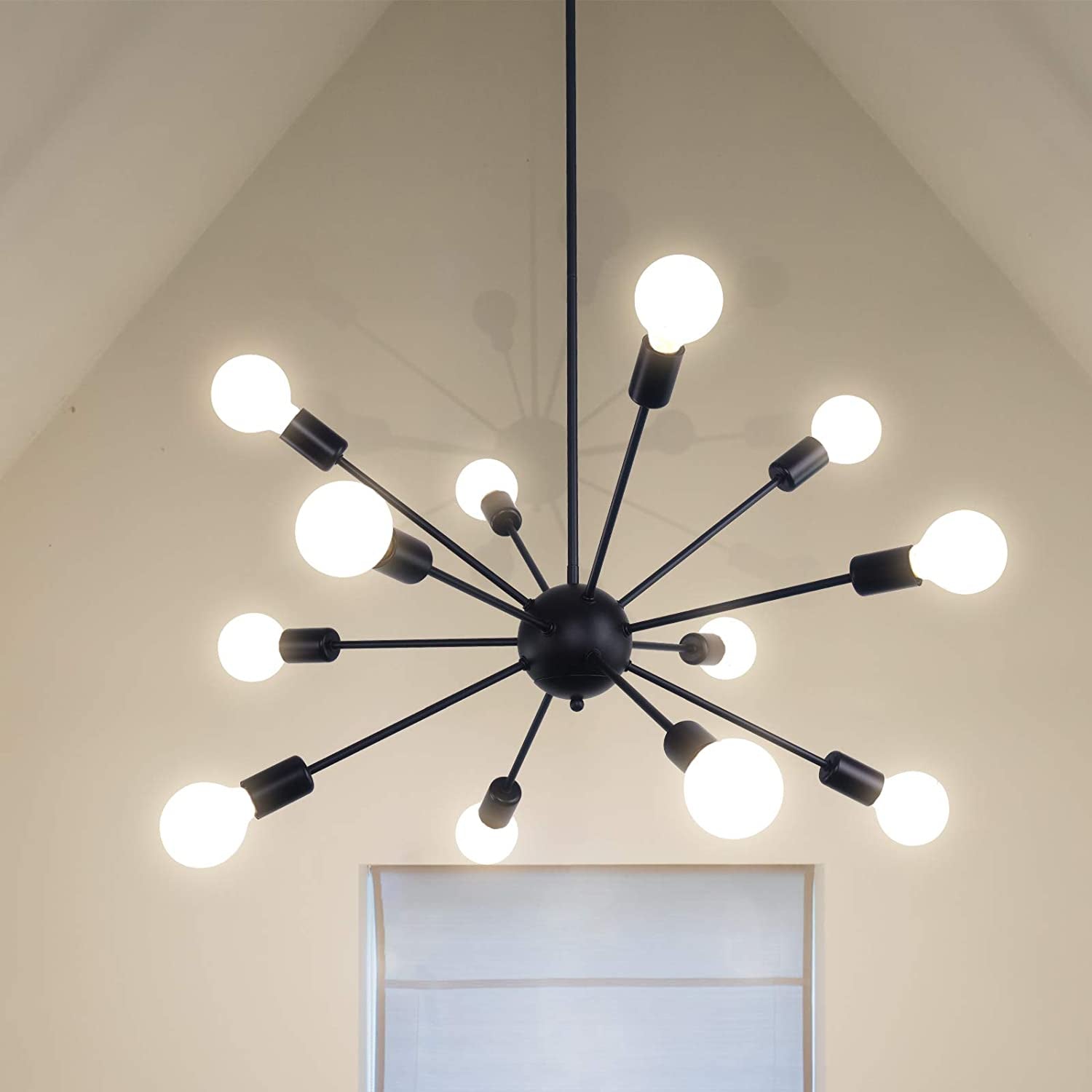
- The Matte Black Sputnik Chandelier (12 Lights) comes with extension rods so you can set the hanging height, and works over a wider table or in an open-plan dining zone.
- The LED Modern 3-Ring Chandelier has adjustable-length chains and three selectable light colours, so you can go bright for meals and warm for after.
- The 6-Light Sputnik Chandelier is dimmable with adjustable colour temperature, a tidy option for a smaller dining setting.
Working out lighting for a kitchen island in the same open-plan space? Our guide to kitchen island pendant light size covers the width, height and spacing rules for benches.
A note on installation: chandeliers are hardwired fixtures, so in Australia the connection to your home's wiring must be carried out by a licensed electrician. Plan your height, size and centring first, then have your electrician set the ceiling point and hang it to match.
Frequently asked questions
How high should a chandelier hang above a dining table?
Hang the bottom of the fixture about 75-90cm above the tabletop for a standard 2.4m ceiling. Measure from the finished tabletop, not the floor. Go higher within that range for taller ceilings and larger fixtures, lower for a cosier feel.
How much higher should I hang a chandelier for a high ceiling?
Add roughly 7.5cm of hang height for every extra 30cm of ceiling above the standard 2.4m. For a 3.0m ceiling, that lifts the base to about 90-105cm above the table, and a larger or taller fixture usually suits the extra volume.
How big should a dining room chandelier be?
Aim for a fixture diameter about one half to two thirds of the table's width, and keep at least 15cm clear between the fixture and each table edge. A 90cm-wide table suits a fixture around 45-60cm across.
Should a chandelier be centred over the table or the room?
Over the table. Dining tables are often placed off-centre in open-plan spaces, so centring on the room can leave the light hanging over the table's edge. Mark the centre of the tabletop and carry that point to the ceiling before the point is cut.
Can I install a dining chandelier myself?
No. Chandeliers are hardwired, so in Australia a licensed electrician must make the connection to your home's wiring. You can plan the height, size and position yourself, then have your electrician set the ceiling point and complete the installation.