Cart
0
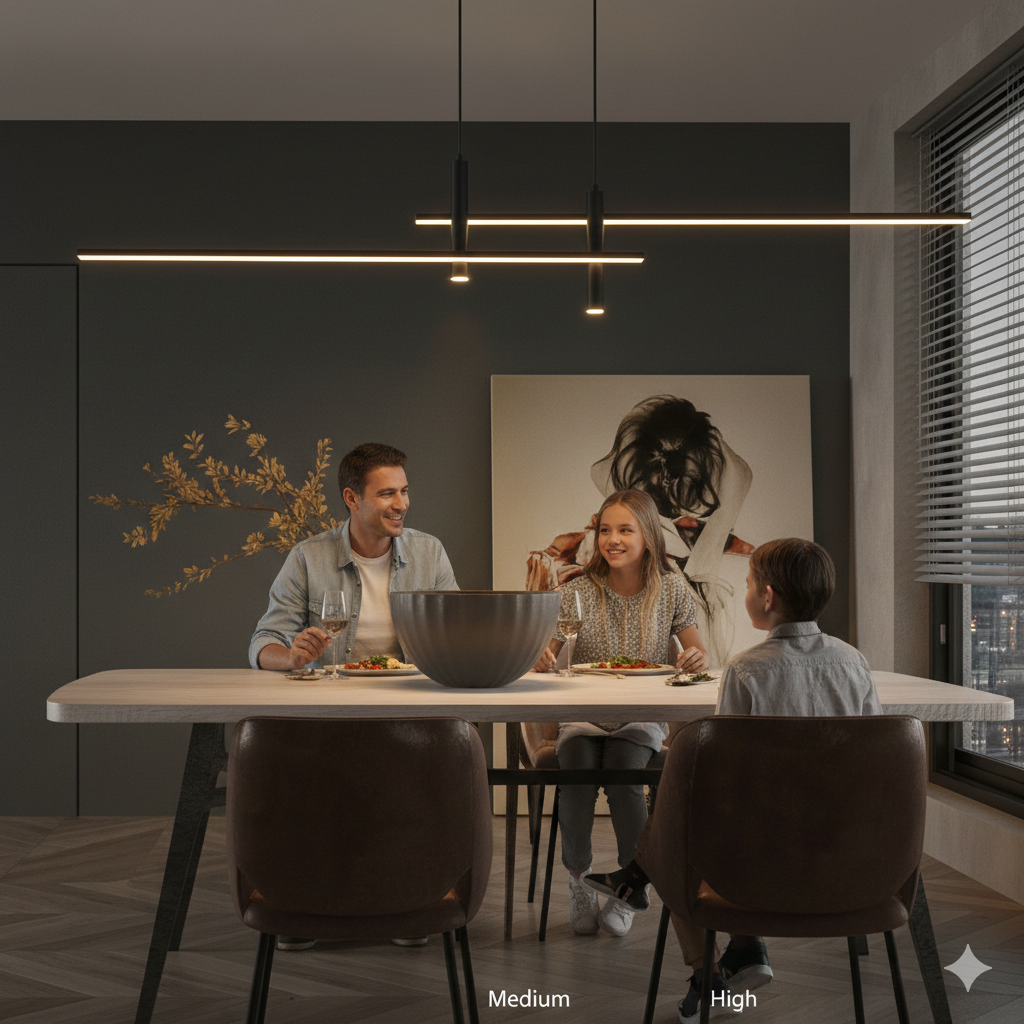
TL;DR: The right kitchen island pendant light size comes down to three numbers. For width, aim for the combined span of your pendants to sit at roughly one third of the island length, leaving a clear gap of at least 15cm at each end. For height, hang the bottom of the pendant about 75-90cm above the benchtop. For spacing, centre two pendants around 75-90cm apart on a standard island. Get those three right and your lighting will look balanced from the day it goes up.
Pendant lights over an island are one of the few design decisions in a kitchen you notice every single day. Too small, and they look lost above a big stone benchtop. Too low, and they block sightlines across an open-plan living zone. Too close to the edges, and the whole arrangement feels off-centre. This guide walks through the Australian sizing rules in plain numbers, so you can measure once and choose with confidence. All measurements below are in centimetres and metres, the way most Australian cabinetmakers and electricians quote them.
The quick rule of thumb for kitchen island pendant light size
There are two ratios worth memorising.
Width: the total width of your pendants (or a single linear fixture) should cover roughly one third of the island's length. So a 180cm island suits fixtures spanning around 60cm in total. This keeps the lighting proportionate to the bench without crowding it.
End clearance: always leave at least 15cm, and ideally 20-30cm, of clear benchtop between the outermost pendant and the end of the island. Pendants pushed hard against the edges make the island look shorter than it is.
These are starting points, not hard limits. A bold single pendant can run a little wider as a deliberate statement, and a run of small pendants can sit a touch narrower. But if you begin from the one-third rule and the end-clearance rule, you will rarely go wrong.
How wide should your pendants be over an island?
Width is where most people get stuck, because it depends on whether you choose one fixture or several. Use the island's length to guide both the number of pendants and their combined span.
| Island length | Suggested layout | Approx. total fixture width |
|---|---|---|
| Up to 100cm | 1 statement pendant | 30-45cm |
| 100-150cm | 2 pendants, or 1 linear fixture | 2 pendants at 25-35cm each, or a linear bar around 90-120cm |
| 150-200cm | 2-3 pendants, or 1 linear bar | linear bar around 120-150cm |
| 200cm and over | 3 pendants, or a long linear bar | 150cm and over |
A few notes on reading the table. When you use separate pendants, the "total fixture width" is the span from the outer edge of the first pendant to the outer edge of the last, including the gaps between them. When you use a single linear fixture, the number is simply the length of the bar. Both approaches are valid; the linear bar just does the spacing maths for you.
Round pendants versus linear bars
Individual round or dome pendants give you flexibility to fine-tune spacing and to mix finishes. A linear bar fixture, by contrast, delivers an even wash of light along the whole bench and only needs one ceiling point, which many people find simpler to plan around. If your island is 150cm or longer and you want a clean, contemporary look, a single linear fixture is often the easiest path to a balanced result.
How high should you hang pendant lights over a kitchen island?
Hang the bottom of the pendant roughly 75-90cm above the benchtop. That range is the sweet spot for most Australian kitchens: high enough to keep sightlines clear across an open-plan space, low enough to pool warm, useful light onto the bench for prep and homework.
Within that band, a few things nudge you higher or lower:
- Taller household or a raised breakfast bar: lean towards 85-90cm so nobody ducks.
- Lower ceilings or a purely decorative pendant: 75-80cm keeps things cosy without dominating.
- Multiple pendants in a row: keep every pendant at exactly the same height. Even a 2cm difference reads as a mistake once the lights are on.
Measure from the finished benchtop surface, not the floor, and remember that a glossy stone bench will reflect the globe, so a slightly higher hang can reduce glare. Because winter evenings in July get dark early across most of Australia, this is also the light you will lean on most for dinner prep, so it pays to get the height comfortable for the person who cooks.
How to space multiple pendants over an island
Spacing is really two questions: how far apart the pendants sit from each other, and how far the end pendants sit from the ends of the bench.
Two pendants: centre them about 75-90cm apart, and keep each roughly 30-45cm in from its end of the island. On a 180cm island, that typically means two pendants centred around 60cm and 120cm along the bench.
Three pendants: divide the usable length (island length minus your end clearances) into equal gaps. On a 200cm island with 30cm clearances at each end, you have 140cm of usable run, so three pendants land at roughly 0cm, 70cm and 140cm within that zone, giving even 70cm spacing.
The even-gap principle: whatever the count, the eye wants equal gaps between pendants and equal margins at each end. Sketch it on paper or mark the benchtop with tape before your electrician sets the ceiling points, because ceiling penetrations are not something you want to move later.
If you like the idea of several lights but want to avoid the spacing arithmetic, a multi-light fixture on a single canopy, such as a three-light pulley pendant, keeps the globes evenly positioned by design while still reading as separate lights.
Does ceiling height change your pendant choice?
Yes, in two ways: how far the fixture drops, and how visually heavy it can be.
A standard Australian ceiling is 2.4m (2400mm). At that height, the 75-90cm hang above a benchtop leaves comfortable headroom. If your ceiling is higher, say 2.7m or a raised section in an open-plan extension, you have two options: drop the pendant lower on a longer cable so it still sits 75-90cm above the bench, or choose a physically larger fixture so it does not look stranded in the tall space.
Many quality pendants come with an adjustable suspension cable for exactly this reason, letting you tune the drop after the fixture is mounted. A generous adjustment range (for example a cable that extends up to around 120cm) gives you room to suit both standard and raised ceilings without buying extension kits.
For lower ceilings under 2.4m, favour slimmer profiles and the upper end of the hang range so the pendants do not feel like they are pressing down on the bench.
One statement pendant or a row of lights?
Both work; it is a question of the look you are after and the island's proportions.
- A single statement pendant suits shorter islands (up to about 100cm) and works when you want one sculptural focal point. Go bolder on width here, because a lone pendant carries the whole island.
- A row of matching pendants suits islands from around 120cm and up, and gives a rhythmic, even spread of light along the bench.
- A single linear bar is the low-fuss middle ground for longer islands: one ceiling point, even light, and no spacing calculations.
Whichever direction you choose, decide it before your electrician is on site, because the number of ceiling points and their positions all flow from this one decision.
---
Ready to light your island? If you want an even wash of light across a longer bench with the fewest ceiling points to plan, a linear fixture is the simplest path. Have a look at the Modern Linear LED Pendant Chandelier with Spotlights, which comes in 120cm and 150cm lengths to suit islands from around 150cm and up, with an adjustable suspension cable for standard or raised ceilings.
Prefer the look of separate lights? A pair such as these mini glass cylinder pendant lights lets you fine-tune your own spacing, while a three-light pulley pendant keeps three evenly spaced globes on a single canopy.
A note on installation: pendant lights are hardwired fixtures, so in Australia the connection to your home's wiring must be carried out by a licensed electrician. Plan your fixture and layout first, then have your electrician set the ceiling points to match.
Frequently asked questions
How big should pendant lights be over a kitchen island?
Aim for the combined width of your pendants to cover about one third of the island's length, with at least 15cm of clear benchtop at each end. For example, a 180cm island suits fixtures spanning roughly 60cm in total.
How high should pendant lights hang above a kitchen island?
Hang the bottom of the pendant about 75-90cm above the benchtop. Measure from the finished bench surface, not the floor. Go higher for taller households or raised breakfast bars, and lower for cosier or purely decorative lighting.
How many pendant lights do I need over an island?
As a guide: one pendant for islands up to 100cm, two for 100-200cm, and three (or a long linear bar) for 200cm and over. A single linear fixture is a tidy alternative on longer islands because it needs only one ceiling point.
How far apart should two pendant lights be over an island?
Centre two pendants roughly 75-90cm apart, keeping each about 30-45cm in from its end of the bench. The goal is equal gaps between pendants and equal margins at each end, so mark the layout before ceiling points are set.
Can I install a kitchen island pendant light myself?
No. Pendant lights are hardwired, so the connection to your home's wiring must be done by a licensed electrician in Australia. You can plan the fixture, height and spacing yourself, then have your electrician position the ceiling points and complete the connection.