Cart
0
Quick answer: Free the floor — visible floor area is what the eye reads as space, so anything you can move onto a wall makes the room feel larger without changing its dimensions.
TL;DR: A small room feels small mostly because of how much floor you can see. That is why wall-mounted storage transforms a room and a slightly smaller sofa does not — one returns floor, the other only reduces what sits on it. After floor space, the levers are light, sight lines and consistency. Get light into the corners, because a dark corner reads as the edge of the room and shrinks it. Keep a clear path from the door through the space. And use fewer colours and fewer objects, since visual busyness is read as clutter and clutter is read as small. The one mistake that makes every small room worse is pushing all the furniture against the walls, which is the opposite of what most people assume.
Key facts
- Visible floor area is the strongest cue the eye uses to judge room size.
- Wall-mounted storage returns floor space that furniture cannot.
- A dark corner reads as the room's edge, making the space feel smaller than it is.
- Leave a clear sight line from the doorway through the room.
- Fewer, larger objects read as calmer than many small ones.
- Pushing all furniture flat against walls usually makes a small room feel smaller.
1. Free the Floor
This is the highest-leverage change and everything else is secondary.
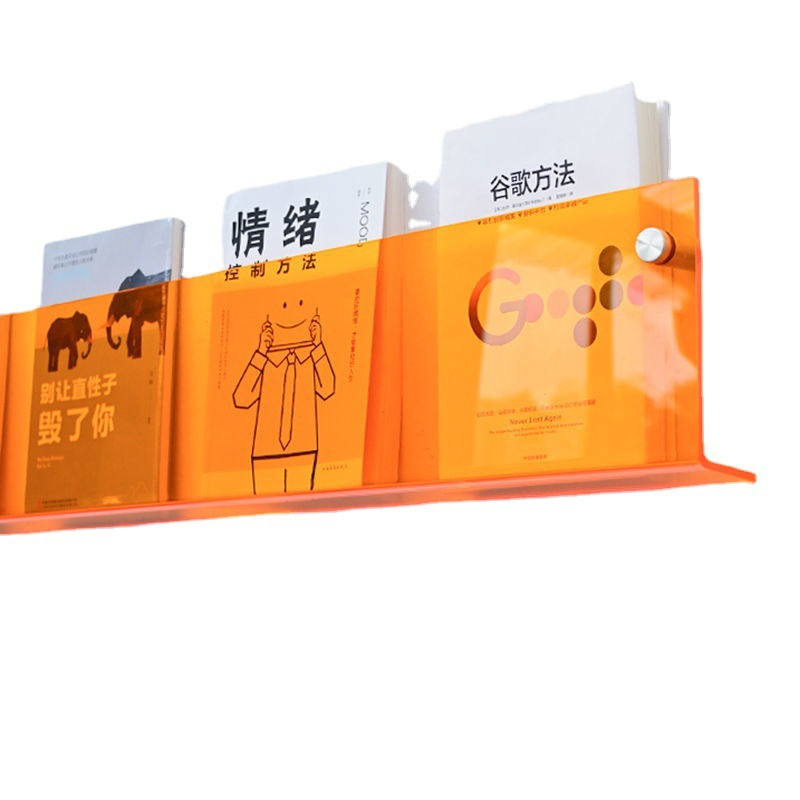
Move storage onto walls. A clear acrylic wall-mounted shelf in 60 cm, 80 cm or 100 cm holds books without a footprint, and the acrylic reads as almost invisible — which matters twice over in a small room. A retro diamond iron and timber wall shelf at 50 × 19 × 50 cm is the decorative version for lighter items.
Choose furniture with legs. Seeing floor under a sofa or bed makes a room read larger than a piece that sits flush to the ground, even at identical dimensions.
Pick pieces that do two jobs. A floor lamp with integrated shelving, a drawer and a USB port replaces a lamp and a side table in one 26 × 26 cm footprint.
Use storage that collapses. A set of foldable fabric storage bins at 25 × 25 × 25 cm folds flat when empty, which rigid boxes do not.
Use the space under the bed properly, since it is the largest unused volume in most small bedrooms — our guide on organising under-bed storage covers measuring clearance and why containers must be sealed.
Fix into studs or rated anchors for anything wall-mounted, and check the lease in a rental. Our guide on hanging wall art without damaging walls covers the options.
2. Light the Corners
A dark corner reads as the boundary of the room. Lighting it pushes the perceived edge outward.
One overhead fitting is the worst arrangement for a small room, because it lights the centre and leaves the perimeter dim, which is exactly the wrong shape.
Two or three low-output sources beat one bright one. Our guide on how many lumens you need per room covers the calculation — target lux multiplied by floor area — and notes that dark walls need 20% to 30% more output.
Light upward as well as down. A lamp throwing light onto the ceiling raises the perceived height.
Keep colour temperature consistent across the room. Mixed temperatures fragment a small space visually. Our guide on warm white versus cool white covers choosing by room.
3. Use Mirrors Deliberately
A mirror works by what it reflects, not by being a mirror. One facing a window doubles the daylight and gives a second view; one facing a wall doubles the wall.
Place it opposite or adjacent to a light source.
Bigger and fewer beats several small ones, which read as busy. Our guide on how to choose a wall mirror covers sizing and placement.
4. Keep the Sight Lines Clear
Stand in the doorway. Whatever blocks the view into the room is what makes it feel small.
Nothing tall immediately inside the door. A wardrobe or bookcase in the first metre closes the room off before you have entered it.
Low furniture toward the middle, tall against the far wall. That gradient draws the eye through rather than stopping it.
5. Reduce the Visual Count
Fewer, larger objects read as calmer than many small ones. Five small items on a shelf read as clutter; two larger ones read as considered.
Limit the palette. Two or three repeating colours across the room ties it together; six fragments it.
Leave a third of every surface clear. The same rule that governs shelves and bedside tables — our guides on styling a bookshelf and styling a bedside table both cover it, because in a small room empty space is doing visible work.
The Mistake That Makes It Worse
Pushing all the furniture flat against the walls.
It feels like it should create space, and it does the opposite — it produces a ring of furniture around an empty middle, which emphasises the walls and makes the room read as a corridor.
Pull pieces a few centimetres off the wall. Even 5 cm to 10 cm creates a shadow line that suggests depth, and it also improves airflow behind furniture on external walls, which our guide on stopping condensation and damp explains matters for moisture as well.
What Actually Helps, Ranked
| Rank | Change | Effect |
|---|---|---|
| 1 | Move storage onto walls | Returns floor, the strongest size cue |
| 2 | Light the corners | Pushes the perceived edge outward |
| 3 | Clear the sight line from the door | Determines first impression entirely |
| 4 | Furniture with visible legs | Floor showing under pieces reads as space |
| 5 | Reduce object count and palette | Busyness is read as clutter, clutter as small |
| 6 | One well-placed mirror | Real, but only if it reflects something worth doubling |
Ready to Try It?
Start by taking one thing off the floor and putting it on a wall — that single move does more than any colour choice. Then light the corners rather than the centre, and stand in the doorway to check what is blocking the view. Browse the full Pattan Australia range for wall shelving, lighting and collapsible storage.
Frequently asked questions
What makes a small room feel bigger?
Visible floor area more than anything else, which is why moving storage onto walls transforms a room while buying slightly smaller furniture does not. After that, lighting the corners, keeping a clear sight line from the doorway, and reducing the number of objects and colours all help.
Do mirrors really make a room look bigger?
Only if they reflect something worth doubling. A mirror opposite a window doubles daylight and gives a second view, which genuinely helps. A mirror facing a blank wall doubles the wall. One larger mirror works better than several small ones, which read as visual busyness.
Should furniture be against the wall in a small room?
Usually not entirely. Pushing everything flat against the walls produces a ring of furniture around an empty centre, which emphasises the boundaries and makes the room read as a corridor. Pulling pieces 5 cm to 10 cm off the wall creates depth and improves airflow behind them.
What colour makes a small room look bigger?
A limited palette matters more than any specific colour — two or three repeating colours across the room tie it together, while six fragment it. Light walls reflect more and reduce the lighting needed, but a dark room with well-lit corners can read as larger than a pale one lit only from the centre.
How do you store things in a small room?
Go vertical and choose storage that collapses when empty. Wall-mounted shelving returns floor space that furniture cannot, under-bed containers use the largest unused volume in most bedrooms, and foldable bins take no space out of season, unlike rigid boxes.
Why does one ceiling light make a small room feel smaller?
Because it lights the centre and leaves the perimeter dim, and a dark corner reads as the edge of the room. Two or three lower-output sources placed around the space push that perceived edge outward, which makes the room feel larger than a single bright fitting does.