
Cart
0
TL;DR: Condensation forms when warm, moist indoor air touches a surface that is colder than the air's dew point. At a comfortable 20°C and 60% humidity, that dew point sits at about 12°C, and a single-glazed window on a cold night is easily colder than that, so water appears on the glass. The fix is never one thing. It is three: cut the moisture you generate, give the moisture that remains a way out through ventilation, and stop surfaces getting cold enough to reach dew point. A household of four generates roughly 10 to 15 litres of water vapour a day just by living, so no absorber or gadget will keep up on its own if the air has nowhere to go. Aim to hold indoor humidity between 40% and 60%, and treat persistent damp that appears at floor level rather than on glass as a building problem, not a housekeeping one.
Australian houses are built for heat, not cold. Most of the country's housing stock is lightly insulated, frequently single-glazed, and designed around getting warm air out in February rather than keeping it in July. The result is a predictable winter pattern: the mornings when you find water pooling on the window sill, black spotting appearing in the corner of a wardrobe, and a musty smell in the room furthest from the sun.
None of that is a cleaning failure. It is physics, and once you understand the mechanism the solution becomes obvious.
The Mechanism: Dew Point in Plain Terms
Air holds water vapour, and warm air holds more of it than cold air. The dew point is the temperature at which the air you have is completely saturated. Cool any surface to that temperature or below, and the vapour touching it turns back into liquid water.
Worked example. A living room at 20°C with 60% relative humidity has a dew point of roughly 12°C. On a night where it drops to 6°C outside, the inner face of a single-glazed window will sit somewhere close to 10°C. That is below 12°C, so water forms on the glass. Nothing has leaked. The window is simply the coldest thing in the room, so it is where the air gives up its moisture first.
This is why the same room behaves differently on different nights. Colder outside means colder glass, and more condensation. Higher indoor humidity means a higher dew point, so condensation starts at a milder outdoor temperature.
It also explains why windows are only the symptom. Glass is visible, so it is where you notice it. The same thing happens out of sight behind a wardrobe pushed against an external wall, under a bed on a slab floor, or in the corner of a room that never gets sun. Those spots are worse, not better, because the water sits there undisturbed.
How Much Moisture a Household Actually Generates
This is the number most people underestimate, and it explains why passive fixes alone tend to disappoint.
| Source | Approximate water vapour released |
|---|---|
| Breathing and perspiration | 1 L to 2 L per person, per day |
| Cooking a typical day's meals | 1 L to 2 L |
| Showers and baths | 0.5 L to 1 L per day |
| Drying one load of laundry indoors | 2 L to 3 L |
| Unflued gas heating | Substantial, roughly equal to the fuel burnt |
| Indoor plants, aquariums, pets | 0.5 L upwards |
A family of four therefore puts something in the order of 10 to 15 litres of water into the air every day, and more if they dry washing inside. Every litre either leaves the building as vapour or condenses somewhere in it. There is no third option. That is the whole problem in one sentence.
The Three Levers
Anything that works falls into one of three categories. Most people try only the third one, which is why the problem persists.
Lever 1: Cut Moisture at the Source
The cheapest litre to remove is the one you never released.
- Lids on pots. Simmering an uncovered pot puts a surprising volume of vapour into a kitchen. A lid keeps most of it in the pot.
- Run the exhaust fan during and after showers. The critical part is the "after". Most of the moisture is still airborne when the water stops, so leaving the fan running for 15 to 20 minutes afterwards removes far more than running it only while you shower.
- Shut the bathroom door while the fan runs. An open door lets humid air spread through the house faster than the fan can extract it, moving the problem to a colder room.
- Avoid unflued portable gas heaters in bedrooms. Burning gas produces water vapour as a combustion product and releases it directly into the room. A gas heater is one of the largest single moisture sources a house can have, and it operates precisely when the house is closed up.
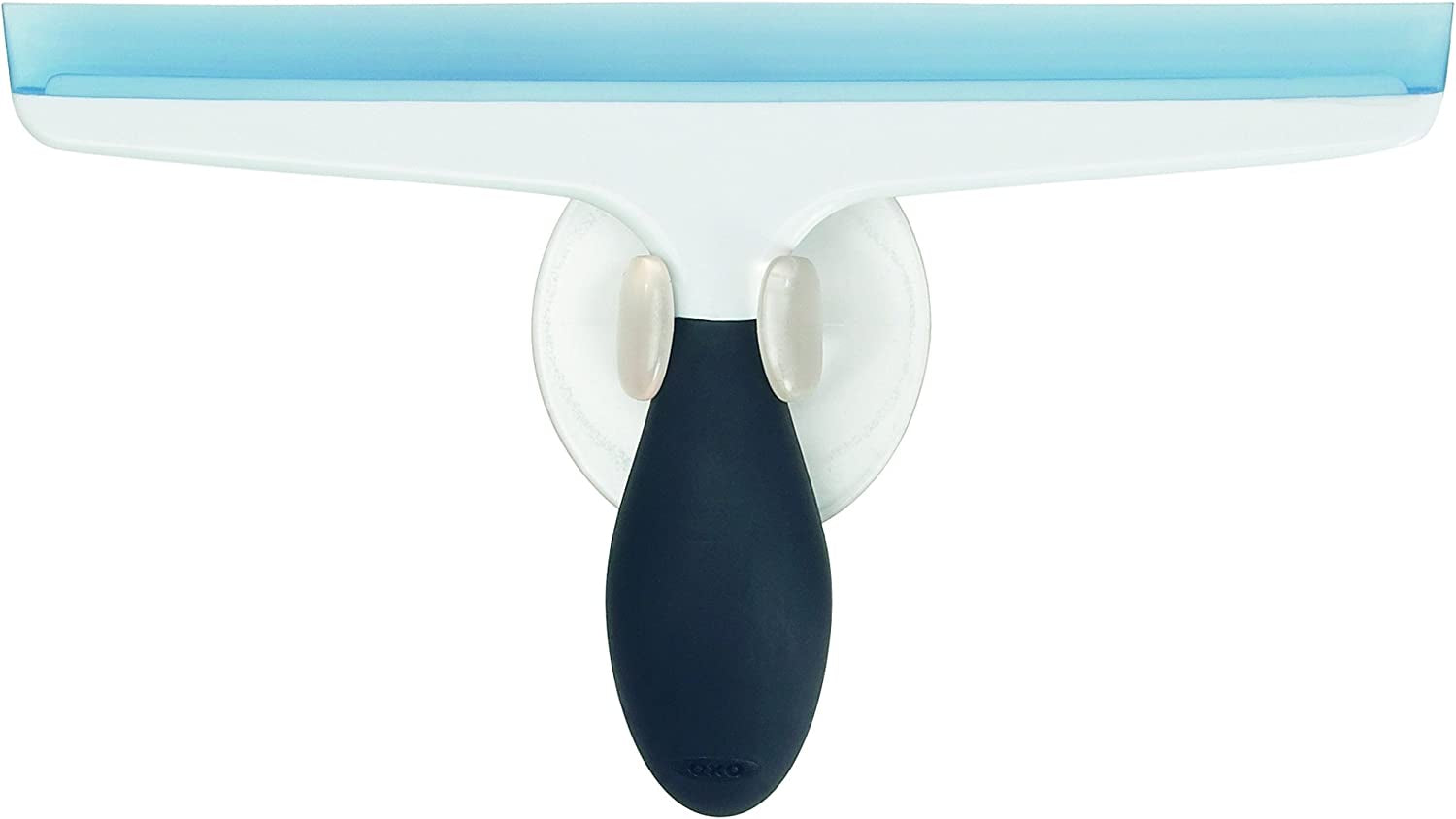
- Wipe the glass, do not just admire it. Water sitting on a sill soaks into the frame and the plaster below. A quick pass with an all-purpose squeegee takes seconds and removes water that would otherwise evaporate straight back into the room or rot the sill. The flexible blade handles rippled and textured glass, and the suction cup keeps it on the wall in the bathroom or beside the window where you will actually use it.
Lever 2: Give the Moisture a Way Out
Ventilation is the only lever that removes water from the building rather than moving it around.
- Cross-ventilate briefly rather than constantly. Opening two windows on opposite sides of the house for five to ten minutes exchanges the air in a room almost completely, without cooling the walls and furniture much. This is far more effective per degree of heat lost than leaving one window ajar all day.
- Do it in the middle of the day. Outdoor air is warmest and, in absolute terms, often driest in the early afternoon. Ventilating at 7am on a cold morning brings in cold air and costs more heat for less moisture removed.
- Ventilate the rooms you generate moisture in, when you generate it. The bathroom during and after a shower, the kitchen while cooking, the laundry while drying.
- Leave internal doors open in unused rooms. A closed spare room with no heating becomes the coldest surface set in the house, which makes it the place moisture chooses to condense. Air movement through it keeps its surfaces closer to the rest of the house.
- Move air with a fan. Air movement across a cold surface reduces condensation and speeds drying. A ceiling fan run on low in winter, in reverse if it has that setting, also pushes warm air down off the ceiling. Our guide on how to choose a ceiling fan covers winter reverse mode in detail.
Lever 3: Stop Surfaces Reaching Dew Point
If a surface never gets to 12°C, the air at 20°C and 60% humidity cannot condense on it.
- Heat steadily rather than in bursts. A house heated hard for two hours each evening and left cold the rest of the time has cold walls and floors all day. Those surfaces are where condensation forms. Gentle background warmth keeps the mass of the building above dew point.
- Insulate what you can reach. The ceiling is usually the cheapest and highest-impact place.
- Use curtains intelligently, and know the trade-off. Heavy curtains keep the room warm but also keep the window cold, so condensation on the glass can increase even as comfort improves. Closing curtains at dusk and opening them in the morning to let the glass warm and dry is the workable compromise.
- Pull furniture off external walls. A wardrobe hard against a cold external wall creates a pocket of still, cold air behind it. A gap of even 5 cm to 10 cm lets air circulate and keeps that wall surface warmer.
Our broader guide on how to keep a house warm in winter in Australia covers the heating and draught side of this in more depth, and the two problems are closely linked.
Where Moisture Absorbers Fit
Absorbers and dehumidifiers are the tools people reach for first, and they do a real job, but only in the right place.
What an absorber is good at. A calcium-chloride absorber pulls moisture out of a small, enclosed, poorly ventilated volume. A wardrobe, a linen cupboard, a caravan, a boat, a rarely used spare room, a bathroom cabinet, a garage. In those spaces it works well, because the volume of air is small and there is no ventilation competing with it. A refillable container topped up with a fragrance-free moisture absorber refill is designed for exactly this: a 3.4 kg refill covers many container refills, it is fragrance-free so it will not scent stored linen or clothing, and it is non-toxic and septic safe. Wardrobes, linen cupboards, laundries and bedrooms are the intended use.
What an absorber cannot do. It cannot keep pace with 10 to 15 litres a day across a whole house. Nothing passive can. Putting a single absorber in a living room and expecting the windows to stop fogging is asking a teaspoon to bail a boat. Use absorbers for enclosed problem spots and ventilation for whole rooms.
| Approach | Removes moisture from building | Works in enclosed spaces | Ongoing cost | Best used for |
|---|---|---|---|---|
| Cross-ventilation | Yes | Poorly | None | Whole rooms, kitchens, bathrooms |
| Exhaust fan | Yes | No | Low | At the moisture source |
| Chemical absorber | Yes, into the sachet | Very well | Refills | Wardrobes, cupboards, caravans, garages |
| Heating | No, raises capacity | No | Moderate to high | Keeping surfaces above dew point |
| Wiping down | Yes, if you empty it | No | None | Glass and sills, immediately |
Where to put absorbers first. The wardrobe on an external wall. The linen cupboard. The spare room nobody heats. The under-sink cupboard. Our guides on wardrobe organisation and under sink storage cover how to leave air gaps in those spaces, which matters as much as the absorber itself. Stored fabric pressed tight against a cold wall is the classic spot for musty smells.
Drying Laundry Indoors Without Making It Worse
Drying washing inside is the single largest avoidable moisture source in an Australian winter, at 2 to 3 litres per load. It is also unavoidable for many households during a wet week.
- Put the rack in one room and ventilate that room. Contain it rather than letting it humidify the whole house.
- Crack a window in that room, or run an exhaust fan. The moisture has to leave. A closed room with a full rack becomes a condensation chamber.
- Airflow beats heat. A fan on low pointed at the rack dries clothes faster than a sealed warm room, and adds no moisture.
- Never dry washing in a bedroom overnight. It is the worst combination available: high moisture release, a closed door, no ventilation, and the coldest hours of the day.
- Space items out. Overlapped fabric dries slowly, which extends the hours the moisture is being released.
Our guide on how to choose a clothes drying rack covers sizing the rack to your load, and how to organise a small laundry room covers making a ventilated drying zone work in a small space.
When It Is Not Condensation
Not all damp is condensation, and treating the wrong problem wastes months.
Condensation appears on cold, non-absorbent surfaces, worst on glass and cold external walls, worst in the morning, and worst in winter. It improves markedly when you ventilate.
Rising damp appears at floor level, works upwards, often leaves a tide mark, and does not respond to ventilation. It is a building fault.
A leak appears in one spot, gets worse with rain rather than with cold, and does not follow the daily heating cycle. Also a building fault.
Bridging happens where soil, a garden bed or a rendered surface sits above the damp-proof course and lets moisture cross it.
If the damp is at floor level, if it worsens after rain rather than after a cold night, if it is confined to one patch, or if it does not improve at all when you ventilate properly for a fortnight, stop buying absorbers and get a builder or qualified damp specialist to look at it. Persistent structural damp is not a housekeeping problem and will not be solved with better habits.
One safety note: dealing with an extraction fan that needs installing, replacing or rewiring is electrical work. In Australia that must be carried out by a licensed electrician.
A Winter Routine That Works
Put together, the habits that actually shift the problem take a few minutes a day.
- Morning. Open two windows on opposite sides for five to ten minutes. Wipe any water off the glass and sills rather than leaving it to re-evaporate.
- While cooking. Lids on pots, rangehood or exhaust fan on, window ajar if the room allows.
- After every shower. Fan on for 15 to 20 minutes with the door closed.
- Evening. Curtains closed for warmth. Steady background heat rather than a short blast.
- Weekly. Check the wardrobe and linen cupboard on external walls. Check absorber levels. Pull furniture out and let those walls breathe.
- Seasonally. Keep an eye on the corners of rooms that get no sun, and behind large furniture on external walls.
Ready to Tackle the Damp Spots?
Start with the mechanism rather than the symptom. Cut what you generate, ventilate what remains, and keep surfaces above dew point. Then use absorbers where they genuinely work, which is inside enclosed cupboards and unheated rooms rather than in the middle of a living space. Browse the full Pattan Australia range for the moisture absorbers, squeegees, drying racks and fans that support that routine.
Frequently asked questions
Why do my windows have water on them every morning in winter?
Warm indoor air holds moisture, and glass is usually the coldest surface in the room. When the glass drops below the air's dew point, around 12°C for a room at 20°C and 60% humidity, that moisture condenses onto it. Overnight is when the glass is coldest, so the water is there when you wake.
What indoor humidity should I aim for in winter?
Between 40% and 60% relative humidity suits most Australian homes. Below that, air feels dry and static increases. Sustained readings above 60% make condensation and mould growth on cold surfaces much more likely. An inexpensive hygrometer tells you which lever to pull.
Do moisture absorbers actually work?
Yes, in enclosed spaces. A calcium-chloride absorber works well in a wardrobe, linen cupboard, caravan, garage or unheated spare room, where the volume of air is small and unventilated. They cannot keep up with a whole house, which generates 10 to 15 litres of vapour a day for a family of four, so they supplement ventilation rather than replace it.
Is it better to open windows or keep the house sealed in winter?
Open them briefly and deliberately. Two windows on opposite sides for five to ten minutes in the middle of the day exchanges the air with little heat loss. Sealing the house completely traps every litre of moisture you generate and guarantees it condenses on the coldest surface available.
Does drying clothes inside cause damp?
It contributes substantially. One load releases roughly 2 to 3 litres of water into the air. That is manageable if the rack is in one ventilated room with a window cracked or a fan running, and it is a problem if the rack is in a closed bedroom overnight.
How do I tell condensation apart from rising damp?
Condensation appears on cold hard surfaces, is worst on winter mornings, and improves when you ventilate. Rising damp starts at floor level, moves upward, often shows a tide mark, and does not respond to ventilation at all. Damp that worsens after rain rather than after a cold night points to a leak or a building fault, which needs a builder rather than an absorber.