Cart
0
TL;DR: The under-sink cupboard is awkward to organise because of the plumbing, not the space itself — the fix is to work around the pipes rather than through them, using a sliding two-tier organiser or stackable bins on either side of the U-bend, with taller items at the back and anything you reach for daily positioned at the front. Measure the cupboard's width, depth, and the pipe's clearance height before buying anything, since a unit that doesn't clear the plumbing won't sit flush no matter how good the organiser is.
Under-sink cupboards are some of the most-used and least-organised storage in the house, largely because the U-bend and water supply pipes cut the usable space in two awkward halves rather than leaving one clear cupboard. Most of the frustration people have with this space isn't really about not having enough room — it's that whatever's stored there was never actually measured against the pipes, so nothing quite fits and everything ends up in a loose pile around the plumbing.
Measure before you buy anything
Before choosing an organiser, take three measurements:
- Total cupboard width and depth, measured at the narrowest point (cupboard doors are often slightly narrower than the internal cavity).
- Clearance height under the pipes, measured from the cupboard floor to the lowest point of the water supply line or U-bend — this determines whether a stackable or tiered unit will actually clear the plumbing.
- Width of the space on each side of the pipes, since most under-sink cupboards effectively become two narrower zones rather than one wide one.
A sliding or pull-out organiser needs enough depth to extend fully without hitting the cupboard door, so check that measurement too if you're considering a sliding basket system rather than fixed shelving.
Sliding, two-tier organisers for kitchens
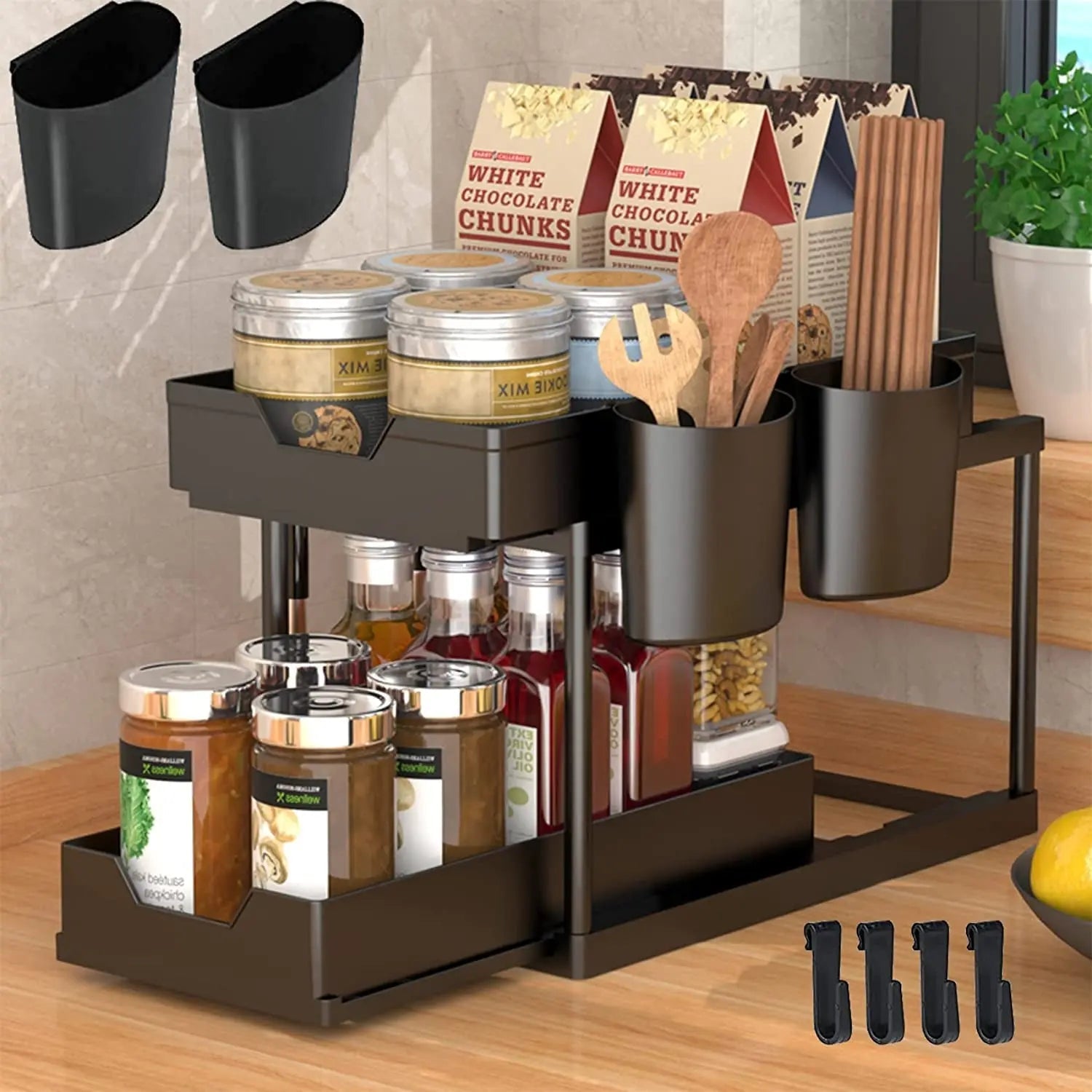
For a kitchen under-sink cupboard — usually storing cleaning products, bin liners, and dish supplies — a sliding two-tier organiser is the most space-efficient option, since it uses the full depth of the cupboard rather than just the front third that's easy to reach into. The 2-tier sliding under-sink organiser works either side of a central U-bend, with a top tier for lighter, frequently used items and a bottom sliding basket for bulkier supplies further back, which solves the common problem of everything behind the front row becoming invisible and forgotten.
For narrower gaps beside the plumbing where a full two-tier unit won't fit, a slimmer sliding rack — like a spice-rack-style sliding organiser originally designed for pantry use — works just as well tucked beside a U-bend, since it's built for the same kind of narrow, awkward gap.
Working with a central pipe instead of around it
Rather than trying to find one organiser that spans the whole cupboard, it's usually easier to treat the two sides of the pipe as separate small zones and organise each independently. A 2-tier cupboard organiser with hanging hooks is a good example of this approach in one unit — the top tier stays fixed for lighter items, the bottom tier slides out for anything bulkier, and the included hooks let you hang spray bottles or cloths on the inside of the cupboard door, using vertical space that would otherwise sit empty.
Bathroom under-sink storage has different priorities
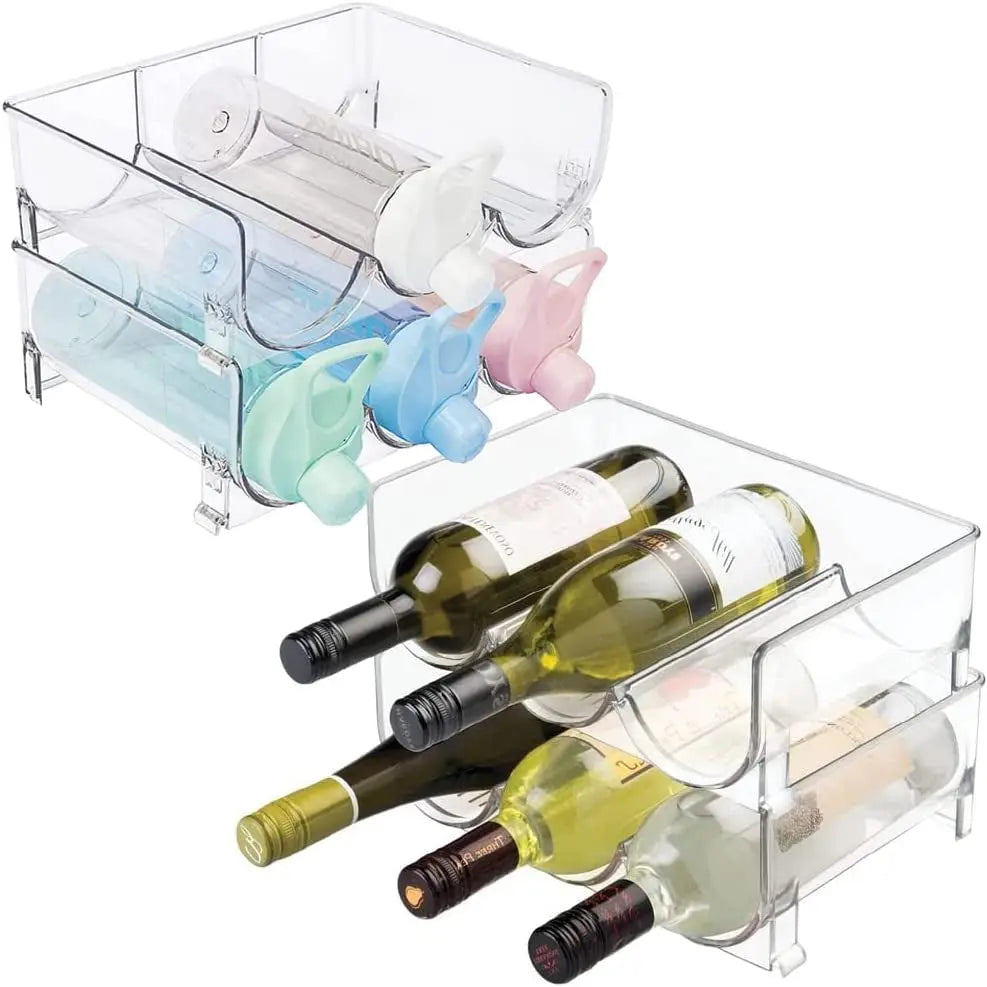
A bathroom under-sink cupboard usually deals with more moisture than a kitchen equivalent, so plastic bins and organisers with drainage or ventilation are worth prioritising over cardboard or fabric-based options, which can develop mould in a consistently humid space. Grouping by category — hair and skin products together, cleaning supplies together, spare toiletries together — in separate stackable bins makes it far easier to find what you need without unpacking the whole cupboard, and keeps liquids that might leak contained to one bin rather than spreading across the shelf.
Under-sink storage checklist
| Step | What to do |
|---|---|
| 1. Measure clearance | Width, depth, and pipe clearance height before buying |
| 2. Split into two zones | Treat each side of the U-bend as its own small space |
| 3. Choose sliding over fixed | Sliding organisers use the full cupboard depth, not just the front |
| 4. Put daily items at the front | Anything reached for often goes nearest the door |
| 5. Use the door | Hooks or a door-mounted rack use vertical space most people leave empty |
| 6. Prioritise moisture resistance in bathrooms | Plastic with drainage over cardboard or fabric bins |
Common under-sink storage mistakes
- Buying an organiser before measuring pipe clearance, then finding it doesn't sit flat or clears the plumbing at an angle.
- Treating the cupboard as one space instead of two, which usually means one side stays crammed while the other is barely used.
- Storing heavy items up front and light items at the back, the reverse of what actually makes the space usable day to day.
- Ignoring the door, which in most under-sink cupboards is unused vertical space that a hook rack or door-mounted organiser can put to work.
- Using fabric or cardboard storage in a bathroom, where humidity leads to mould faster than in a kitchen cupboard.
Frequently asked questions
How do I organise an under-sink cupboard with a lot of pipes?
Treat the space on either side of the U-bend as two separate zones rather than one, and choose narrower sliding organisers or stackable bins sized to fit each side individually rather than one wide unit spanning the whole cupboard.
What's the best type of organiser for under a kitchen sink?
A sliding two-tier organiser generally works best, since it lets you use the full depth of the cupboard rather than just the front section that's easy to reach, and keeps bulkier items accessible on a pull-out tier.
Should I measure before buying an under-sink organiser?
Yes — measure the cupboard's width, depth, and the clearance height under the pipes first, since an organiser that doesn't clear the plumbing won't sit flush no matter how well it's designed.
Is plastic or fabric better for bathroom under-sink storage?
Plastic, ideally with some drainage or ventilation, holds up better than fabric or cardboard in a bathroom cupboard, where humidity from showers and baths makes mould a real risk for porous materials.
Can I use the same organiser under both a kitchen and bathroom sink?
Often yes, provided it fits the cupboard's measurements, though bathroom cupboards benefit more from moisture-resistant materials given the higher humidity most bathrooms have compared to kitchens.