Cart
0
TL;DR: The safest way to clean sterling silver jewellery at home is a warm-water and mild dish soap soak, followed by a gentle scrub with a soft cloth or soft-bristled brush and a thorough dry — this handles everyday dulling without risking the metal. For visible tarnish, a dedicated silver-cleaning cloth or an ultrasonic jewellery cleaner designed for silver is a safer next step than household abrasives, which can scratch the surface or strip plating on gold-plated silver pieces.
Sterling silver (stamped 925, meaning 92.5% pure silver alloyed with other metals for strength) is a genuinely durable everyday metal, but it reacts with sulphur compounds in the air and on skin, which is what causes the yellow-to-black tarnish that builds up over weeks of wear or storage. That reaction isn't a sign of poor quality — it happens to all sterling silver eventually — but how you clean it off matters, since the wrong method can do more damage than the tarnish itself.
Why sterling silver tarnishes in the first place
Tarnish is a chemical reaction between the silver alloy and sulphur compounds, which are present in normal air, in some skincare and cleaning products, and even in the natural sulphur your skin produces. Humidity speeds the process up, which is why silver jewellery left in a bathroom or a humid climate tarnishes faster than the same piece stored in a dry drawer.
This is also why pieces worn daily against skin often tarnish more slowly than pieces left sitting in a jewellery box — the natural oils from regular handling create a light barrier, while jewellery left untouched for long stretches has nothing between it and the air.
The safe everyday clean: warm water and mild soap
For light dulling — the kind that builds up from a few weeks of normal wear rather than visible dark tarnish — a simple soak is enough:
- Fill a small bowl with warm (not hot) water and a few drops of mild, phosphate-free dish soap.
- Soak the piece for 10–15 minutes to loosen surface oils and light residue.
- Gently scrub with a soft-bristled brush (a clean, soft toothbrush works well) into any detailed or textured areas where residue collects.
- Rinse thoroughly under running water, making sure no soap residue remains in settings or crevices.
- Dry immediately and completely with a soft, lint-free cloth — silver left damp is more prone to spotting and speeds up tarnish.
This method is safe for plain sterling silver and for most gemstone settings, but skip the soak for pieces with porous stones (pearls, opals, turquoise) or glued elements, since prolonged water exposure can loosen adhesive or damage the stone itself.
Removing actual tarnish
Once tarnish has visibly darkened a piece, warm water and soap usually isn't enough on its own. Two safer next steps:
- A dedicated silver-polishing cloth, pre-treated with a mild polishing compound, lifts tarnish through gentle friction without the abrasive grit found in some household cleaning products. Work in straight lines rather than circles, and use a clean section of the cloth as it darkens with lifted tarnish.
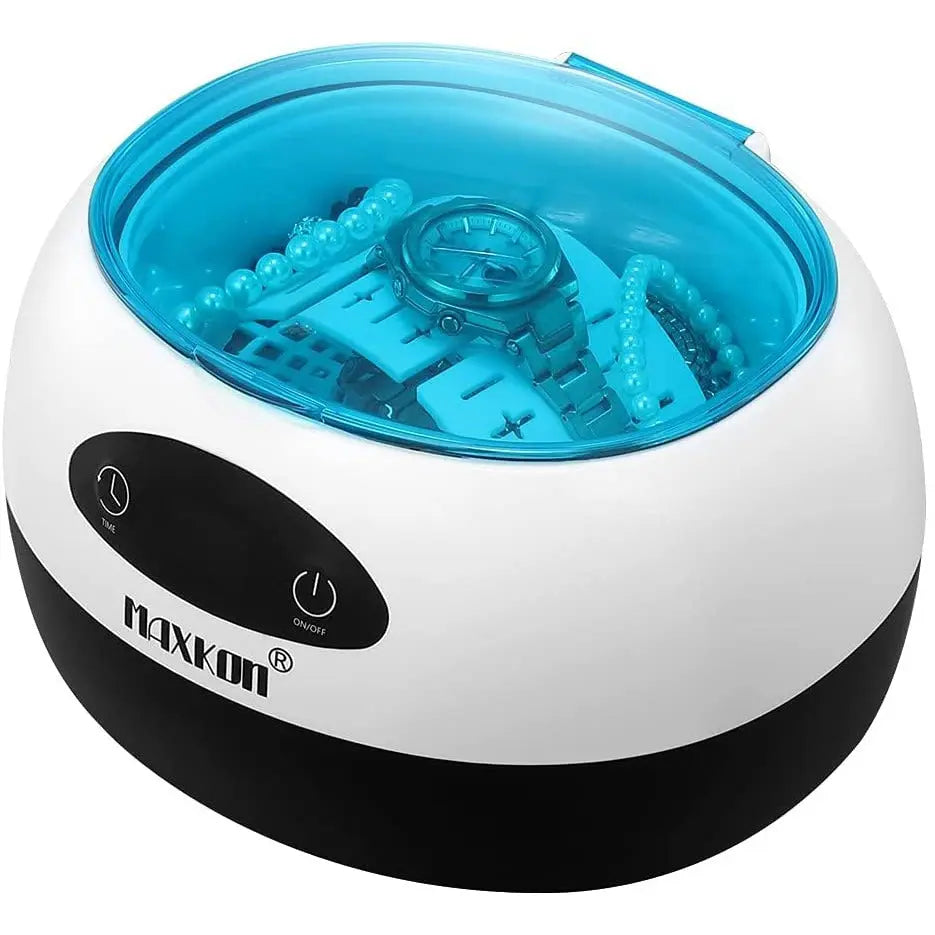
- An ultrasonic jewellery cleaner uses sound-wave-driven micro-bubbles in a cleaning solution to lift dirt and light tarnish from crevices and settings that a cloth can't reach, without any manual scrubbing. This is particularly useful for filigree, chain links, and settings with fine detail, where a cloth alone struggles to get into every gap. The ultrasonic jewellery cleaner is sized for rings, necklaces, and watches, and works on the same basic principle used in professional jewellery cleaning — vibration rather than abrasion, which is gentler on both the metal and any set stones.
What to avoid
- Toothpaste. A commonly repeated home remedy, but most toothpaste contains mild abrasives fine enough for tooth enamel yet still capable of leaving fine scratches on softer metals like silver over repeated use.
- Baking soda scrubs. Same issue as toothpaste — abrasive enough to dull a polished finish over time, even if it lifts tarnish in the short term.
- Household silver dips for gold-plated or gemstone pieces. Dip-style tarnish removers are formulated for solid silver and can strip gold plating or damage certain gemstones and pearls — check the piece's finish before using any dip product.
- Storing silver in a humid bathroom. Bathroom humidity from showers accelerates tarnish faster than almost anywhere else in the house — a bedroom drawer or a lined jewellery box is a better everyday storage spot.
Sterling silver cleaning methods compared
| Method | Best for | Avoid on |
|---|---|---|
| Warm water + mild soap | Everyday dulling, light residue | Porous stones (pearl, opal), glued elements |
| Silver-polishing cloth | Visible tarnish on plain surfaces | Deep filigree (limited reach) |
| Ultrasonic cleaner | Detailed settings, chains, filigree | Very soft or porous stones — check compatibility first |
| Toothpaste or baking soda | Not recommended | All sterling silver — risk of fine scratching |
Frequently asked questions
How often should I clean sterling silver jewellery?
A light soap-and-water clean every few weeks for pieces worn regularly is enough to prevent heavy tarnish buildup; visible tarnish can be addressed as it appears with a polishing cloth or ultrasonic cleaner.
Why does my sterling silver jewellery keep tarnishing quickly?
Faster tarnishing usually points to higher humidity in storage, contact with certain skincare or cleaning products containing sulphur compounds, or a bathroom storage spot — try moving pieces to a dry drawer between wears.
Is toothpaste safe for cleaning silver jewellery?
It's better avoided — most toothpaste contains mild abrasives that can leave fine scratches on silver's surface over repeated use, even though it's commonly suggested as a home remedy.
Can I use an ultrasonic cleaner on all my jewellery?
Ultrasonic cleaners work well on solid sterling silver, most diamonds, and many hard gemstones, but check compatibility first for softer or porous stones like pearls, opals, and emeralds, which can be damaged by the vibration.
Does sterling silver tarnish faster than other metals?
Yes, compared to gold — silver's alloy composition makes it more reactive to sulphur compounds in the air, which is why it needs more regular care than gold-plated or gold jewellery to stay bright.