Cart
0
TL;DR: The short answer to how to organise a pantry: sort everything into zones by category (baking, snacks, tins, breakfast) before you buy a single container, then match container size to what you actually store the most of — bulk dry goods need bigger, uniform bins; smaller packets need shallow trays you can see into at a glance. Most pantries fall back into chaos not because the system was wrong, but because nothing had a fixed "home" to go back to.
A pantry clean-out feels great for about two weeks. Then a new shop happens, nobody puts things back where they were meant to go, and it slowly drifts back into the same pile it started as. The fix isn't a better container — it's designing the system around how the pantry actually gets used day to day, not how it looks on the one afternoon you reorganise it. The same zoning logic applies well beyond the pantry — our guides to small kitchen storage ideas and organising a kitchen drawer with dividers cover the same category-first approach for other parts of the kitchen.
Start by sorting, not buying
Before any containers come into the picture, take everything out of the pantry and group it into rough categories: baking supplies, snacks, tins and jars, breakfast items, spices, and anything else that doesn't fit those groups. This step alone usually reveals the real problem — most pantries don't lack space, they lack a category ever having a fixed spot.
While you're sorting, this is also the moment to check use-by dates and consolidate duplicates (the three half-used bags of the same flour that always seem to appear). Doing this first means you're organising what you'll actually keep, not organising clutter into a tidier-looking pile.
Zone the shelves by how often you reach for things
Once everything is sorted, assign each category a shelf based on how often it's used, not just what looks neat together.
- Eye level, most accessible: everyday items — breakfast cereals, snacks, things reached for daily.
- Higher shelves: bulk stock and backup supplies — the second jar of something you don't need until the first runs out.
- Lower shelves: heavier items and things kids might need to reach themselves, like snack bins or lunchbox supplies.
This zoning does more work than any container ever will, because it matches the pantry's layout to actual behaviour instead of fighting against it.
Choosing containers that match what you store
Containers matter, but the right choice depends entirely on what's going in them, not on finding one style that fits everything.
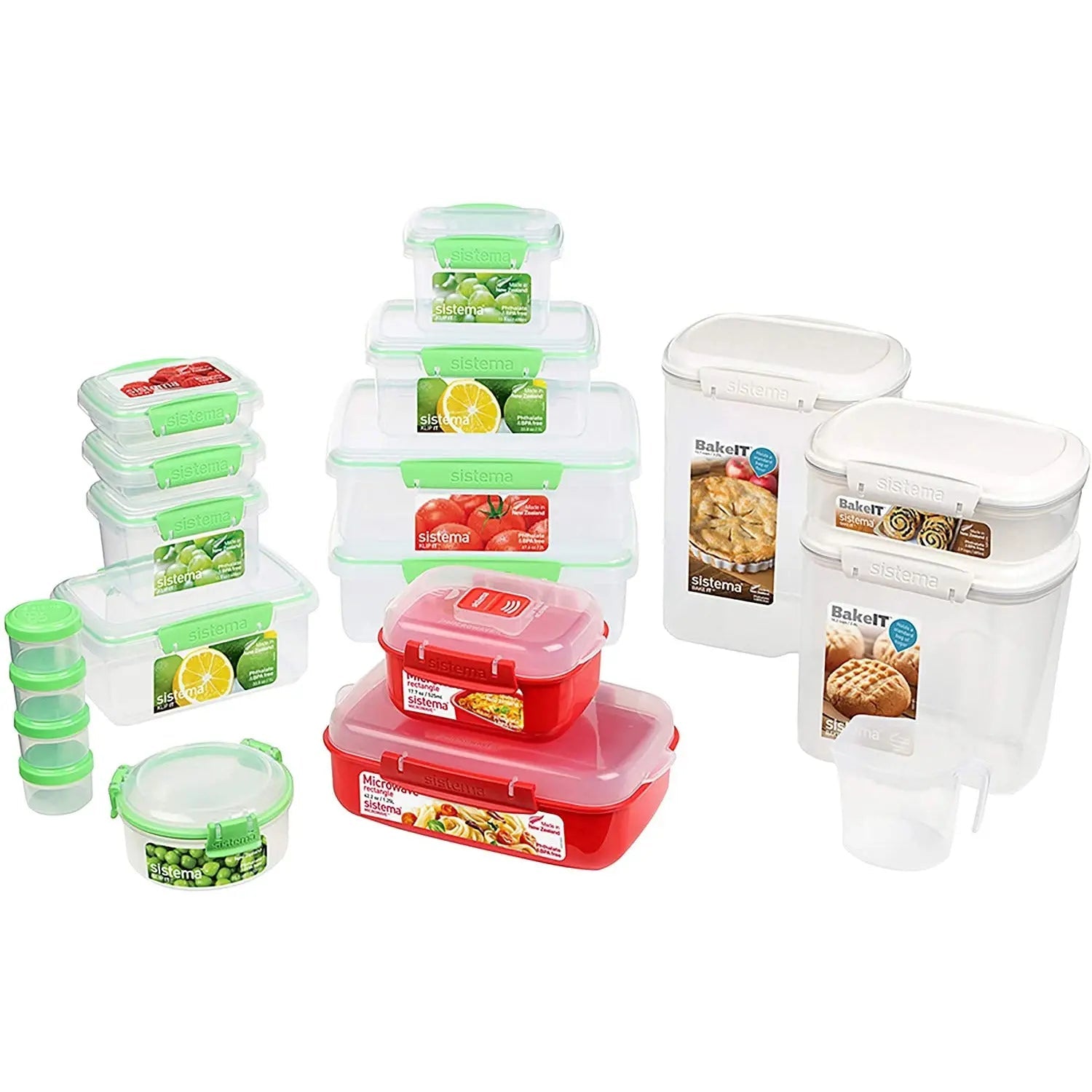
For bulk dry goods — rice, pasta, flour, sugar — uniform, stackable containers make the biggest visible difference, since they replace irregular packet shapes with flat, space-efficient blocks. The Kitchen Storage Solutions Starter Pack covers this well as a single set — 18 containers with lids means most bulk categories can be decanted in one go rather than buying containers one at a time as you notice gaps.
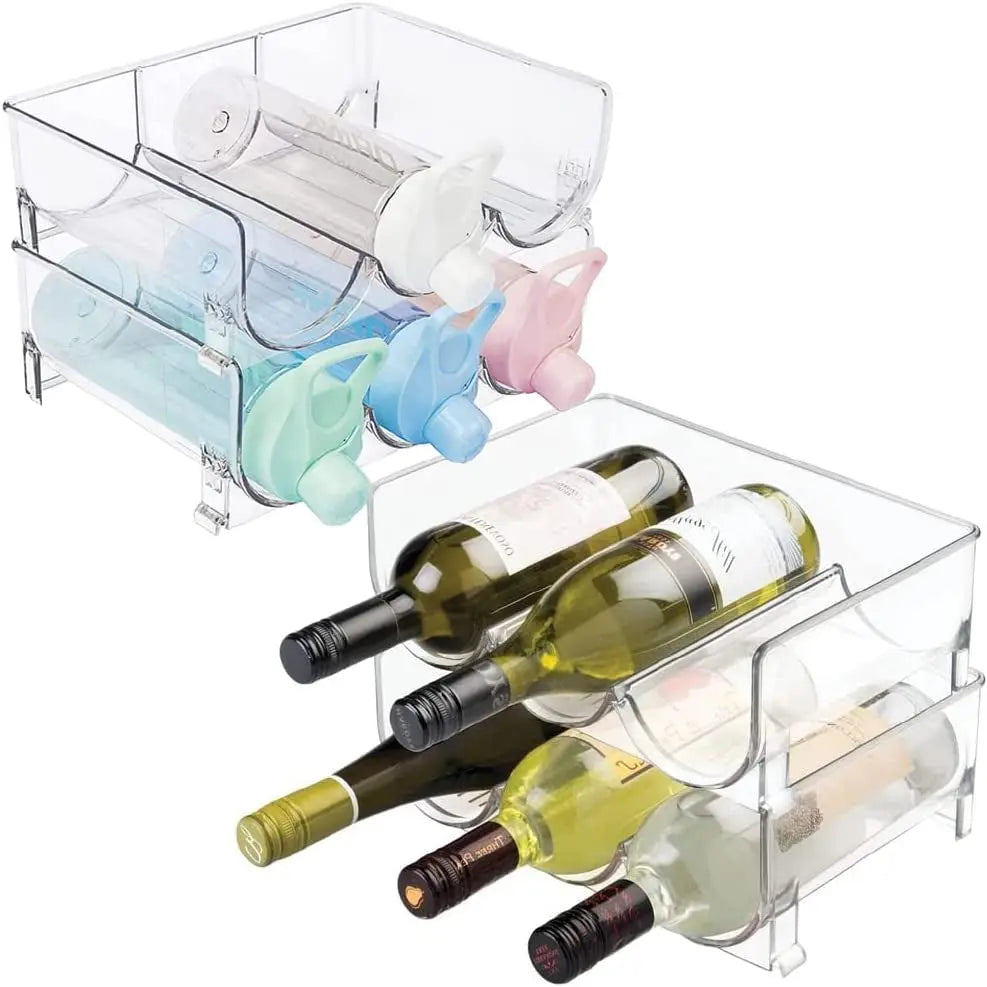
For pots, pans, and lids specifically — a category that tends to pile loose and become the messiest part of any kitchen storage system — a dedicated rack solves the actual problem rather than just hiding it in a bigger container. The SimpleHouseware Pantry Pan and Pot Lid Organiser Rack keeps lids upright and separated, so you're not lifting a stack of three to find the one that fits.
For smaller, irregular items — spice packets, sauce sachets, opened snack bags — an adjustable compartment organiser works better than a single large container, since it keeps each item visible and upright rather than buried. The Adjustable Kitchen Lid Organizer with 7 Compartments adapts to different item widths, which matters in a pantry where package sizes rarely match.
Labelling: the step most people skip
A container without a label works for the person who set it up and nobody else in the household. Labelling isn't about making the pantry look curated — it's what lets anyone put an item back in the right spot without having to guess, which is the actual reason systems fall apart within a few weeks. Simple, consistent labels (category name is enough — you don't need contents lists) do most of the work here.
A pantry organisation checklist
| Step | What to do |
|---|---|
| 1. Empty and sort | Group everything by category before buying anything |
| 2. Check dates | Consolidate duplicates and toss anything expired |
| 3. Zone by frequency | Everyday items at eye level, bulk stock higher, heavy items lower |
| 4. Match containers to contents | Uniform bins for bulk goods, compartment trays for small items |
| 5. Label everything | So the system survives being used by more than one person |
| 6. Revisit every few months | Re-sort as shopping habits and household needs change |
Common pantry organisation mistakes
- Buying containers before sorting. It's tempting to start with a container haul, but without knowing what needs to fit, you end up with the wrong sizes and gaps you notice too late.
- Treating "organised" as a one-time event. Pantries drift because life changes — a system set up once and never revisited slowly reverts to a pile.
- No fixed zones. If everyday snacks and rarely-used bulk stock share the same shelf, the shelf will always look cluttered no matter how nice the containers are.
- Skipping labels. The single most common reason a freshly organised pantry falls apart within a month.
Frequently asked questions
How often should I reorganise my pantry?
Every few months is a reasonable habit, since shopping patterns and household needs shift over time — a quick re-sort keeps zones accurate rather than letting them slowly drift out of date.
What containers are best for a small pantry?
Uniform, stackable containers make the biggest difference in a small pantry, since they replace irregular packet shapes with flat, space-efficient blocks that maximise vertical shelf space.
Should I decant everything into containers?
Not necessarily — focus decanting on bulk dry goods (rice, pasta, flour) where packet shapes waste space. Items already in compact, stable packaging don't always need to be moved.
How do I stop my pantry going back to a mess after a clean-out?
Assign every category a fixed zone based on how often it's used, and label shelves or containers clearly — most pantries fall apart not because the system was wrong, but because nothing had an obvious home to go back to.
What's the biggest mistake people make organising a pantry?
Buying containers before sorting. Sorting first reveals what you actually need to store and in what volume, which prevents buying the wrong sizes or too many of one type.