Cart
0
TL;DR: Choosing outdoor string lights comes down to three decisions: power source (solar for flexibility with no cords to run, plug-in for consistent brightness regardless of weather), length (measure the actual run including any droop or swag, not just the straight-line distance), and a genuine outdoor weather rating (look for IP65 or higher if the lights will be exposed to rain, not just "outdoor use" on the box). Getting the power source right matters more than any other decision, since it determines where you can realistically install the lights at all.
Outdoor string lights are one of the fastest ways to change how a patio, deck, or garden feels after dark, but the wrong choice usually shows up within the first few weeks — lights that fade to nothing on a cloudy week, a cord that can't reach a power point, or a string that stops working after the first real rain. Getting the basics right before you buy avoids all three. If you're planning a wider outdoor entertaining setup, our guide to keeping an outdoor entertaining area warm in winter covers the other half of making the space usable after dark.
Step 1: Solar or plug-in — this decision shapes everything else
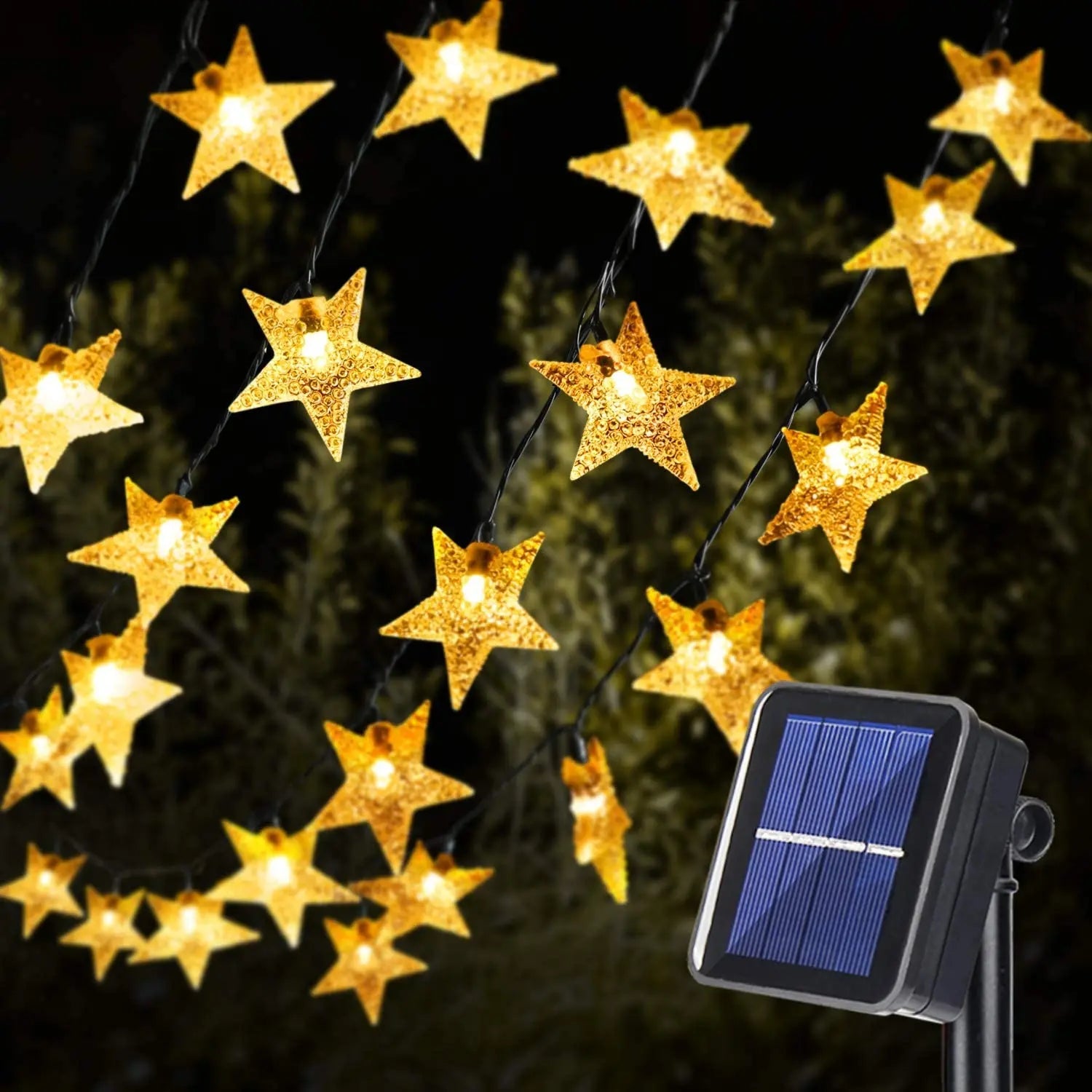
- Solar string lights charge via a small panel during the day and switch on automatically at dusk. They're the easier option for anywhere without a nearby power point — along a fence line, around a tree, or over a pergola with no easy cord run. The trade-off is that brightness and run time depend on how much direct sun the panel gets; a shaded spot will charge poorly even on a sunny day. The Star Solar String Light, 18m with 110 LEDs covers this well for a longer run, and also charges via USB as a backup on days without enough sun.
- Plug-in string lights give consistent, predictable brightness regardless of weather, since they're not relying on stored solar charge. They're the better choice for an entertaining area where reliable light matters more than installation flexibility, provided there's a power point within reach or you're comfortable running an outdoor-rated extension lead.
If you're unsure, solar is the lower-commitment option to start with — no cord planning required — but check the panel will genuinely get several hours of direct sun in its planned position before relying on it for an important space.
Step 2: Measure the actual run, not just the distance
String lights are sold by total length, but the mistake most people make is measuring the straight-line distance between two points rather than the actual path the lights will follow. A swagged run between posts (the gentle drooping curve that gives fairy lights their look) uses noticeably more length than a straight, taut line between the same two points — often 15–20% more, depending on how much sag you want.
Measure the full path, including any corners, and factor in extra length for swag if that's the look you're after. Buying slightly longer and having some left over is a smaller problem than running short partway across a deck.
Step 3: Check the actual weather rating, not just "outdoor use"
Plenty of string lights are labelled generically as suitable for outdoor use without specifying an actual ingress protection (IP) rating, which makes it hard to know how much weather they can genuinely handle. For anywhere exposed to rain — not just under a fully covered patio — look for an explicit IP65 rating or higher, which means the lights are protected against low-pressure water jets from any direction, not just light dust or occasional splashes.
The 2-Pack Solar Fairy String Lights, 20m/200 LEDs is IP65-rated, which is the level worth looking for if the run will sit anywhere genuinely open to the weather rather than under solid cover.
Choosing between warm white and multicolour modes
Most outdoor string lights now come with multiple lighting modes built in — steady warm white through to colour-changing and flash patterns. For everyday garden or patio ambience, a steady warm white setting reads as more considered and less like temporary party decor; save the colour-changing modes for actual events rather than nightly use, since a fixed warm glow tends to suit a garden space better long-term. The same warm-vs-cool logic that applies indoors — covered in our warm white vs cool white guide — carries outside too.
Indoor-style string lights for covered or protected spaces
Not every outdoor-adjacent space needs a fully weatherproofed string light. Under a covered verandah, along an enclosed balcony, or anywhere fully protected from direct rain, a lighter indoor-style option like Fairy Curtain Lights, 300 LED can work well as a backdrop-style feature, provided it's genuinely shielded from the weather rather than just under a light overhang.
Outdoor string light comparison at a glance
| Use case | Power source | What to check |
|---|---|---|
| Fence line, tree, no nearby power | Solar | Panel gets several hours direct sun |
| Entertaining area, reliable brightness needed | Plug-in | Power point within reach or outdoor extension lead |
| Fully exposed to rain | Either | IP65 rating or higher, explicitly stated |
| Covered verandah or balcony | Either | Lighter indoor-style options are fine here |
| Special event vs everyday ambience | Either | Steady warm white for everyday, multicolour modes for events |
Common outdoor string light mistakes
- Measuring the straight-line distance instead of the actual path, including swag, and buying a length that runs short.
- Relying on solar in a shaded spot, where the panel can't charge enough for a full evening of light.
- Trusting a vague "outdoor use" label instead of checking for an explicit IP rating on anywhere genuinely exposed to rain.
- Using an indoor-only string light outside, which shortens its lifespan significantly even under partial cover.
Frequently asked questions
Are solar or plug-in outdoor string lights better?
It depends on the location — solar is more flexible with no cord to run but depends on the panel getting several hours of direct sun; plug-in gives more consistent brightness regardless of weather but needs a nearby power point.
What IP rating do outdoor string lights need?
Look for IP65 or higher for anywhere genuinely exposed to rain, which protects against water jets from any direction rather than just light dust or splashes.
How much extra length do I need for a swagged look?
Roughly 15–20% more than the straight-line distance between your mounting points, depending on how much droop or sag you want in the curve.
Can I use indoor string lights outside under a covered patio?
Only if it's genuinely shielded from rain — a light overhang isn't always enough protection, and indoor-rated lights will degrade faster outdoors even under partial cover.
Do solar string lights work well in winter?
They can, but shorter daylight hours and lower sun angles in winter mean less charge overall — expect a shorter run time in the evening compared to summer unless the panel gets strong direct sun during the day.