Cart
0
TL;DR: The most reliable way to keep an outdoor entertaining area warm in winter is to combine a radiant heat source with wind-blocking and soft layers — a heater alone loses most of its effect in an open breeze. Position an electric strip or panel heater to warm people directly rather than the open air, use a weatherproof outdoor power point, and add rugs, throws and a windbreak to hold the warmth in. Get the placement and power set-up right first, then layer comfort on top.
Alfresco areas and covered patios get plenty of use across an Australian summer, then often sit empty from May to August simply because nobody wants to sit outside in the cold. With the right heating and a bit of wind management, most covered or semi-covered entertaining areas can stay comfortable well into winter — no renovation required.
What type of outdoor heating suits an entertaining area?
Outdoor heaters generally fall into a few categories, and each behaves differently once you're outside rather than in a closed room.
- Radiant infrared heaters (strip or panel style) warm people and objects directly in their line of sight, rather than heating the surrounding air first. Because outdoor air disperses quickly, this direct-warmth approach tends to hold up better in an open-sided area than heaters that rely on warming the air around them.
- Gas patio heaters (freestanding mushroom-style units) throw heat in a wide radius and don't need a power point, but they need a gas bottle changed and stored safely.
- Fire pits and chimineas add ambience and real warmth but need solid fuel, ventilation, and a fixed non-flammable base — not ideal under a low patio roof.
- Fan-forced or convection heaters move warm air, which works well indoors but loses much of its effect the moment a breeze moves through an open entertaining area.
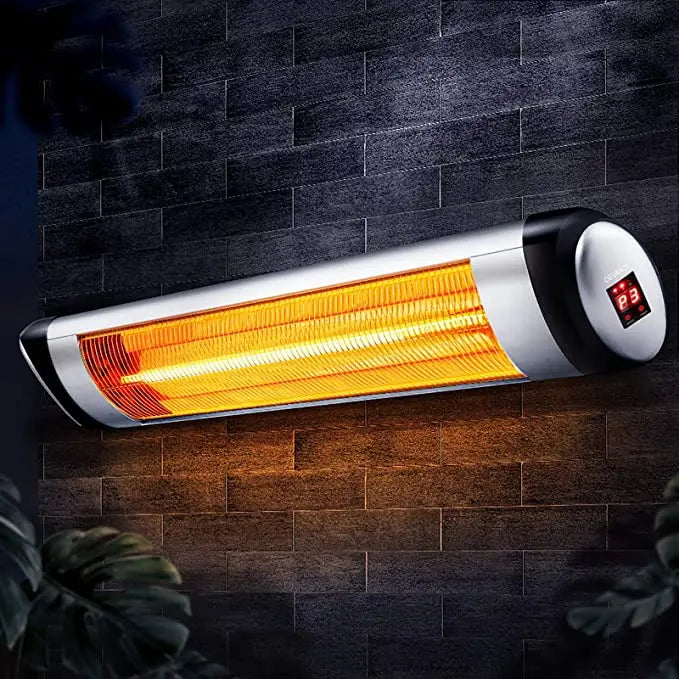
For a covered or semi-covered patio, deck or alfresco space, a corded electric radiant heater is usually the simplest option to add: no gas bottle, no flame to manage, and it plugs into a standard power point. Pattan Australia stocks a 2000W infrared strip heater listed for indoor and outdoor use — a slim silver panel that runs on radiant infrared and connects via a standard corded electric supply, which suits a fixed spot near an outdoor lounge or dining setting.
Where should you place an outdoor heater, and how do you keep it safe?
Placement does most of the work. A radiant heater warms whatever is directly in front of it, so position it where people actually sit — angled across a seating area or dining table rather than into open space.
A few placement and safety basics matter more outdoors than in:
- Keep clearance from furnishings, umbrellas and soft furnishings. Follow the clearance distance in the heater's instructions and don't let cushions, throws or umbrella fabric sit close to the heating element.
- Use a weatherproof, RCD-protected outdoor power point. Outdoor power points should be rated for outdoor use and protected by a residual current device (RCD), which cuts power quickly if a fault occurs — standard safety practice for anything electrical outside.
- Keep cords away from wet areas. Run the power cord clear of pooling water, garden beds, and foot traffic, and avoid running it under rugs where it can't be seen.
- Never leave a heater unattended or running with nobody in the area.
If your outdoor entertaining area doesn't already have a suitable weatherproof power point, or you're considering mounting a heater permanently or running new outdoor wiring, that work must be done by a licensed electrician. Don't attempt DIY wiring or install a new power point yourself — a licensed electrician can confirm the circuit can safely handle the load and that the point meets outdoor safety standards. A plug-in heater used from an existing, properly rated outdoor power point doesn't need any electrical work at all — it's simply a matter of running it from a safe point.
Layering warmth: heater plus rugs, throws and wind-blocking
A heater does the heavy lifting, but the areas around it matter just as much for how warm the space actually feels. Wind is usually the biggest factor working against you outdoors — even a mild breeze carries heat away faster than a heater can replace it.
A few layers that make a real difference:
- Block the wind first. Outdoor blinds, a screen, or simply positioning seating against a solid wall rather than an open edge reduces how much heat gets carried off before anyone feels it.
- Add rugs underfoot. Cold pavers or decking pull warmth from feet fast; an outdoor-rated rug breaks that contact.
- Keep throws within reach. A stack of throws or blankets on a bench or in a nearby basket means guests can layer up without leaving their seat. If you're also thinking about warmth indoors for the nights guests move between the two, our guide to choosing an electric heated throw rug covers how they work and how to use them safely.
- Close in the space where you can. Even a temporary clear outdoor blind across one open side of a patio cuts wind chill noticeably.
None of these replace a heater, but together they mean the heater doesn't have to work as hard — which matters in an open-sided area where warmth escapes constantly.
How many heaters does an outdoor entertaining area need?
This comes down to the size and openness of the space rather than a fixed rule. The table below is a general guide.
| Area type | Typical approach | Notes |
|---|---|---|
| Small, mostly enclosed nook (2-4 seats) | One radiant strip or panel heater | Position across the seating, not into open air |
| Covered patio or alfresco (4-8 seats) | One to two radiant heaters, positioned at different ends | Combine with a windbreak on the open side |
| Large or fully open deck | Multiple heaters plus wind-blocking | Heaters alone struggle in open wind — layering matters most here |
If you regularly entertain a larger group outdoors, it's usually more effective to add a second heater and a windbreak than to rely on one larger unit working harder against an open breeze.
A quick checklist before your next outdoor gathering
- Heater positioned to face seating, with clear space around it
- Power point is outdoor-rated and RCD-protected
- Cord run clear of wet areas and foot traffic
- Windbreak or screen up on the exposed side
- Rugs down, throws within reach
- Heater never left running unattended
Frequently asked questions
What type of outdoor heating suits an entertaining area?
Radiant infrared heaters generally suit covered or semi-covered entertaining areas well, because they warm people directly rather than relying on warming the surrounding air, which disperses quickly outdoors. Gas patio heaters and fire pits are alternatives but bring extra fuel handling and clearance requirements.
Do I need an electrician to set up outdoor heating?
Only if you're installing a new power point, mounting a heater permanently, or doing any fixed wiring — that work must be done by a licensed electrician. A plug-in heater used from an existing, properly rated outdoor power point doesn't require any electrical work.
Can an electric strip heater be used outdoors?
Some electric strip heaters, including radiant infrared panel styles, are listed for both indoor and outdoor use — check the specific product listing to confirm before buying. Always run it from a weatherproof, RCD-protected outdoor power point and keep the cord away from wet areas.
How do I stop wind from undoing an outdoor heater's warmth?
Add a windbreak, outdoor blind or solid screen on the exposed side of the space, and position seating against it rather than in the open. Wind carries heat away faster than most heaters can replace it, so blocking it does as much as the heater itself.
What else can I do besides using a heater to stay warm outside?
Rugs underfoot stop cold pavers or decking pulling warmth from feet, and throws or blankets within reach let guests layer up as the evening cools. Combined with a windbreak, these reduce how hard the heater needs to work.
Is it safe to leave an electric outdoor heater running unattended?
No. Any electric heater, indoors or outdoors, should be switched off when nobody is in the area, and cords and clearances should be checked each time it's set up, particularly after rain.