Cart
0
TL;DR: Choosing a wall clock comes down to matching its size to the wall it's going on (as a rough guide, the clock should take up no more than a third of the visible wall space it sits within), hanging it at a height where the centre lines up roughly with eye level, and deciding whether you want it to double as a decorative feature or stay purely functional. A large, styled piece works as a focal point on an otherwise empty wall; a smaller, quieter design suits a wall that's already doing visual work with art or shelving.
A wall clock is one of the few household items that has to work on two levels at once — genuinely useful for checking the time, and permanently visible as part of the room's look, unlike most decor you can swap out on a whim. Getting the size and placement right matters more here than with almost any other piece. If you're styling the wall as part of a bigger vignette — above a console table or sideboard — our guide to styling a console table covers how to balance a clock against other decor pieces in the same space.
Sizing a wall clock to the wall it's going on
The most common mistake is choosing a clock based on how it looks close-up in a photo rather than how it will read from across the room. A clock that looks proportionate held at arm's length can disappear on a large, empty wall, while an oversized statement piece can dominate a smaller space.
As a general guide:
- Small walls or above a desk: a compact clock, roughly 25–30cm, keeps things in proportion without overwhelming a tight space.
- Standard living or dining walls: a mid-size clock, around 35–45cm, reads clearly from typical seating distances without needing to be the only thing on the wall.
- Large, mostly empty feature walls: this is where an oversized clock, 50cm or more, can genuinely work as a statement piece rather than looking like it's trying too hard — but only if the wall doesn't already have other visual competition.
Placement height: aim for eye level, not a fixed number
There's no single universal height in centimetres that works for every room, since ceiling height and furniture placement change what "eye level" actually looks like in a given space. The more reliable approach is to aim for the centre of the clock sitting roughly at seated or standing eye level for the room's main use — lower in a dining area where people are usually seated, higher in an entryway or hallway where people are standing and passing through.
If the clock is going above furniture — a console table, sideboard, or desk — leave a reasonable gap above the furniture (typically 15–20cm) so the two don't visually compete or look like they're touching.
Decorative statement piece vs quiet, functional design
Before choosing a style, it helps to be clear on which job the clock is actually doing in the room.
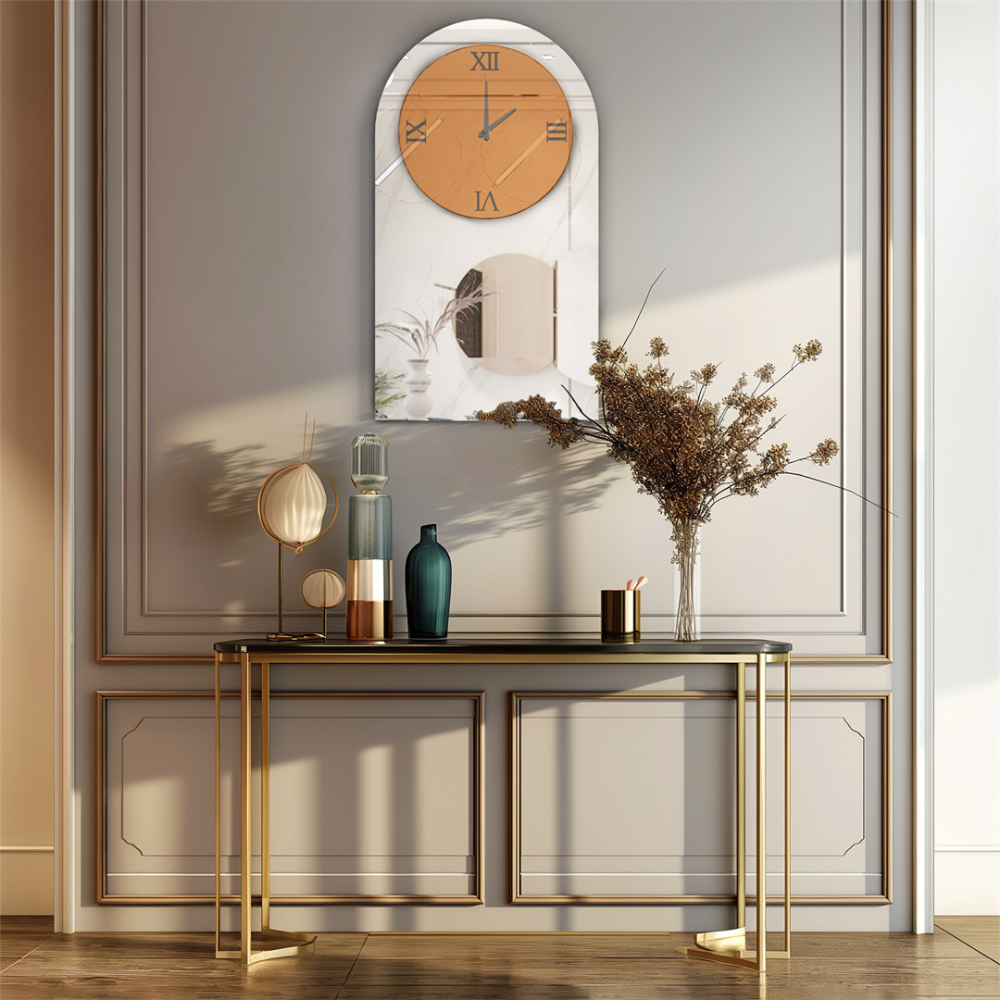
A statement clock — an interesting shape, a mirrored face, an oversized silhouette — works best on a wall that has the visual space to support it, typically somewhere without a lot of other decor competing for attention. The Modern Silver Mirror Wall Clock is a good example of this dual-purpose approach — it functions as both a wall clock and a mirrored accent, which suits an entryway, hallway, or a living room wall that could use a reflective element to bounce a bit of extra light around.
A functional, practical clock makes more sense in spaces where clarity matters more than styling — a kitchen, a home office, or a study nook where you actually need to glance at the time at a distance without squinting. The Large LCD Screen Electronic Digital Wall & Desk Clock suits this use case well, with a genuinely readable display from across a room and the flexibility to sit on a desk instead of the wall if needed.
Analogue or digital — it's a room-use decision, not just a style one
Analogue clocks generally read as warmer and more decorative, which is why they dominate living rooms, hallways, and bedrooms where the clock is part of the room's overall look. Digital displays are easier to read precisely at a glance and often include useful extras like an alarm or temperature display, which is why they suit more functional spaces like a kitchen, office, or bedside table better than a purely decorative room.
Neither is objectively better — it's a genuine trade-off between the ambient, always-decorative quality of an analogue face and the precise, glanceable clarity of a digital one.
Wall clock choice at a glance
| Room / wall type | Recommended size | Style direction |
|---|---|---|
| Above a desk or small wall | 25–30cm | Compact, functional or minimal |
| Standard living or dining wall | 35–45cm | Balanced — works as light decor |
| Large, empty feature wall | 50cm+ | Statement piece, oversized shape |
| Entryway or hallway | Mid-size | Slightly higher placement, standing eye level |
| Kitchen or home office | Any size, prioritise readability | Digital or high-contrast analogue |
Common wall clock mistakes
- Choosing size based on a close-up photo rather than how it will read from typical viewing distance in the actual room.
- Hanging too high or too low relative to how the room is actually used — sitting versus standing changes what counts as eye level.
- Placing a statement clock on an already busy wall, where it competes with existing art or shelving instead of standing out.
- Prioritising style over readability in functional spaces like a kitchen, where you genuinely need to check the time at a glance.
Frequently asked questions
What size wall clock should I buy for a living room?
For a standard living room wall, a mid-size clock around 35–45cm generally reads well from typical seating distances without overwhelming the space or getting lost on it.
How high should a wall clock be hung?
Aim for the centre of the clock at roughly eye level for how the room is mainly used — lower for a seated dining area, higher for a hallway or entryway where people are standing.
Is an analogue or digital wall clock better?
Neither is universally better — analogue suits decorative spaces like living rooms and hallways, while digital suits functional spaces like kitchens and offices where quick, precise readability matters more than styling.
Can a wall clock also work as a mirror?
Yes — a mirrored-face wall clock, like a silver mirror clock design, can double as a small decorative mirror and a light-reflecting accent, which works particularly well in entryways or hallways.
How much space should be left between a wall clock and furniture below it?
Around 15–20cm is a reasonable gap above a console table, sideboard, or desk, so the clock and furniture read as two distinct elements rather than visually crowding each other.