Cart
0
TL;DR: The safest way to store kitchen knives is any method that keeps the blade fully covered or the edge facing away from where a hand naturally reaches — a magnetic strip or block, a knife block with individual slots, or an in-drawer organiser with dedicated knife slots, rather than loose in a drawer with other utensils. The right choice mostly comes down to counter space and whether there are kids in the house: magnetic holders save the most bench space, blocks are the easiest to use one-handed while cooking, and in-drawer organisers keep blades completely out of sight and reach.
Loose knives in a cutlery drawer are one of the most common small hazards in an Australian kitchen — not because the knife itself is dangerous sitting still, but because a hand reaching in quickly for a spoon doesn't know which way an edge is facing. Fixing this is usually a five-minute swap, not a renovation. If you're also tackling the rest of the drawer while you're at it, our guide to organising a kitchen drawer with dividers covers the cutlery and utensil side of the same project.
Magnetic knife holders — best for saving counter space
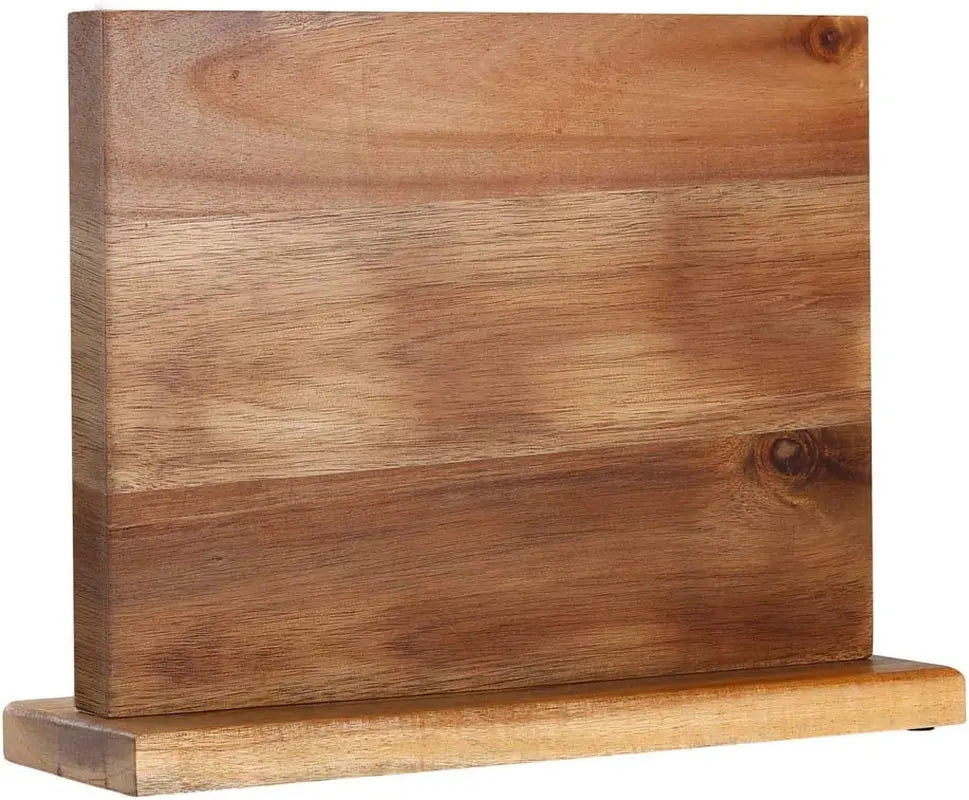
A magnetic strip or magnetic block holds knives by the flat of the blade using strong neodymium magnets, so the knife sits fully exposed but vertical, out of the way of anything sliding across the bench. The main appeal is footprint: a magnetic holder like the Home Kitchen Magnetic Knife Block Holder Rack takes up a fraction of the bench space a traditional block needs, which matters in a smaller Australian kitchen where every centimetre of counter is doing double duty.
The trade-off is that magnetic holders leave blades visible and exposed, so they're a poor fit for a household with young kids who can reach the mounting height, or anywhere the holder would sit within easy reach of a bench a toddler can pull themselves up on. A bamboo option like the Magnetic Knife Holder — All Natural Bamboo Knife Block works as a freestanding countertop version if wall-mounting isn't an option in a rental.
Knife blocks — best for one-handed use while cooking
A traditional block with individual slots is the most familiar format, and it's still the easiest to use mid-cook — you can pull the right knife out one-handed without looking, and the blade goes straight back into its own slot rather than needing to line up against a magnet. The Deluxe Magnetic Knife Block is a hybrid — a double-sided block that uses internal magnets rather than open slots, so blades aren't touching a hard surface on every insertion, which helps them hold their edge for longer.
A compact option like the Square Knife Block Holder in bamboo is worth considering if a full-size block is too much bench real estate for a smaller kitchen but you still want individual slots.
In-drawer knife organisers — best for keeping blades fully out of sight
If bench space is limited or there's no realistic way to keep a wall-mounted or countertop holder out of a child's reach, an in-drawer organiser is the safest default. The Knife Block Drawer Organiser, which holds up to 11 knives in individual slots inside a hardwood tray, sits inside a standard drawer so the blades are completely covered and the drawer itself can still lock or be fitted with a child safety catch if needed.
The trade-off is convenience — reaching into a drawer and finding the right slot takes a beat longer than grabbing straight off a countertop block, and it only works if the drawer is deep enough to fit the tray without the knives catching on the runner above.
Comparing the three storage methods
| Method | Counter space used | Child safety | Best for |
|---|---|---|---|
| Magnetic strip/block | Minimal — wall or slim footprint | Lower — blades exposed and visible | Small kitchens, no young kids nearby |
| Traditional knife block | Moderate — sits on the counter | Moderate — blades covered, block itself is reachable | Frequent cooks who want one-handed access |
| In-drawer organiser | None — stored inside a drawer | Highest — fully hidden, drawer can be locked | Households with young kids, limited counter space |
Common mistakes to avoid
- Storing knives loose in a general utensil drawer, where a hand reaching for a spoon can find the edge of a blade instead.
- Mounting a magnetic strip within reach of a bench a young child can climb, which defeats the main safety benefit of getting knives off the counter.
- Washing knives in a dishwasher regardless of storage method — most kitchen knives, especially anything with a wooden handle, last longer and stay sharper hand-washed and dried immediately, whichever storage option you use.
- Forcing a knife into the wrong-sized slot on a block, which can chip the tip over time — check the block's slot sizing against your longest knife before buying.
Frequently asked questions
Is a magnetic knife holder safe with kids in the house?
It can be, but only if it's mounted well above a child's reach and away from any surface they can climb — otherwise an in-drawer organiser or a block with covered slots is the safer choice.
Do magnetic knife holders damage knife edges over time?
No, properly designed magnetic holders hold the flat of the blade rather than the edge, so they don't dull knives any faster than a block does — just avoid dragging the edge across the magnet when placing a knife.
How many knives does a standard in-drawer organiser hold?
It varies by model, but a hardwood in-drawer tray typically holds around 8–11 knives of mixed sizes in individual slots, similar to a countertop block.
Should steak knives be stored differently to a chef's knife?
Not necessarily — a double-sided magnetic block or a drawer organiser with mixed slot sizes can hold both together, as long as the slots or magnet strength suit the smaller blade length of a steak knife.
What's the safest option for a small rental kitchen with no wall space?
An in-drawer organiser is usually the best fit for a rental — no drilling for wall mounting, no lost counter space, and it can move with you when you leave.