Cart
0
TL;DR: The right dish drying rack for a small kitchen comes down to where it actually lives day-to-day — an over-the-sink or expandable rack folds away or spans the sink itself when bench space is tight, a fixed two-tier rack with a draining board suits a kitchen with a permanent spot for it, and a roll-up rack works best as an occasional-use option that lives in a drawer between uses. Drainage matters as much as size: look for a rack with a drainboard or spout that actually channels water into the sink, not just a tray that needs emptying by hand.
A dish rack sounds like the simplest purchase in a kitchen, but it's one of the few things that sits on the bench permanently, so getting the footprint wrong is a daily annoyance rather than a one-off inconvenience. In a smaller Australian kitchen — especially older apartments with limited bench length — the shape of the rack matters more than how many dishes it technically holds.
Fixed two-tier racks — best when you have a permanent spot for it
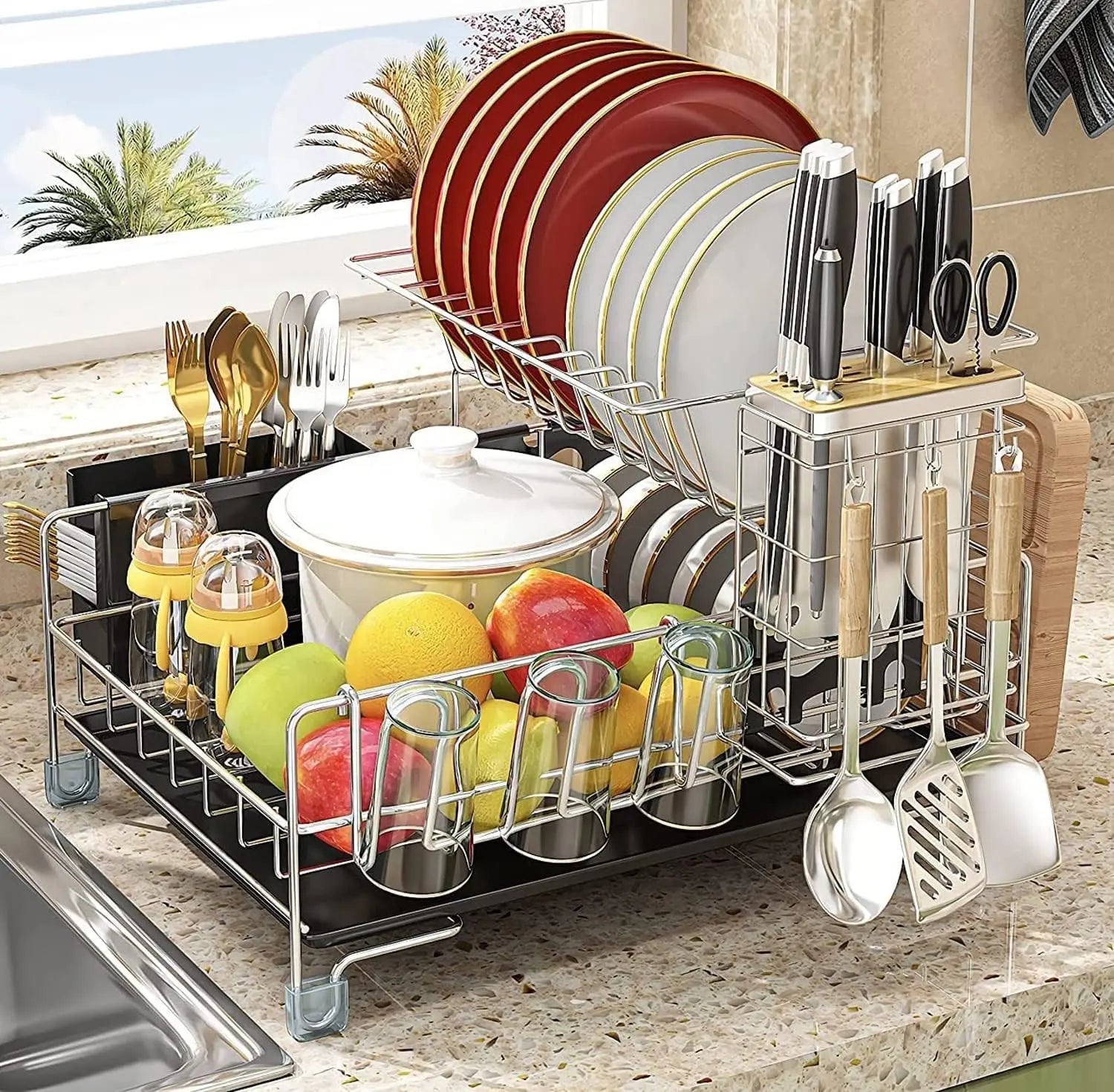
A standard two-tier rack with a built-in draining board, like the 2-Tier Stainless Steel Dish Drying Rack with Draining Board, holds the most at once and usually comes with extras built in — a cutlery rack, cup holder, and sometimes a knife holder slot, which keeps everything draining in one place instead of scattered across the bench. This is the right choice if the rack has a dedicated spot next to the sink and doesn't need to move for meal prep.
The Dish Drying Rack with Cup Holder is a similar large-capacity option, worth considering for a household that runs a full sink of dishes at once rather than a few items at a time.
Expandable and over-the-sink racks — best for tight bench space
An expandable rack adjusts in length to fit different sink or bench widths, and an over-the-sink design sits directly above the sink itself, using space that would otherwise be empty. The Expandable Dish Drying Rack over Sink, Stainless Steel is built for exactly this — it frees up bench space entirely by draining straight down into the sink rather than onto a tray that needs emptying.
For a corner sink or an awkward layout, the Triangle Roll-Up Dish Drying Rack for Sink Corner is a smaller-footprint option shaped specifically to sit in a corner rather than along a straight edge.
Roll-up racks — best for occasional use or a fully hidden setup
A roll-up mat-style rack, like the Expandable Roll Up Dish Drying Rack with Storage Baskets, lays flat over the sink or bench when in use and rolls up small enough to store in a drawer or cupboard the rest of the time. This is the best option for a kitchen where the bench needs to stay completely clear between uses — share houses, small rentals, or anyone who only hand-washes occasionally rather than as a daily routine.
Comparing dish rack types
| Type | Bench footprint | Capacity | Best for |
|---|---|---|---|
| Fixed two-tier with draining board | Permanent, largest | Highest | A dedicated spot next to the sink, full sink loads |
| Expandable / over-the-sink | Adjustable, sits above the sink | Moderate | Small kitchens needing the bench back |
| Roll-up mat rack | None when stored | Lower, occasional use | Share houses, rentals, infrequent hand-washing |
Getting drainage right
The biggest difference between a good and a frustrating dish rack isn't capacity, it's where the water actually goes. A rack with a sloped drainboard and a spout that directs water back into the sink means dishes can be left to dry without anyone needing to empty a tray. A flat tray with no drainage point, by contrast, needs to be tipped out by hand — fine for occasional use, but a genuine daily annoyance in a household that hand-washes regularly.
Common mistakes to avoid
- Buying based on capacity alone without checking the rack's length against the actual bench space available — an oversized rack just gets pushed aside and stops being used.
- Choosing a flat tray with no drainage spout for a kitchen that hand-washes daily, which turns drying into two chores instead of one.
- Ignoring rust resistance — a genuine stainless steel or rust-proof coated rack lasts significantly longer in a kitchen with daily use than a painted or bare-metal alternative.
- Overlooking corner and over-sink options in a small kitchen, where a standard rectangular rack simply won't fit the available bench length.
Frequently asked questions
What's the best dish rack for a small apartment kitchen?
An expandable or over-the-sink rack is usually the best fit, since it uses the space directly above the sink rather than taking up separate bench space.
Do roll-up dish racks hold as many dishes as a fixed rack?
Generally no — roll-up mat racks suit smaller, more frequent loads rather than a full sink's worth of dishes, which is why they work best for occasional use or smaller households.
How do I stop a dish rack from rusting?
Choose a genuine stainless steel model rather than a painted or coated metal one, dry the rack itself occasionally rather than leaving it permanently wet, and empty any drip tray regularly so water doesn't sit.
Can a dish rack go over any size sink?
Expandable racks are designed to adjust across a range of sink widths, but it's worth checking the rack's minimum and maximum length against your specific sink before buying, especially for a single or corner sink.
Is a dish rack with a cutlery holder worth it?
Yes, for most households — keeping cutlery draining separately from plates and bowls reduces clutter on the rack itself and makes it easier to put cutlery away first once it's dry.