Cart
0
TL;DR: Choosing a towel rail comes down to three decisions — heated or standard, wall-mounted with fixings or self-adhesive, and sized to the number of towels it actually needs to hold. A heated towel rail is worth the running cost in a bathroom without much airflow, where towels otherwise stay damp between uses; a standard rail is fine anywhere towels dry properly on their own. Self-adhesive rails suit a rental or a light-use hand towel, while a drilled, wall-mounted rail is the sturdier choice for a main bath towel that takes real daily weight.
A towel rail is easy to treat as an afterthought, but it's one of the few bathroom fittings used every single day, multiple times a day, so getting the type and size wrong shows up immediately — either as a towel that never quite dries or a bar that comes loose within a few months of daily use.
Heated towel rails — worth it for bathrooms with poor airflow
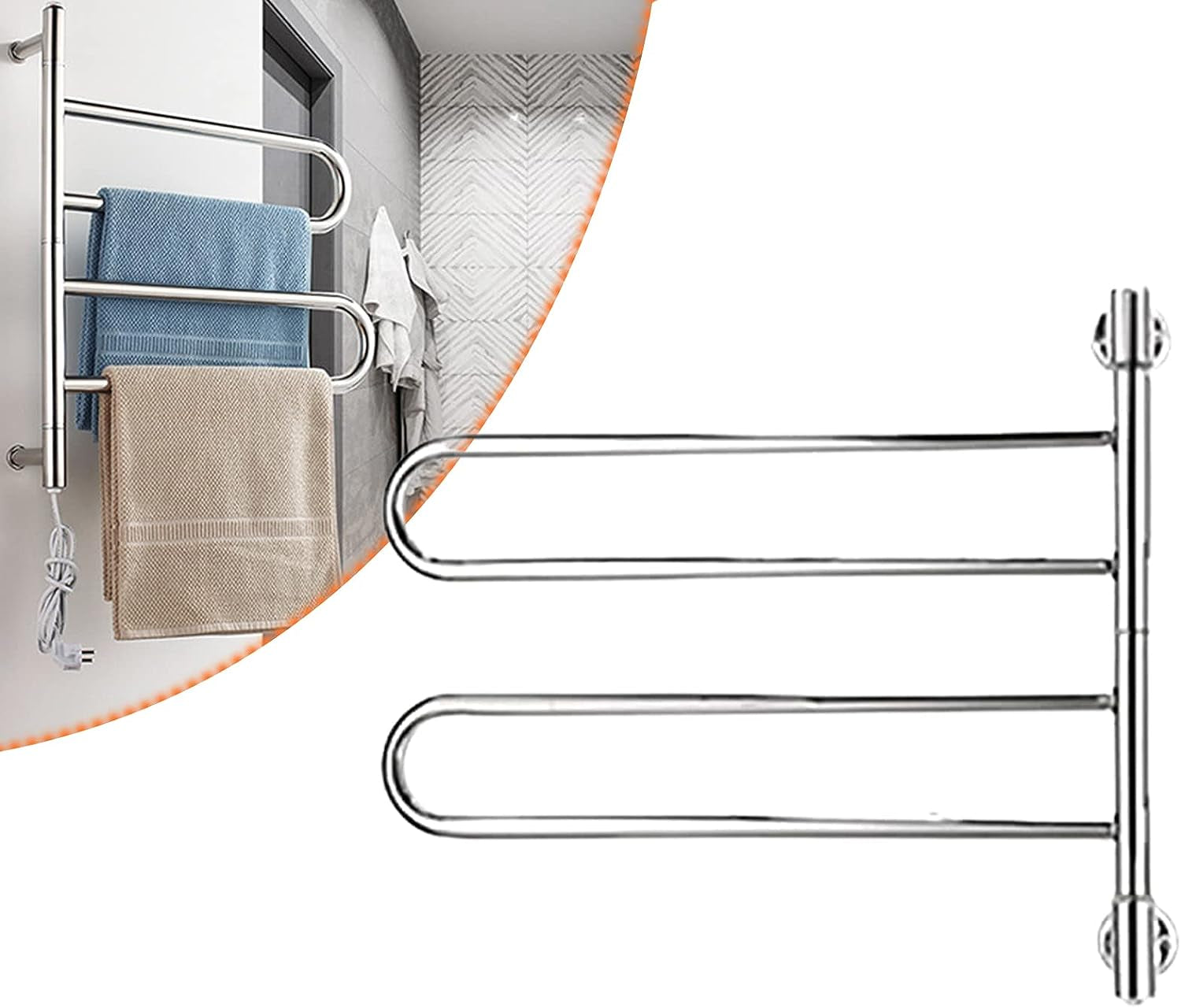
A heated towel rail keeps towels warm and actively helps them dry between uses, which matters most in bathrooms with limited ventilation, no window, or a shower that runs frequently through the day. The Electric Heated Towel Rail Radiator with 180° Rotating Thermostat adds a rotating, thermostat-controlled bar, so heat output can be adjusted rather than running at a fixed level year-round — useful in Australian climates where a bathroom might need real heat in a Melbourne winter and barely any in a Queensland summer.
An Electric Heated Towel Rail in aluminium is a simpler, fixed-bar alternative — a reasonable option if the rotating feature isn't necessary and the priority is just getting towels dry faster than open air alone would manage.
Standard (unheated) towel rails — fine anywhere towels dry properly on their own
If the bathroom already has decent airflow — a window, an exhaust fan that's actually used, or towels that don't see back-to-back use — a standard rail does the job without the ongoing running cost of a heated one. The Towel Rail, 300mm, White is a simple, compact option suited to a smaller bathroom or an ensuite where one bar is enough.
For a main bathroom with heavier daily use, the Mindset Steel Towel Bar in Mineral Infinite Grey is rated to hold up to 4.4 lbs and finished to resist rust, which matters in a bathroom that stays humid for long stretches of the day.
Wall-mounted vs self-adhesive — match it to how permanent the fixing needs to be
A drilled, wall-mounted rail is the sturdier option and the right choice for anything carrying real daily weight — a main bath towel, or a household with more than one person using the same rail. Self-adhesive rails, like the Adhesive Towel Bar 5-Piece Set, avoid drilling entirely, which makes them the better fit for a rental or anywhere putting holes in the wall isn't an option — but they're better suited to lighter-use spots like a hand towel near the basin rather than a heavily used main bath towel.
For a hand towel specifically, a Hand Towel Holder/Ring, self-adhesive is a purpose-built option rather than using a full-length bar for a towel that doesn't need one.
Comparing towel rail types
| Type | Running cost | Fixing | Best for |
|---|---|---|---|
| Heated, wall-mounted | Ongoing electricity cost | Drilled, permanent | Poor-airflow bathrooms, colder climates |
| Standard, wall-mounted | None | Drilled, permanent | Well-ventilated bathrooms, main bath towels |
| Self-adhesive | None | No drilling, lighter duty | Rentals, hand towels, light daily use |
Common mistakes to avoid
- Installing a heated towel rail in a bathroom that already dries towels fine on its own, which just adds an ongoing running cost with little practical benefit.
- Using a self-adhesive rail for a heavy, frequently-used main bath towel, where the adhesive mount isn't rated for the daily weight and use a drilled fixing handles easily.
- Undersizing the rail for the household — a single short bar in a shared bathroom means towels overlap and don't dry properly between uses.
- Skipping the thermostat/rotation check on a heated rail — a fixed, non-adjustable heated rail can run warmer than needed for most of the year in milder Australian climates.
Frequently asked questions
Is a heated towel rail worth the electricity cost in Australia?
It depends on the bathroom — in a poorly ventilated or consistently humid bathroom, a heated rail earns its running cost back in genuinely drier towels and less mildew smell; in a well-ventilated bathroom it's more of a comfort upgrade than a necessity.
Can a self-adhesive towel bar hold a full bath towel?
Lighter self-adhesive bars are better suited to hand towels or light daily use — for a main bath towel used daily by more than one person, a drilled, wall-mounted rail is the more reliable choice long-term.
Should a heated towel rail run all the time?
Most heated rails with a thermostat are designed to be left on, cycling to maintain a set temperature rather than running at full output constantly — check the specific model's manual, but a rotating, adjustable model gives more control over this than a fixed-output one.
What size towel rail suits a small ensuite?
A single compact rail around 300mm is generally enough for a small ensuite or single-user bathroom, while a shared main bathroom benefits from a longer bar or multiple rails.
Does electrical work need a licensed electrician?
Yes — any hardwired electric heated towel rail installation should be connected by a licensed electrician rather than DIY-wired, in line with standard Australian electrical safety requirements.