Cart
0
Quick answer: Fill about two-thirds of each shelf and leave a third empty, alternate vertical stacks with horizontal ones, and group objects in odd numbers — usually threes — at varying heights.
TL;DR: A styled bookshelf looks considered because of what is left out, not what is added. The single most common mistake is filling every shelf to capacity, which reads as storage rather than styling no matter how good the individual objects are. Work to roughly two-thirds full. Alternate vertical book stacks with horizontal ones, because that rhythm is what stops the eye sliding straight past. Group in odd numbers at different heights. And treat the shelf's own proportions as the starting point — a 60 cm shelf and a 100 cm shelf want genuinely different arrangements, so measure before you buy anything to put on it.
Key facts
- Fill roughly two-thirds of each shelf; the empty third is what makes it read as styled.
- Group objects in odd numbers, most often threes.
- Alternate vertical book stacks with horizontal ones on every shelf.
- Heavy items belong on lower shelves, for both visual balance and fixing safety.
- Wall-mounted shelves must be fixed into studs or rated anchors, never plasterboard alone.
- Leave roughly 3 cm to 5 cm of clearance above the tallest book so the shelf does not feel crammed.
Start With the Shelf, Not the Objects
Measure before you style. Length decides how many groupings a shelf can hold without looking cluttered. A 60 cm shelf realistically holds two groupings; a 100 cm shelf holds three.
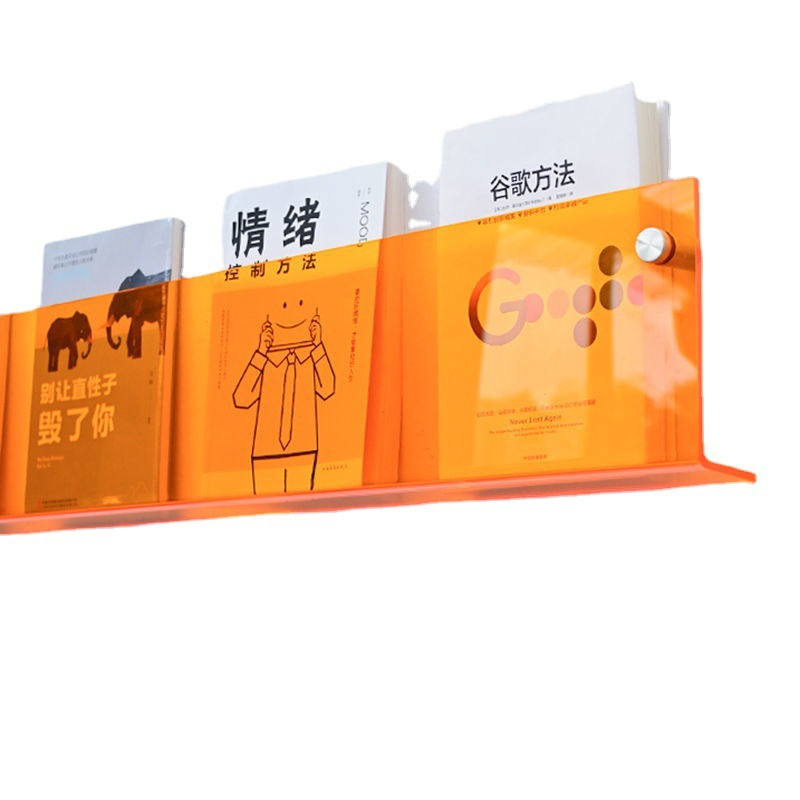
Match the shelf to the wall, not the book count. A wall-mounted acrylic shelf comes in 60 cm, 80 cm and 100 cm — the 60 cm suits a narrow alcove, the 100 cm spans above a desk or bedhead. Clear acrylic effectively disappears, which matters in a small room where a timber shelf would read as another piece of furniture.
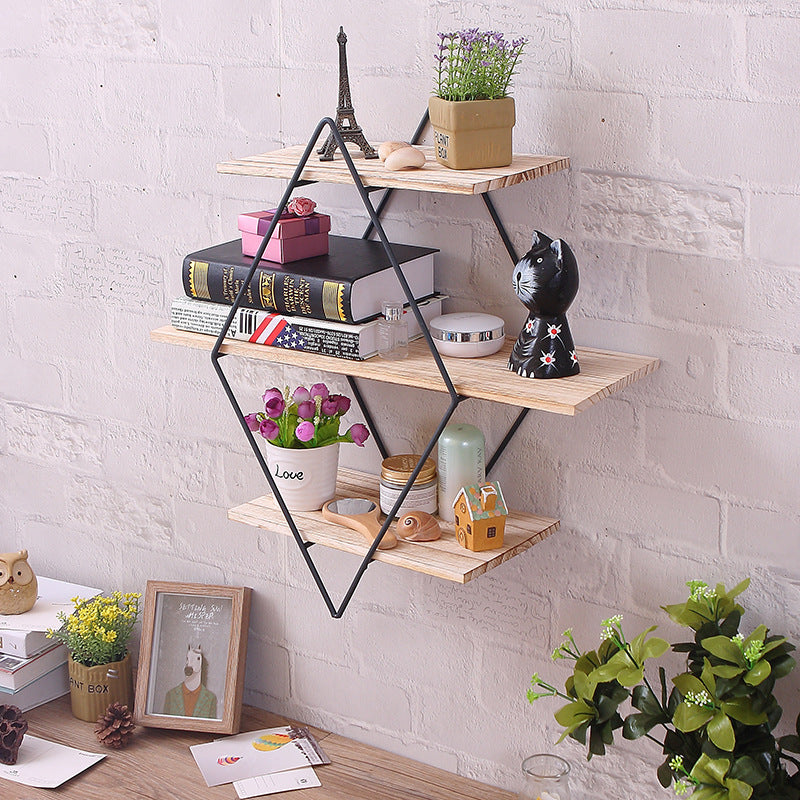
Consider whether the shelf should be seen at all. A decorative frame becomes part of the arrangement. A retro diamond iron and timber wall shelf at 50 × 19 × 50 cm holds three levels inside a diamond frame, so the geometry does the decorating and the shelf suits paperbacks, small plants and framed photos rather than heavy hardcovers.
Check what it can carry before you load it. Both of those are light units — 1.02 kg and 1.62 kg respectively — which means the fixings, not the shelf, set the limit. Fix into a stud where you can, and use rated plasterboard anchors chosen comfortably above the loaded weight where you cannot. Our guide on hanging wall art without damaging walls covers fixings in more depth.
The Two-Thirds Rule
Fill about two-thirds, leave about one-third empty. This is the difference between a shelf that looks styled and one that looks full.
The empty space is doing work. It gives the eye somewhere to rest and makes what remains read as chosen rather than stored. A completely full shelf communicates capacity; a two-thirds shelf communicates intent.
Leave headroom. Roughly 3 cm to 5 cm above the tallest book stops the shelf feeling crammed even when the shelf itself is fixed height.
If everything must fit, you need more storage, not better styling. Those are different problems. Our guide on garage storage ideas and how to organise a linen cupboard cover the storage side.
Alternate Vertical and Horizontal
This is the technique that does the most visual work for the least effort.
Vertical stacks are books stood upright, the conventional arrangement.
Horizontal stacks are books laid flat, three to five high, which creates a platform you can put an object on top of.
Alternate them across and between shelves. A shelf of only vertical spines reads as a wall of text and the eye slides past it. Adding one horizontal stack per shelf breaks that rhythm.
Use horizontal stacks as pedestals. A small plant, a framed photo or a bowl on top of a flat stack sits at a different height from everything around it, and height variation is most of what "styled" means.
Group in Odd Numbers, Vary the Height
Threes work more often than any other number. Odd-numbered groupings read as deliberate; even numbers read as symmetrical, which is harder to pull off and easier to get slightly wrong.
Vary the height within each group. Tall, medium, short. Three objects of identical height is a row, not a grouping.
Vary the texture too. Something matte, something reflective, something organic. A ceramic, a glass or metal piece, and a plant covers all three.
Leave breathing room between groups. Two groupings on an 80 cm shelf with a gap between them beats four groupings edge to edge.
Weight, Balance and Safety
Heavy items go low. Large hardcovers and heavy ceramics belong on the bottom shelves. This is both a visual rule — a top-heavy shelf looks unstable — and a practical one.
Balance across the unit, not within each shelf. If shelf two has a large object on the left, shelf three benefits from weight on the right. Perfect symmetry on every shelf looks staged.
A desk-edge unit changes the calculation. Something like a mobile desk-edge bookshelf at 74.5 × 71 × 43 cm with five open shelves is working storage rather than display, and the wheeled version is designed to be pulled around. Load it for function and reserve styling for the shelves people actually look at.
For a study or homework desk, a tiered student desk organiser in 5-layer or 6-layer configurations keeps textbooks and stationery in separate compartments so the working surface stays clear. At 1.94 kg it lifts off the desk easily.
What to Put on a Shelf Besides Books
- Plants. The most reliable single addition. Trailing plants soften a hard edge better than anything else.
- Framed photos or art, leaned rather than hung, layered slightly in front of books.
- Bowls and vessels, which add a round shape against all those rectangles.
- Objects with personal meaning. A shelf styled entirely from a shop looks like a shop.
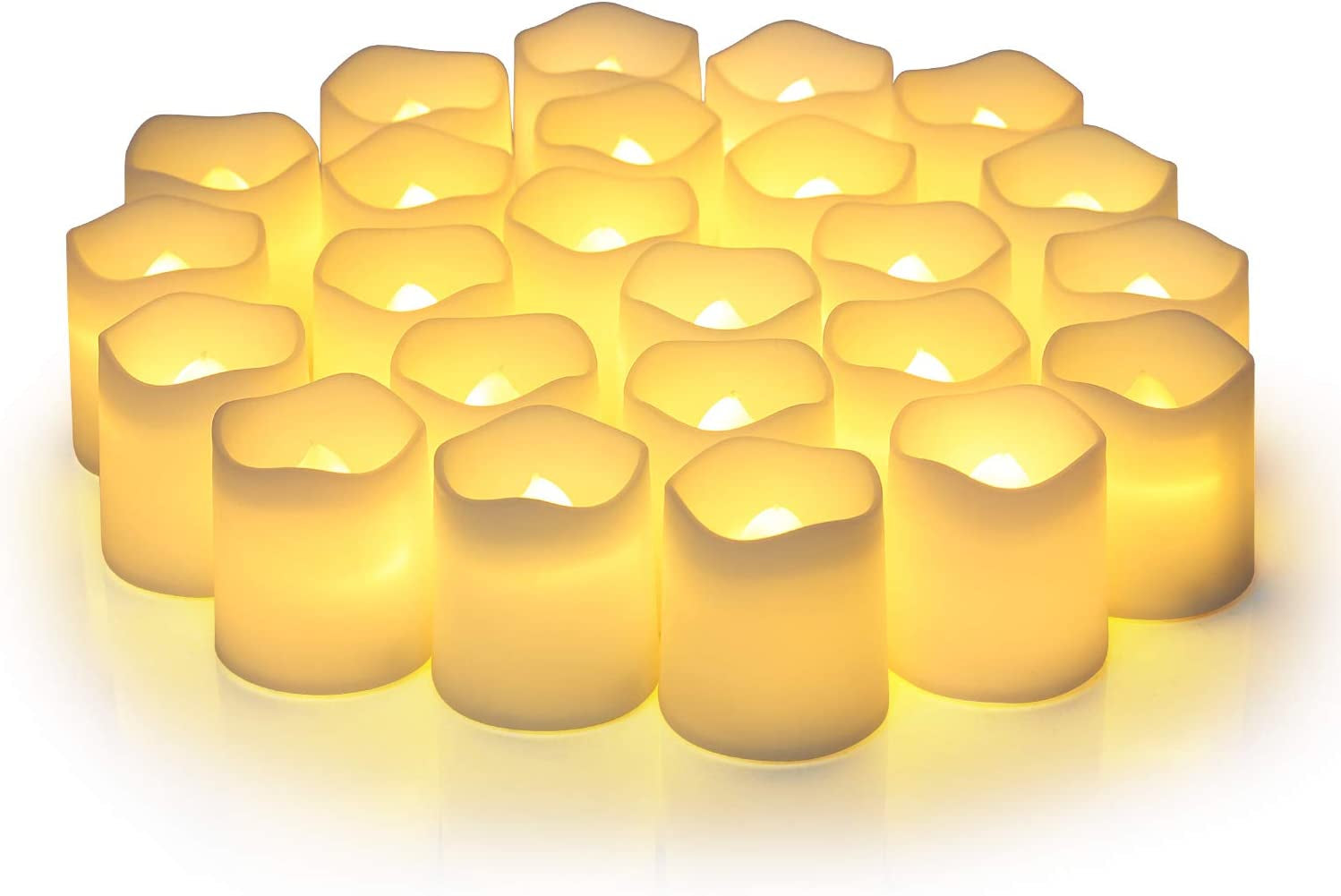
- A small lamp, if there is a power point nearby — light at shelf height changes a whole wall in the evening. Our guide on how many lumens you need per room covers output, and flameless candles are the safe option on a shelf with anything flammable near it.
What to avoid: too many small objects, which read as clutter regardless of quality; anything in a colour that appears exactly once; and filling gaps for the sake of filling them.
Colour and Ordering
Colour-blocking books works, but it is a commitment. Arranging by spine colour looks striking and makes finding a specific book genuinely harder. Choose based on whether the shelf is decorative or working.
Spines-in is a decorating trend, not a system. It looks calm and makes the books unusable. If you actually read them, do not.
A limited palette across the whole unit helps more than any single object. Two or three repeating colours across all shelves ties the arrangement together.
Do It in This Order
- Empty the shelf completely. Styling around what is already there just rearranges the existing problem.
- Put the heavy and large items in first, low down.
- Add book stacks, alternating vertical and horizontal across shelves.
- Place your groupings of three, varying height and texture.
- Take one third of it back off. This step is the whole technique.
- Look at it from the doorway, not from arm's length. That is where it will actually be seen from.
Ready to Reset Your Shelves?
Measure the shelf first, fill two-thirds, alternate vertical and horizontal, and group in threes at different heights. Then remove a third of what you added. Browse the full Pattan Australia range for shelving and the pieces that go on it.
Frequently asked questions
How full should a bookshelf be?
About two-thirds full, with roughly a third left empty. Empty space is what makes a shelf read as styled rather than stored, and it gives the eye somewhere to rest. Leave 3 cm to 5 cm of clearance above the tallest book as well.
Should books be stacked vertically or horizontally?
Both, alternating. A shelf of only upright spines reads as a wall of text that the eye slides straight past. Adding one horizontal stack of three to five books per shelf breaks that rhythm, and doubles as a platform for placing an object at a different height.
How do you arrange objects on a shelf?
Group in odd numbers, usually threes, and vary both height and texture within each group. Three objects of the same height form a row rather than a grouping. Leave clear space between groupings rather than spreading them edge to edge.
Where should heavy items go on a bookshelf?
On the lower shelves. A top-heavy arrangement looks unstable and is unstable, particularly on wall-mounted units where the fixings rather than the shelf set the load limit. Fix into studs where possible, or use rated anchors chosen comfortably above the loaded weight.
Is arranging books by colour a good idea?
It looks striking and makes finding a specific book considerably harder. Choose based on how the shelf is used: colour-blocking suits a decorative shelf in a living area, while a working shelf you actually pull books from is better arranged by subject or author.
How do you style a small or narrow shelf?
Reduce the number of groupings rather than shrinking everything. A 60 cm shelf holds about two groupings comfortably; a 100 cm shelf holds three. On a small shelf, a clear acrylic unit helps because it visually disappears and lets the objects read as the feature.