Cart
0
Quick answer: Switch the power off at the wall and let everything cool completely first, then dust dry before introducing any moisture, and match the method to the material — fabric shades are dusted or vacuumed, glass is washed and fully dried, and globes are wiped with a dry or barely damp cloth only.
TL;DR: Dusty light fittings are not just an aesthetic problem — a heavily soiled shade or diffuser measurably reduces the light reaching the room, so cleaning them is the cheapest brightness upgrade available. The order matters: power off at the wall, wait for cooling, dust dry, then clean wet only where the material allows. The two rules people break are introducing water before removing dry dust, which turns dust into a smeared paste, and refitting glass while it is still damp, which traps moisture inside the fitting. Anything requiring the fitting to come off the ceiling, or any sign of scorching or damaged wiring, is a job for a licensed electrician rather than a cleaning task.
Key facts
- Always switch off at the wall switch and let fittings cool completely before cleaning.
- Dust dry before introducing any moisture, or dust becomes a smeared paste.
- Never refit a glass diffuser or cover while it is still damp.
- LED globes run far cooler than halogen but still need to be off and cool before handling.
- A heavily soiled shade or diffuser noticeably reduces the light output reaching the room.
- Any work that involves removing a hardwired fitting is electrician work in Australia.
Safety First, and It Is Short
Switch off at the wall switch, not just the lamp switch. For plug-in lamps, unplug at the socket.
Let it cool completely. Halogen and incandescent globes get hot enough to burn, and a hot globe touched with a damp cloth can shatter.
Use a stable platform. Most light-fitting injuries are falls, not electrical.
Never let water reach the fitting's electrical parts — the lamp holder, the wiring, the transformer on a downlight.
Stop and call a licensed electrician if you see scorching or browning around the holder, cracked or brittle wiring insulation, a fitting that is loose from the ceiling, or a globe that is difficult to remove. In Australia, removing or reinstalling a hardwired fitting is electrical work and must be done by a licensed electrician. Cleaning a fitting in place, and changing a globe, are ordinary household jobs.
Step 1: Dust Dry, Always First
This is the step that decides the result. Introducing a damp cloth to a dusty surface creates a paste that then has to be worked off, usually leaving streaks.
Use a microfibre cloth or a soft brush. For ceiling fittings, an extendable duster reaches without a ladder.
Work top-down in the room. Light fittings and ceiling fans first, before walls, surfaces and floors — otherwise the dust you dislodge lands on things you have already cleaned. Our indoor spring reset checklist covers the full room order.
Ceiling fan blades hold the most. Dust sits on the upper face where nobody looks. Wipe each blade with a cloth folded over it rather than brushing dust into the air.
Step 2: Match the Method to the Material
| Material | Method | Avoid |
|---|---|---|
| Fabric or linen shade | Dust, then vacuum on low with a brush head | Water, which stains and warps |
| Paper or parchment shade | Dry dust only, very gently | Any moisture at all |
| Glass shade or diffuser | Remove, wash in warm soapy water, dry fully | Refitting while damp |
| Acrylic or plastic cover | Damp cloth, mild detergent | Ammonia and solvents, which craze plastic |
| Metal or powder-coated | Damp cloth, dry immediately | Abrasives and leaving it wet |
| Crystal or cut glass | Dust, then a barely damp lint-free cloth | Dishwashers and soaking |
| Bulbs and globes | Dry or barely damp cloth, cold and off | Any liquid running toward the base |
Fabric shades are dusted, not washed. Water marks fabric shades and can warp the frame or dissolve the adhesive holding the trim. Vacuum on the lowest setting with a soft brush attachment.
Glass and acrylic are the ones you can genuinely wash — but dry them completely and reassemble only when bone dry. Moisture trapped in a closed ceiling fitting is how you get marks that look like water damage later.
Never use ammonia-based cleaners on acrylic. It causes crazing, the fine network of surface cracks that cannot be undone.
Step 3: Clean the Globes Themselves
A dusty globe emits less light. Combined with a soiled shade, the loss is easily noticeable.
Cold and off, always. Then a dry microfibre cloth, or barely damp if the film is greasy — common in kitchens.
Never let moisture run toward the base or contacts. Wring the cloth almost dry.
Handle by the base, not the glass, particularly with halogen, where skin oils create hot spots that shorten life.
Use the opportunity to check what is actually fitted. If a room has been dim all winter, cleaning may not be the whole answer. Our guide on how many lumens you need per room gives the calculation — target lux multiplied by floor area — and warm white versus cool white covers colour temperature by room.
If you are replacing globes, check the cap first. Australian homes mostly use B22 bayonet and E27 Edison screw. Our light bulb fitting types guide covers identification. A B22 bayonet LED rated 15 W and 1,350 lm at CRI 90 suits general lighting, and an E27 10 W, 1,400 lm globe is the screw-cap equivalent. Both are 230 V, Australia's nominal mains voltage.
Step 4: Lamps and Floor Lamps
Unplug at the wall. Not the inline switch.
Dust the shade in place, then lift it off if the fitting allows and clean the base separately.
Check the cord while you are there. Fraying near the plug or at the base is a genuine hazard and a reason to stop using the lamp.
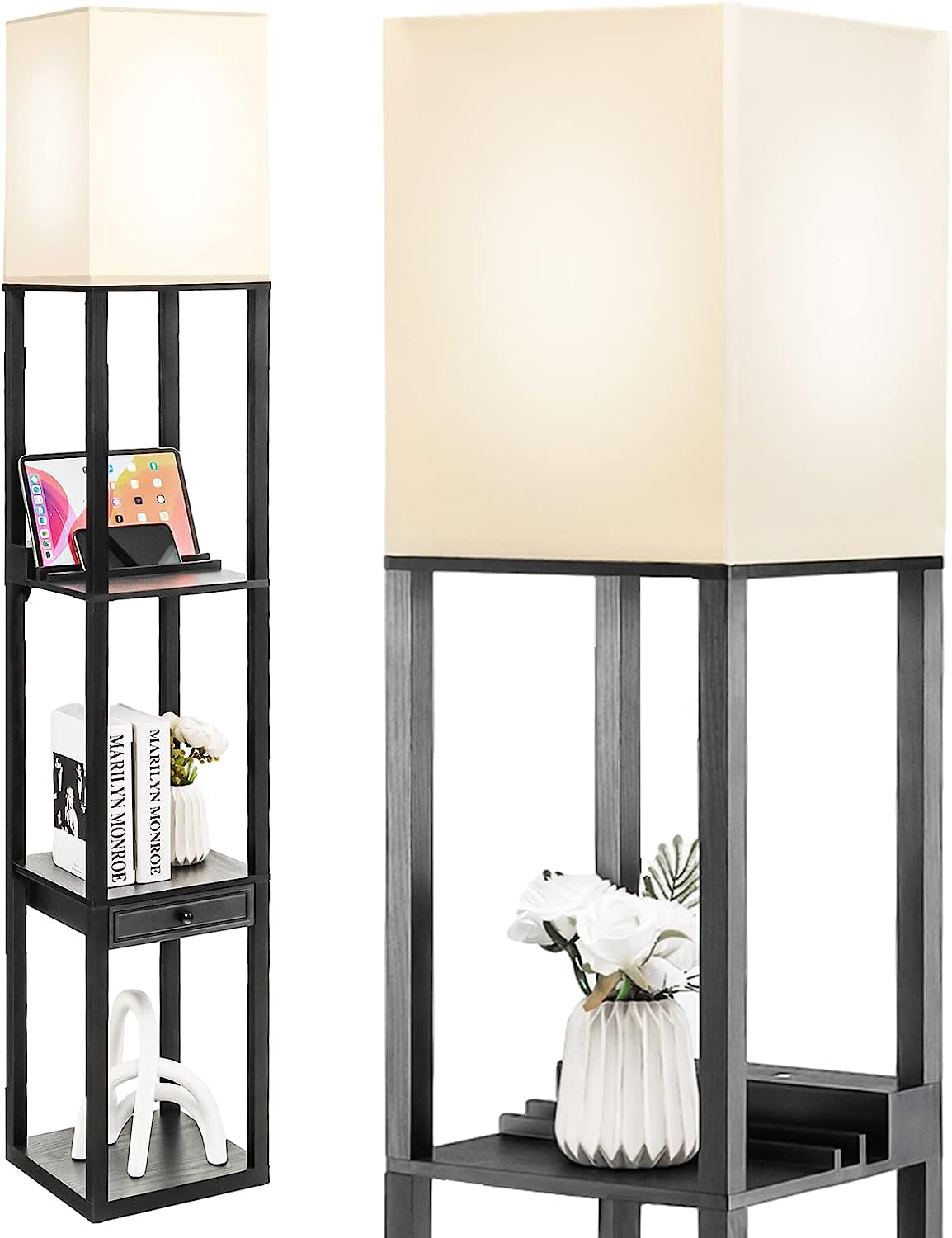
Wipe the base according to its material. A floor lamp with integrated shelving combines an MDF structure with a linen fabric shade, which means two different methods on one piece — damp cloth on the shelving, dry dusting on the shade. That unit is 26 × 26 × 159.5 cm with an E27 fitting and a 2.6 m cord.
Our guide on how to choose a floor lamp covers what to look for if a lamp is past cleaning.
How Often
| Fitting type | Frequency | Why |
|---|---|---|
| Kitchen fittings | Every 2 to 3 months | Airborne cooking grease binds dust |
| Bathroom fittings | Every 3 months | Humidity and product overspray |
| Ceiling fans | Seasonally, before each use change | Dust accumulates on upper blade faces |
| Living and bedroom fittings | Every 6 months | Lower soiling rate |
| Enclosed diffusers | Every 6 to 12 months | Also collects insects |
| Outdoor fittings | Seasonally | Dust, salt, insects |
Kitchens are the outlier. Cooking aerosolises oil, which lands on nearby fittings and binds dust into a film that dry dusting alone will not lift.
Ready to Get the Light Back?
Power off, cool down, dust dry, then wet-clean only what the material allows — and never reassemble glass while it is damp. If a room still feels dim after cleaning, the issue is output rather than dust, and that is a lumens calculation rather than a cleaning job. Browse the LED lights collection if globes need replacing.
Frequently asked questions
How do you clean a light fitting safely?
Switch off at the wall switch, let the fitting cool completely, and dust it dry before introducing any moisture. Clean wet only where the material allows — glass and acrylic yes, fabric and paper no — and never let water reach the lamp holder or wiring.
Can you wash a fabric lampshade?
No. Water stains fabric shades, can warp the frame and may dissolve the adhesive holding the trim. Dust it first, then vacuum on the lowest setting using a soft brush attachment. Paper and parchment shades should be dry dusted only, with no moisture at all.
How do you clean a glass ceiling light cover?
Turn the power off at the wall and let it cool, remove the cover, then wash it in warm soapy water. Dry it completely before refitting — reassembling while damp traps moisture inside the fitting and leaves marks that later look like water damage.
Does dust on light bulbs reduce brightness?
Yes. A dusty globe emits less light, and combined with a soiled shade or diffuser the loss becomes noticeable. Cleaning fittings and globes is one of the cheapest ways to restore brightness in a room that has gradually become dim.
How often should you clean light fittings?
Kitchen fittings every 2 to 3 months, since cooking grease binds dust into a film. Bathrooms every 3 months, living and bedroom fittings every 6 months, and enclosed diffusers every 6 to 12 months. Clean ceiling fans seasonally, before each change of use.
When do you need an electrician instead?
Whenever the job involves removing or reinstalling a hardwired fitting, or if you see scorching around the lamp holder, cracked or brittle wiring insulation, a fitting loose from the ceiling, or a globe that will not come out. In Australia that work must be carried out by a licensed electrician.