Cart
0
TL;DR: Choose a floor lamp by the job you need it to do. For reading, pick a directional lamp you can aim, with the shade bottom near eye level when you are seated (around 100-120cm). For ambient light, choose an uplight or a diffused shade that washes the room softly. For mood, a corner LED or colour-changing lamp fills a dark corner with atmosphere. Then match the height to the furniture, place it where it earns its keep, and pick controls (foot switch, touch, or remote) that suit how you use the room. Warm white light suits a living room best.
A floor lamp is the most flexible light in a living room: it adds light exactly where a ceiling fixture cannot reach, needs no wiring, and moves whenever you rearrange the room. The key is choosing the right type for what you actually want it to do. This guide walks through the three jobs a floor lamp does and how to get the height, placement and controls right.
First, decide the job: reading, ambient, or mood
Almost every floor lamp is built for one of three purposes. Naming yours first makes the rest of the decision easy.
- Reading / task light: a directional lamp, often with an adjustable or arc head, that puts bright light onto a book, a chair or a desk without lighting the whole room.
- Ambient light: an uplight or a lamp with a soft, diffused shade that bounces a gentle, even glow around the room to lift the general light level.
- Mood / accent light: a corner or colour-changing lamp that fills a dark corner with atmosphere rather than working light, often with adjustable colours for different occasions.
A room can happily use more than one: a reading lamp by the chair and a mood lamp in the corner do different jobs and layer the light.
Get the height right
Height depends on the job.
- For reading, the bottom of the shade should sit around eye level when you are seated, roughly 100-120cm from the floor, so the light falls onto the page and the globe stays out of your eyes. An adjustable or arc head lets you fine-tune this.
- For ambient uplight, taller is better, so the light clears the furniture and washes the ceiling and walls.
- For a corner mood lamp, height is about proportion: a tall, slim lamp suits a corner without crowding it, and fills the vertical space a room often leaves empty.
Place it where it earns its keep
Where a floor lamp stands changes everything about how useful it is.
- Beside a reading chair or sofa, slightly behind your shoulder, so the light falls over you onto the page rather than into your eyes.
- In a dark corner, to lift the part of the room a central ceiling light never reaches. Corners are where living rooms feel gloomiest, and a floor lamp fixes that instantly.
- Over a sofa with an arc lamp, reaching the light out above the seating without needing a side table underneath.
- Beside a media unit or console, to soften the contrast between a bright screen and a dark room in the evening.
Keep the base clear of walkways, and choose a lamp with a weighted, stable base if it will stand near where children or pets move.
Choose the light: warm, and adjustable
For a living room, warm white light (around 2700-3000K) is almost always right. It feels relaxing and flattering in the evening, where cool light feels clinical. Our guide to warm white vs cool white light covers the colour temperatures room by room.
Look for these light features:
- Dimming, so the lamp can go bright for reading and low for relaxing.
- Selectable colour temperature or colour, if you want one lamp to shift from warm reading light to cooler task light, or coloured mood light for occasions.
- A good globe or built-in LED, ideally included, so the lamp works out of the box.
Controls and extras that matter
The switch and features shape how easily the lamp fits your evening.
- Foot switch is the classic, easy to reach without bending.
- Touch control cycles brightness with a tap.
- Remote or app control lets you adjust colour and brightness from the sofa, which suits mood and colour-changing lamps.
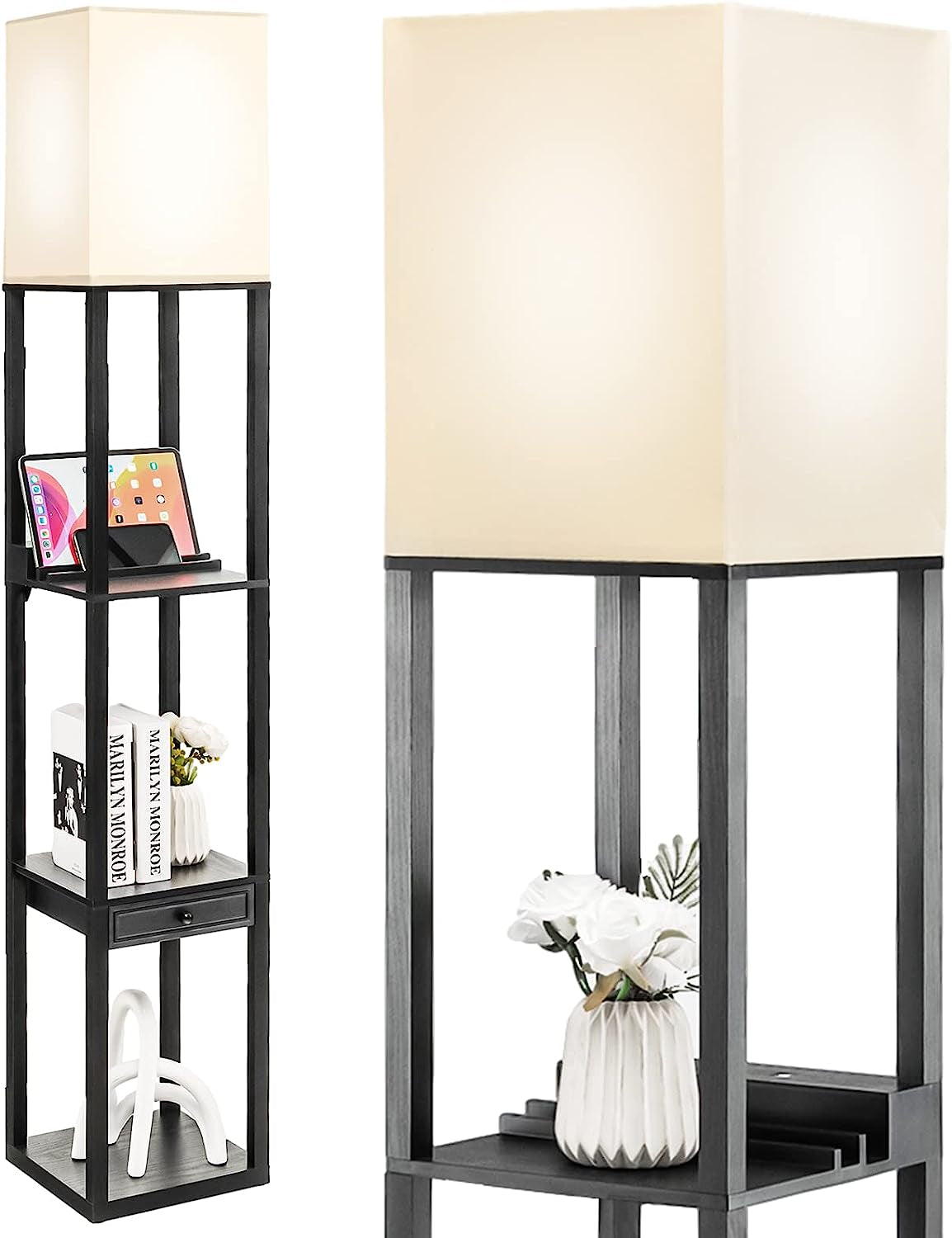
- A built-in USB port or a small shelf turns a floor lamp into a side table too, handy where space is tight.
Match the lamp to the job
| You want | Choose | Key feature |
|---|---|---|
| To read comfortably | Directional / arc reading lamp | Adjustable head, shade at eye level |
| To lift the whole room | Uplight or diffused-shade lamp | Tall, soft, even glow |
| Atmosphere in a corner | Corner LED / colour-changing lamp | Remote or app, adjustable colour |
| A lamp plus a surface | Shelf floor lamp | Shelves, USB port, weighted base |
Choosing your floor lamp
A few Pattan Australia floor lamps across the three jobs:
- The Modern Shelf Floor Lamp with USB Port combines light, three display shelves, a drawer and a charging port, with three brightness levels and a bulb included, a practical all-rounder for a reading corner.
- The RGB Corner Floor Lamp with Remote fills a corner with adjustable colour and mood light, controlled from the sofa.
- The Smart LED Corner Floor Lamp (app and remote) adds app and voice-style control with a weighted aluminium base for stability, ideal as an accent light.
Choosing a lamp for beside the bed instead? Our guide to choosing a bedside table lamp covers the height and controls that suit a nightstand.
Frequently asked questions
How tall should a floor lamp be?
It depends on the job. For a reading lamp, the bottom of the shade should sit around eye level when you are seated, roughly 100-120cm from the floor, so the light falls on the page. For ambient uplight, taller is better so the light clears the furniture and washes the room.
Where should you place a floor lamp in a living room?
Beside a reading chair or sofa (slightly behind your shoulder) for reading, or in a dark corner to lift the part of the room the ceiling light misses. An arc lamp can reach light out over a sofa without a side table. Keep the base clear of walkways.
What is the best light colour for a living room floor lamp?
Warm white, around 2700-3000K, suits a living room best. It feels relaxing and flattering in the evening. A lamp with dimming, or with selectable colour temperature, lets one fixture go bright for reading and low and warm for relaxing.
What is the difference between a reading and an ambient floor lamp?
A reading (task) lamp is directional, putting bright, aimed light onto a book or chair without lighting the whole room. An ambient lamp uses an uplight or diffused shade to spread a soft, even glow that lifts the general light level. Many rooms use one of each.
Do floor lamps need special installation?
No. Floor lamps are plug-in fixtures, so they need no wiring or electrician, just a nearby power point. Choose one with a weighted, stable base if it will stand near where children or pets move, and keep the cord clear of walkways.