Cart
0
Quick answer: Stop the heat before it gets in — shade windows on the outside, close up during the day and ventilate at night — then run ceiling fans counterclockwise and set any air conditioning to 24°C to 25°C rather than lower.
TL;DR: Heat that has already entered the house is expensive to remove, so almost everything worthwhile happens at the glass. External shading beats internal blinds substantially, because it stops the heat before it passes the window rather than after. Once you have done that, the second principle is that fans cool people, not rooms — a ceiling fan makes you feel several degrees cooler through air movement but does nothing to air temperature, so running one in an empty room is pure waste. Third, every degree you drop the air conditioning costs meaningfully more energy, and 24°C to 25°C is the efficient setting for Australian conditions. Finally, sleep is where summer heat actually costs you, and breathable bedding does more for that than anything you can do to the room.
Key facts
- Ceiling fans should spin counterclockwise in summer to push air down, and clockwise in winter.
- Fans cool people, not rooms — switch them off when you leave the room.
- 24°C to 25°C is the efficient air conditioning setting for Australian summers.
- Every degree below that increases energy use by roughly 5 to 10 per cent.
- External shading blocks heat before it passes the glass; internal blinds only act after.
- Open up at night only once the outdoor temperature has actually dropped below the indoor one.
Stop the Heat at the Glass
Windows are where the heat comes in. Unshaded glass facing the sun is the single largest heat source in most Australian homes, which is why this is the first and highest-return job.
External shading beats internal blinds by a wide margin. An awning, an external blind, a pergola or a shade sail intercepts sunlight before it passes through the glass. An internal blind stops the light only after the heat is already inside the room. Both help; they are not equivalent.
Prioritise west-facing glass. West windows take the late afternoon sun at exactly the hours the house is already at its hottest, and they matter more than north-facing glass for summer heat.
Plants work as shading. A deciduous tree or a vine on a west wall shades in summer and lets sun through in winter, which is difficult to achieve with anything mechanical.
Close up during the day, open at night. Through a heatwave, the sequence is: close windows and coverings in the morning before the heat arrives, then open up once the outside temperature has genuinely dropped below the inside temperature. Opening windows at 6pm on a 38°C day makes things worse, not better.
Cross-ventilate at night. Two openings on opposite sides move far more air than one. Our guide on getting your outdoor area ready for spring covers the shading side outdoors.
Use Fans Properly
Fans cool people, not rooms. A fan does not lower air temperature — it moves air across skin, which accelerates evaporation and makes you feel cooler. A fan in an empty room is doing nothing except adding a small amount of heat from its motor.
Switch fans off when you leave. This follows directly from the point above, and it is the most commonly ignored piece of fan advice.
Summer direction is counterclockwise. Looking up at the fan, the blades should turn counterclockwise, pushing air straight down to create the draught you feel. In winter you reverse it to clockwise, which pulls air up and pushes warm air down the walls without a direct draught.
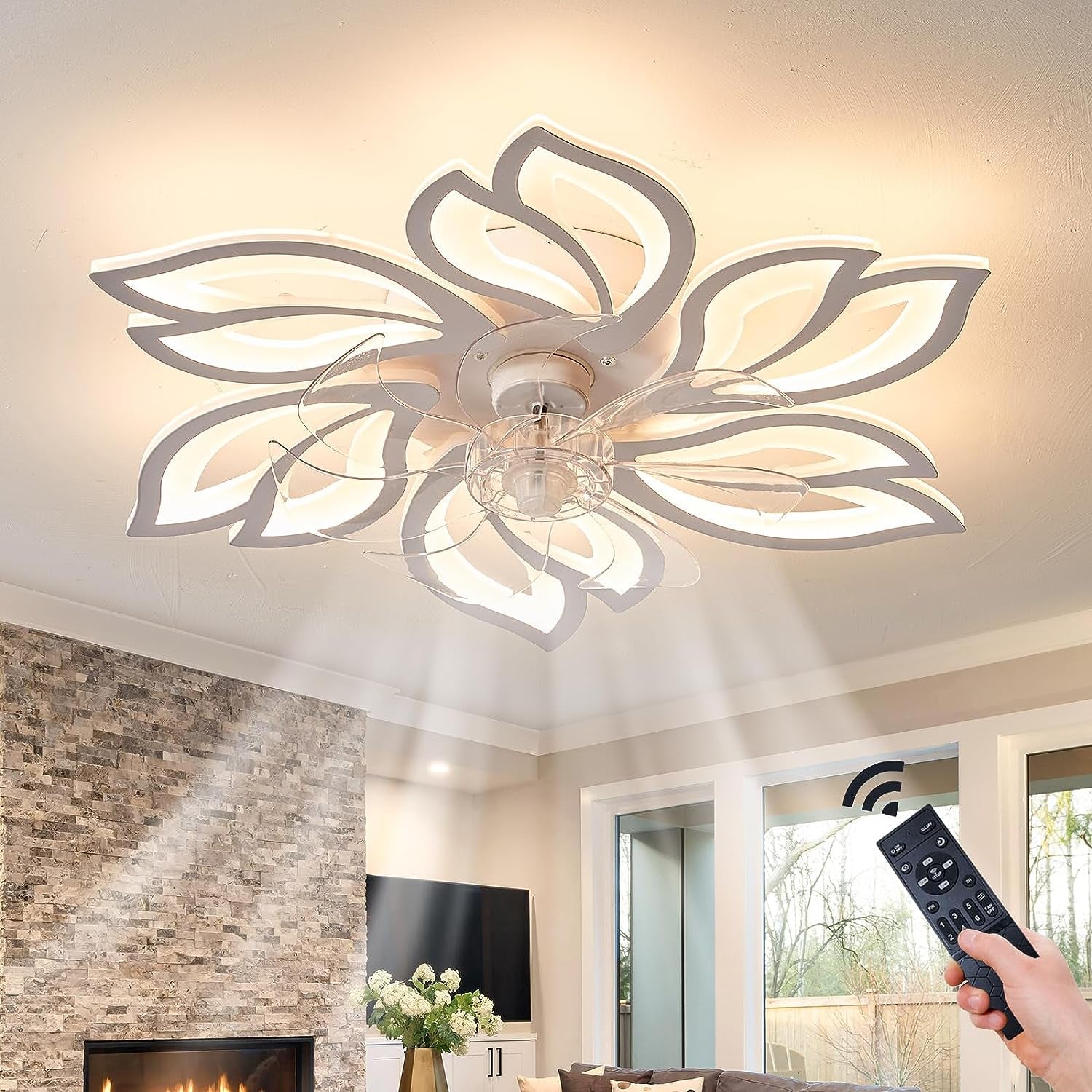
Almost every modern ceiling fan has a reverse switch, and most people never touch it. A low profile ceiling fan with a reversible DC motor is 65 cm in diameter, suits rooms of 8 to 20 m², and is only 15 cm tall, which matters in a low room or an attic conversion. It runs 6 wind speeds with a DC motor, which is quieter and more efficient than a traditional AC motor.
A 69 cm version covers the same 8 to 20 m² range at 69 × 69 × 13 cm, with the fan motor drawing 10 W against 50 W for its lighting — a useful illustration of how little a ceiling fan costs to run compared with almost any other cooling.
Our full guide on how to choose a ceiling fan covers sizing to room area.
Installing a ceiling fan is electrical work. In Australia it must be done by a licensed electrician. Changing the direction switch and cleaning the blades are ordinary household jobs — and a dusty blade is worth cleaning before summer, which our guide on cleaning light fittings safely covers.
Set the Air Conditioning Correctly
24°C to 25°C is the efficient range for cooling in Australia. It is comfortable, and it is where the energy curve is still reasonable.
Every degree lower costs roughly 5 to 10 per cent more energy. Setting 19°C rather than 24°C does not cool the room faster — thermostats are not throttles — it just runs the unit longer and further.
Run a ceiling fan with the air conditioning, not instead of it. The fan lets you sit comfortably at a higher thermostat setting, which is where the saving actually comes from.
Close doors to rooms you are not cooling, and check that the filter is clean. A blocked filter makes the unit work harder for less result.
Reduce the Heat You Generate
Cook outside, or cook late. An oven running for an hour on a hot afternoon undoes a lot of shading.
Switch off what is idling. Devices and chargers all contribute, modestly but continuously.
Change lighting if it still runs hot. Halogen downlights throw real heat into a room. LED equivalents run far cooler and use a fraction of the energy — our guide on how many lumens you need per room covers matching output when you swap.
Dry washing outside. Australian sun is free, and an indoor rack in summer adds both heat and humidity. Our guide on choosing a clothes drying rack covers the outdoor options.
Sleeping Through It
This is where summer heat is actually felt, and where the cheapest wins are.
Breathable bedding matters more than thread count. Density traps heat; airflow and moisture handling are what keep you comfortable. Bamboo and eucalyptus-derived fibres are used in Australian bedding for exactly this reason.
A cooling bamboo sheet set is built around breathability and moisture absorption rather than density alone, and includes a fitted sheet, flat sheet and two pillowcases. A bamboo set with a 40 cm deep pocket is OEKO-TEX Standard 100 certified and publishes its exact component dimensions, which removes the guesswork on a thicker mattress.
The layer under the sheet counts too. An all-seasons eucalyptus Tencel mattress protector is designed for temperature regulation and moisture absorption, which is the property that matters on a hot night. A waterproof protector that does not breathe will undo good sheets.
Check the size before buying. Our Australian bed sizes chart covers every size in centimetres, including the fitted-sheet depth issue that catches people out, and how often to wash your sheets covers why summer shortens the interval.
Move air across the bed, not at your face. A fan on low aimed across the bed is more comfortable through the night than one pointed directly at you.
The Order to Do It In
| Priority | Action | Why it ranks here |
|---|---|---|
| 1 | Shade west and north glass externally | Stops heat before it enters — highest return |
| 2 | Close by day, ventilate at night | Free, and works in every home |
| 3 | Ceiling fans, correct direction | Cheap to run, large comfort gain |
| 4 | Air con at 24 to 25°C with fans | Effective, but the expensive lever |
| 5 | Reduce internal heat generation | Small individually, adds up |
| 6 | Breathable bedding | Where heat is actually felt |
The same logic runs in reverse in winter — our guide on keeping a house warm covers that side, and stopping condensation and damp covers the moisture that comes with a closed-up house.
Ready for Summer?
Start at the glass, because everything else is managing heat that has already arrived. Then get the fans spinning the right way, and hold the thermostat at 24°C to 25°C rather than chasing a lower number. Browse the full Pattan Australia range for fans and cooling bedding.
Frequently asked questions
Which way should a ceiling fan spin in summer?
Counterclockwise when viewed from below. That pushes air straight down and creates the draught you feel on your skin. In winter you reverse it to clockwise, which draws air upward and circulates warm air down the walls without a direct draught.
What temperature should you set air conditioning in an Australian summer?
Between 24°C and 25°C. Every degree below that increases energy use by roughly 5 to 10 per cent, and setting a much lower number does not cool the room any faster — thermostats control the target, not the rate. Running a ceiling fan alongside lets you sit comfortably at the higher setting.
Do fans actually cool a room?
No. Fans move air across skin, which accelerates evaporation and makes people feel cooler, but they do not lower air temperature — the motor adds a small amount of heat. This is why you should switch fans off when leaving a room, and why a fan in an empty room does nothing useful.
Are external blinds better than internal blinds?
Yes, substantially. External shading such as an awning, external blind or pergola intercepts sunlight before it passes through the glass, while an internal blind only acts once the heat is already inside the room. Both help, but they are not equivalent.
When should you open the windows in a heatwave?
Only once the outdoor temperature has genuinely dropped below the indoor temperature, usually late evening or overnight. Close windows and coverings in the morning before the heat arrives. Opening up during the hottest part of the day brings hot air in and makes the house warmer.
What bedding is best for hot sleepers in Australia?
Breathable fibres rather than high thread counts, since density traps heat while airflow and moisture handling do the work. Bamboo and eucalyptus-derived Tencel are common choices. Check that any mattress protector underneath also breathes, since a non-breathable one will undo good sheets.