Cart
0
Quick answer: Wash bed sheets and pillowcases every 7 to 14 days, moving to every 7 days in an Australian summer or if you sweat, share the bed with pets, or go to bed without showering.
TL;DR: Fortnightly is the minimum most Australian households should aim for; weekly is better and is the right default from December through February. The reason is straightforward — a bed collects sweat, skin cells and body oils every night, and in a warm climate that happens faster. Pillowcases need washing most often because they take direct contact with your face and hair. Items you never think about matter too: pillows themselves need washing two to four times a year, and mattress protectors every one to two months. Wash at 60°C where the fabric allows, since that is the temperature at which dust mites are reliably killed, and always check the care label first, because bamboo and silk will not tolerate it.
Key facts
- Sheets and pillowcases should be washed every 7 to 14 days, or weekly in an Australian summer.
- 60°C is the wash temperature at which dust mites are reliably killed.
- Pillows themselves need washing 2 to 4 times a year, not just their cases.
- Mattress protectors should be washed every 1 to 2 months.
- An adult loses roughly 500 mL of moisture in an average night's sleep.
- Two sheet sets in rotation roughly halves the pressure on any single wash day.
The Full Frequency Table
| Item | Standard | Australian summer | Why |
|---|---|---|---|
| Pillowcases | Every 7 days | Every 3 to 4 days | Direct face and hair contact, absorbs oils and product |
| Fitted sheet | Every 7 to 14 days | Every 7 days | Full-body contact all night |
| Flat sheet | Every 7 to 14 days | Every 7 days | Same, if you sleep under it |
| Mattress protector | Every 1 to 2 months | Monthly | Catches what gets through the sheet |
| Pillows (the pillow itself) | 2 to 4 times a year | 4 times a year | Absorbs moisture and oils over time |
| Doona / quilt | 2 to 3 times a year | Seasonally | Protected by the flat sheet, so less often |
| Doona cover | Every 2 to 4 weeks | Every 2 weeks | Outer layer, handled constantly |
| Blankets and throws | Every 1 to 3 months | Monthly | Depends heavily on use and pets |
The pattern is contact and moisture. The closer an item sits to skin and the more moisture it absorbs, the more often it needs washing. That is why pillowcases top the list and doonas sit near the bottom.
Why Australian Conditions Shift the Answer
Most published advice assumes a temperate northern-hemisphere climate. Australian conditions change three things.
Heat and humidity accelerate everything. An adult loses roughly 500 mL of moisture over an average night. In a humid Queensland or northern NSW summer, that moisture evaporates far more slowly out of bedding, and damp fabric is what encourages both odour and dust mites.
Dust mites do well in coastal humidity. They thrive above roughly 50% relative humidity, which describes most of coastal Australia for much of the year. Washing frequency is one of the few controls you have.
Winter is not a free pass. People often stretch washing intervals in winter because they sweat less, but winter is also when bedrooms are closed up, ventilation drops and moisture accumulates. If you dry washing indoors as well, the room is holding more moisture, not less. Our guide on stopping condensation and damp in winter covers the ventilation side, which matters as much as wash frequency.
When to Wash More Often
Move to weekly, or shorter, if any of these apply:
- You sleep with pets on the bed. This is the single biggest factor after climate.
- You go to bed without showering, particularly after exercise or a hot day.
- You have allergies, eczema or asthma. Reducing dust mite load is a recognised part of managing house-dust-mite allergy.
- You sweat heavily at night, whether from climate, illness or hormones.
- You eat in bed, which adds crumbs and food residue.
- Someone in the bed is unwell. Wash separately and at the highest temperature the fabric allows.
Wash Temperature: The Number That Matters
60°C is the threshold at which dust mites are reliably killed. Below roughly 50°C, mites can survive a wash cycle.
But the care label wins. Washing at 60°C will damage several fabrics that are common in Australian bedrooms:
| Fabric | Wash temperature | Notes |
|---|---|---|
| Cotton, poly-cotton | Up to 60°C | Handles hot washes well |
| Linen | 40°C | Hot washing weakens the fibre over time |
| Bamboo viscose | 30°C cold to warm, gentle | Hot water damages the fibre and causes shrinkage |
| Silk | Cold, hand or delicate | Never hot |
| Microfibre | 40°C | High heat can melt or pill the fibre |
If your fabric cannot take 60°C, you have two options that work: wash cold and dry thoroughly in direct sunlight, which Australia has in abundance and which is genuinely effective, or use a laundry sanitiser designed for cold washes.
Do not overload the machine. Sheets need room to move for detergent to reach the fabric. A machine packed tight washes badly regardless of temperature.
Caring for Bamboo and Cooling Sheets
Bamboo bedding is common in Australian homes because it breathes well in heat, and it is also the fabric most often damaged by over-enthusiastic washing.
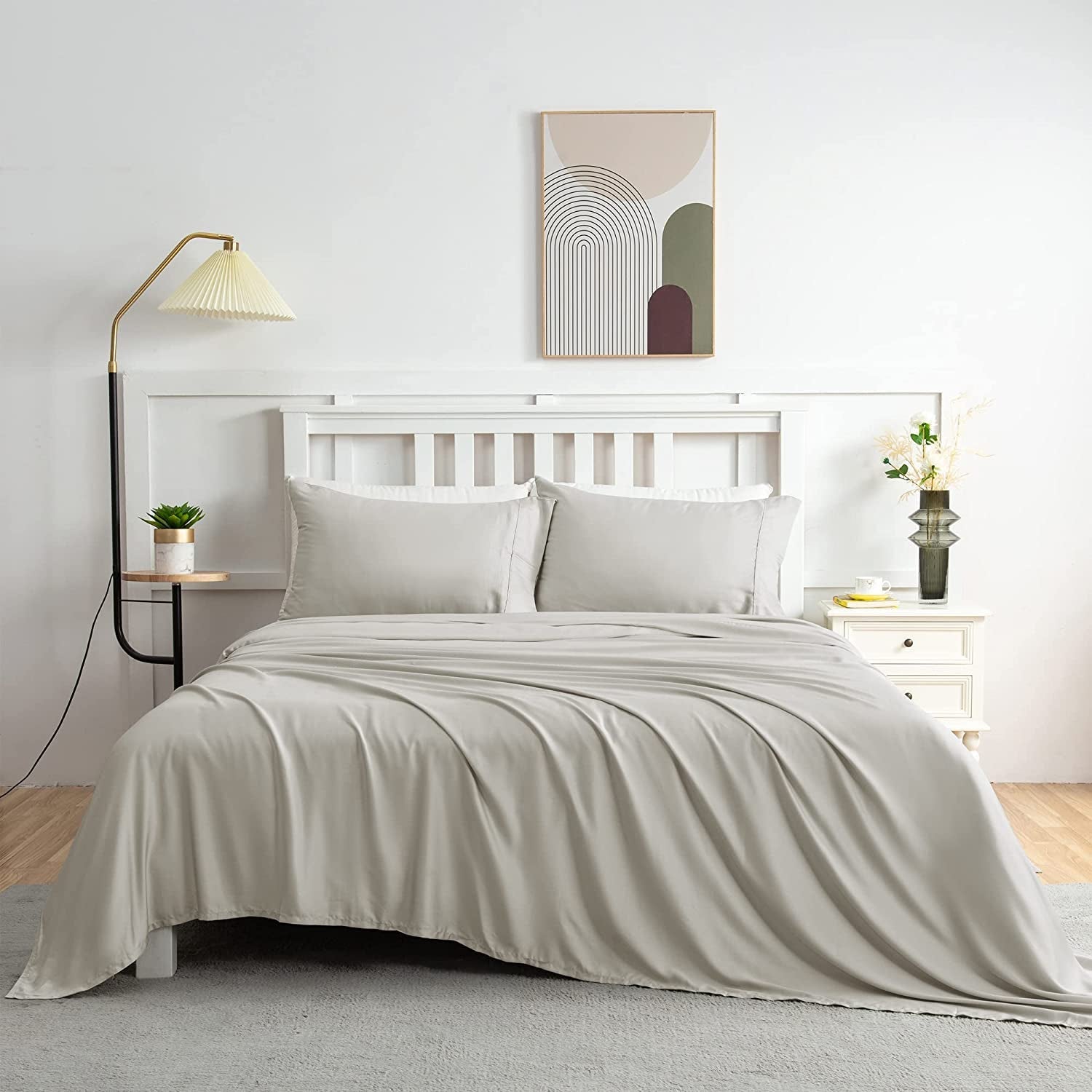
Wash cold on a gentle cycle. A cooling bamboo sheet set specifies cold water on a gentle cycle, then line drying or tumble drying on low. That set is OEKO-TEX Standard 100 certified and includes a 182 × 203 cm fitted sheet with a 40 cm deep pocket, a 270 × 265 cm flat sheet and two 48 × 74 cm pillowcases.
Skip fabric softener entirely on bamboo and cotton. Softener coats fibres, and coated fibres absorb less. On sheets that is the opposite of what you want — you are paying to make moisture-wicking bedding wick less.
Line dry where you can. Australian sun is free, effective against mites, and gentler on fibres than a hot dryer. Our guide on choosing a clothes drying rack covers indoor drying when the weather does not cooperate.
A 2000TC cooling bamboo sheet set is a similar option, including fitted sheet, flat sheet and two pillowcases.
Don't Forget the Layers Under the Sheet
The mattress protector is the item people forget. It sits under the sheet catching moisture, and it needs washing every one to two months. A waterproof bamboo terry mattress protector specifies a warm gentle machine wash, no bleach and no tumble drying — worth reading before it goes in with the sheets on a hot cycle.
Pillows need actual washing, not just new cases. Two to four times a year. Most polyester and down-alternative pillows are machine washable; check the label, wash two at a time to balance the drum, and dry completely before use, because a pillow that is damp inside will develop odour.
Air the mattress itself. Strip the bed and leave it bare for a few hours when you change the sheets. It costs nothing and lets accumulated moisture escape.
Making It Sustainable
The reason people wash sheets less often than they intend is friction, not ignorance.
Own two sets per bed. This is the single change that makes weekly washing realistic — strip, remake immediately, wash the other set whenever suits. Check your size before buying a second set; our Australian bed sizes chart covers every size in centimetres and the fitted-sheet depth issue that catches people out.
Pick a fixed day. Attaching the task to a day rather than a feeling is what makes it happen.
Store the spare set where the bed is. A linen cupboard down the hall adds friction. Our guide on wardrobe organisation covers storing bedding without it becoming a pile.
Ready to Get on a Schedule?
Pick a day, aim for every 7 to 14 days, and go weekly through summer. Wash at 60°C if the fabric allows and cold-plus-sunlight if it does not. Then add the two things people skip: the protector every month or two, and the pillows a few times a year. Browse the full Pattan Australia range for a second sheet set, which is what makes the schedule stick.
Frequently asked questions
How often should you change your bed sheets?
Every 7 to 14 days for most people, and every 7 days during an Australian summer. Move to weekly year-round if you sleep with pets, sweat heavily, go to bed without showering, or have allergies or eczema.
What temperature should you wash sheets at?
60°C reliably kills dust mites and suits cotton and poly-cotton. Linen and microfibre prefer 40°C, bamboo viscose needs cold to warm on a gentle cycle, and silk must be washed cold. Where the fabric cannot take 60°C, wash cold and dry fully in direct sunlight.
How often should you wash pillows?
The pillows themselves need washing 2 to 4 times a year, separately from their cases. Most polyester and down-alternative pillows are machine washable — wash two at a time to balance the drum and dry them completely, since a pillow left damp inside will develop odour.
How often should you wash a mattress protector?
Every 1 to 2 months, or monthly in summer. It sits beneath the sheet absorbing moisture that gets through, so it needs washing far more often than the mattress but less often than sheets. Check the label, as many waterproof protectors cannot be tumble dried.
Is it bad to wash sheets only once a month?
It is longer than recommended. Over a month a bed accumulates sweat, skin cells and body oils, and in Australia's humidity that also supports dust mite populations. If monthly is where you are, the easiest improvement is owning two sheet sets so changing them does not depend on a wash finishing.
Should you use fabric softener on sheets?
No. Fabric softener coats fibres and reduces absorbency, which works directly against moisture-wicking bedding such as bamboo or cotton. It also builds up over time and leaves sheets feeling less breathable, which is the opposite of what you want in a warm climate.