Cart
0
Quick answer: Work bottom-up in seven layers — protector, fitted sheet, flat sheet placed pattern-side down, blanket, doona, pillows, then decorative cushions — and put the flat sheet on upside down so the pattern shows when you fold it back.
TL;DR: A properly made bed is a sequence, and two details do most of the work. The flat sheet goes on with its pattern or finished side facing down, because it gets folded back over the doona and the underside becomes the visible surface — get that wrong and the hem shows the wrong way round. The other is the mattress protector, which people skip and which is the layer doing the actual protecting. Beyond that it is order and tension: each layer goes on fully before the next, and tucking the sides before the foot is what stops everything pulling out overnight. Hospital corners are just a way of folding the excess into a triangle so nothing bunches.
Key facts
- The flat sheet goes on pattern-side down, because it is folded back and the underside becomes visible.
- The mattress protector is the first layer and the one doing the actual protecting.
- Tuck the sides before the foot to stop bedding pulling out overnight.
- A queen flat sheet is typically around 245 cm × 250 cm, giving enough overhang to tuck.
- Standard Australian pillowcases are about 48 cm × 74 cm; King pillowcases about 48 cm × 90 cm.
- Strip the bed and leave the mattress bare for a few hours when changing sheets.
The Seven Layers, in Order
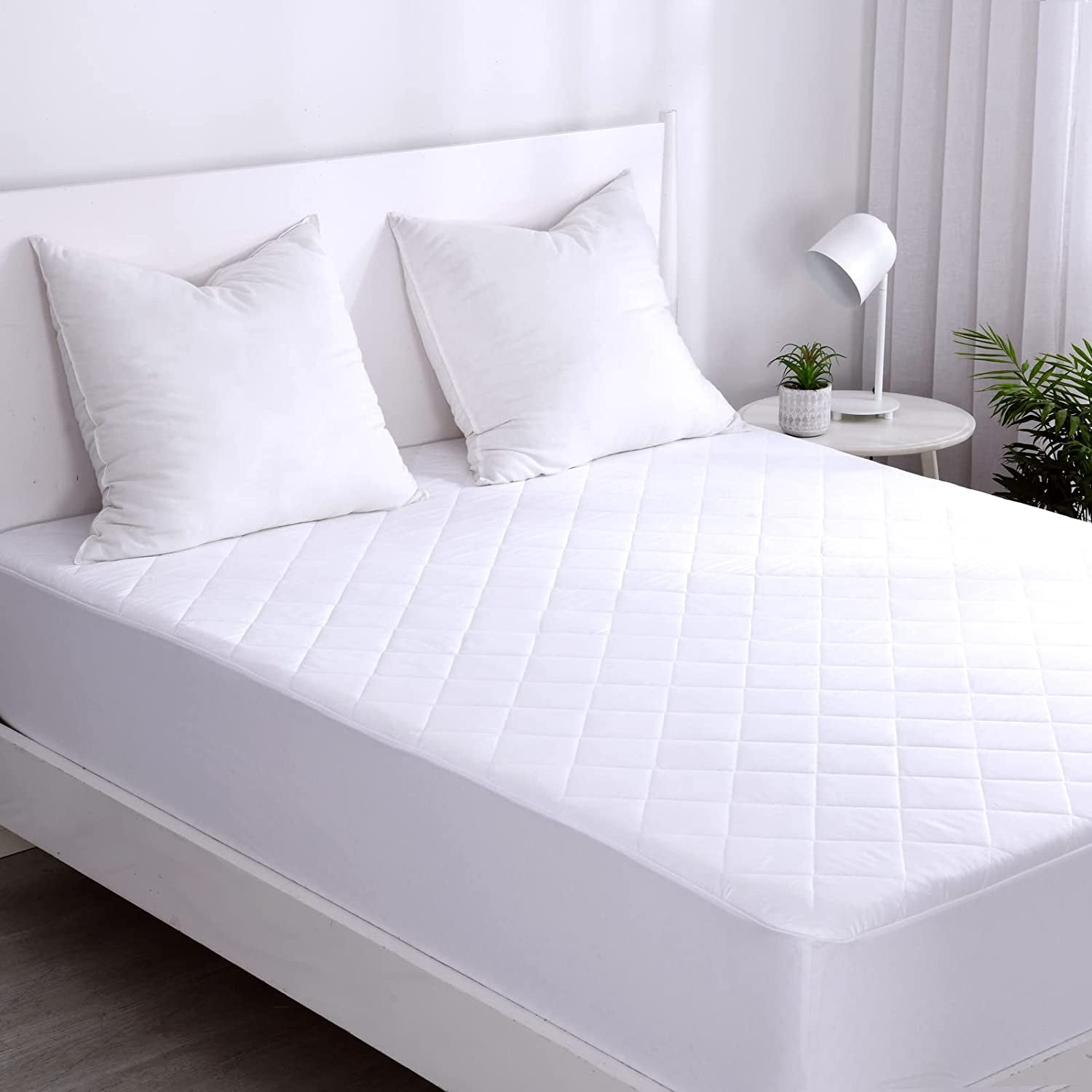
1. Mattress protector. First and non-negotiable. It sits directly on the mattress and catches everything that gets through. An all-seasons eucalyptus Tencel quilted protector regulates temperature and absorbs moisture, which matters given an adult loses roughly 500 mL of moisture over a night. Our guide on choosing a mattress protector covers waterproof versus breathable.
2. Fitted sheet. Corners first, diagonally opposite pairs, then the sides. Check the pocket depth suits your mattress — this is where most fitted sheets fail, not on width or length.
3. Flat sheet, pattern-side DOWN. The top of the sheet gets folded back over the doona, so the side facing down is the side you will see. The wide hem goes at the head of the bed.
4. Blanket, if you use one. Positioned a little lower than the flat sheet so the sheet can fold over it.
5. Doona or quilt. Pulled up to roughly 20 cm from the head of the bed, leaving room for the fold-back.
6. Pillows. Sleeping pillows first, standing or lying flat depending on preference.
7. Decorative cushions. Last, and fewer than you think.
The Flat Sheet Rule Explained
This is the detail almost everyone gets wrong.
Lay the flat sheet with its pattern or finished side facing the mattress. It feels backwards.
When you fold the top back over the doona, that face turns upward and becomes the visible surface. If you laid it pattern-up, the fold-back shows the plain reverse and the hem stitching the wrong way round.
The wide hem goes at the head. Flat sheets have a wide hem at one end and a narrow one at the other. Wide at the top.
A queen flat sheet is typically around 245 cm × 250 cm, which gives enough overhang on a 153 cm wide mattress to tuck properly on both sides. If your flat sheet will not tuck, it is undersized rather than positioned wrongly. Our Australian bed sizes chart covers mattress dimensions and pocket depth.
Hospital Corners, Without the Diagrams
All a hospital corner does is fold the excess into a flat triangle so the sheet cannot bunch or pull out.
- Tuck the sheet under the foot of the mattress, across its width.
- At one corner, lift the side hanging edge up onto the mattress, making a diagonal fold.
- Tuck the part still hanging below the mattress underneath.
- Drop the lifted section back down over it.
- Tuck that down the side.
Tuck the sides before the foot if you want the bed to hold overnight. Doing the foot first means the sides pull it loose.
Skip it on a doona-only bed. If you do not use a flat sheet, there is nothing to tuck.
Pillows
Standard Australian pillowcases are about 48 cm × 74 cm. King pillowcases run roughly 48 cm × 90 cm.
A King bed does not require King pillows. Two standard pillows side by side span about 96 cm on a 183 cm wide bed, which looks proportionate.
Sleeping pillows go at the back, decorative in front, if you use both.
Wash the pillows themselves two to four times a year, not just the cases — our guide on how often to wash your sheets has the full frequency table.
Cushions: Fewer Than You Think
Odd numbers, varying sizes, and enough that removing them at night is not a chore.
Anything you have to move to get into bed will stop being used within a week. That is the practical test.
Our cushion size and layering guide covers proportions by bed size.
Seasonal Changes
Swap the doona weight rather than adding blankets indefinitely. Our doona warmth rating guide covers matching it to the season.
Change the sheet fibre with the weather. A cooling bamboo sheet set suits warm months, and a bamboo set with a 40 cm deep pocket publishes exact component dimensions, which removes the guesswork on thicker mattresses.
Air the mattress when you strip the bed. Leave it bare for a few hours — it costs nothing and lets accumulated moisture escape. Our guide on setting up a bedroom for better sleep covers the wider room.
Why Bother
A made bed takes about two minutes and changes how the whole room reads, because the bed is the largest object in it.
It also protects the bedding. A doona pulled straight rather than crumpled wears more evenly, and a fitted flat sheet keeps the doona cleaner between washes.
Ready to Do It Properly?
Work bottom-up through the seven layers, put the flat sheet on pattern-side down with the wide hem at the head, and tuck the sides before the foot. Two minutes, and the flat sheet detail alone makes the difference between a bed that looks made and one that looks finished. Browse the full Pattan Australia range for bedding and protectors.
Frequently asked questions
Which way does a flat sheet go on a bed?
Pattern or finished side facing down, with the wide hem at the head of the bed. The top gets folded back over the doona, so the face that was against the mattress becomes the visible surface. Laying it pattern-up means the fold-back shows the plain reverse.
What is the correct order to make a bed?
Bottom-up in seven layers: mattress protector, fitted sheet, flat sheet pattern-side down, blanket if used, doona or quilt, sleeping pillows, then decorative cushions. Each layer goes on fully before the next, and the doona stops roughly 20 cm from the head to leave room for the fold-back.
How do you do hospital corners?
Tuck the sheet under the foot across the mattress width, then at each corner lift the hanging side edge up onto the mattress to form a diagonal fold, tuck the part still hanging below the mattress underneath, drop the lifted section back down, and tuck it down the side.
Should you tuck the sides or the foot first?
The sides first. Tucking the foot first means the sides pull it loose again as you work, which is why beds made in that order come apart overnight. Sides, then foot, holds considerably better.
Do you need King pillows on a King bed?
No. Two standard Australian pillows at about 48 cm × 74 cm sit side by side across roughly 96 cm, which looks proportionate on a 183 cm wide King mattress. King pillowcases at around 48 cm × 90 cm are a preference rather than a requirement.
How often should you air a mattress?
Whenever you change the sheets. Strip the bed and leave the mattress bare for a few hours before remaking it. It costs nothing, requires no equipment, and lets moisture accumulated overnight escape rather than staying trapped under bedding.