Cart
0
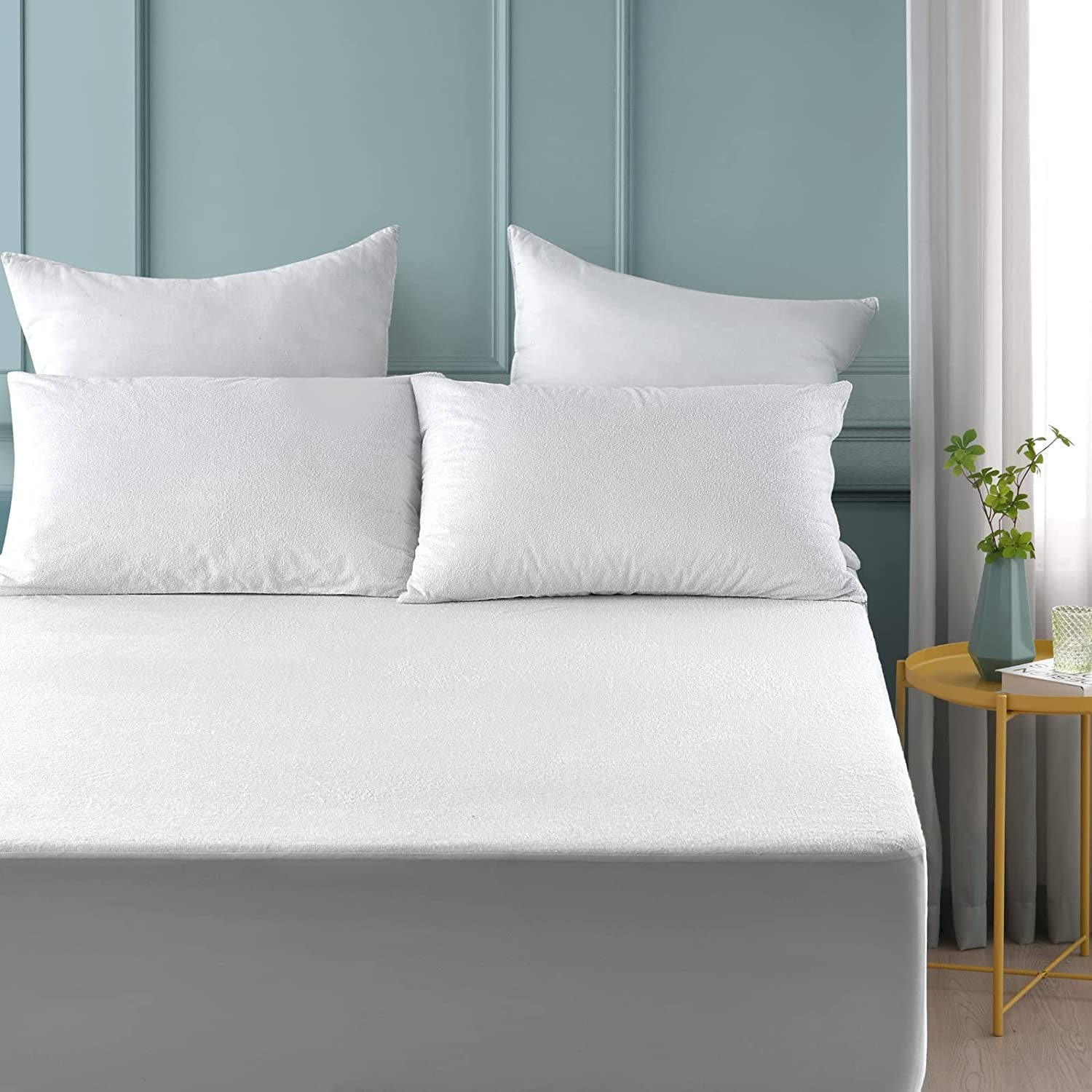
Quick answer: Match three things — the bed size in centimetres, the mattress depth including any pillow top, and whether you need waterproofing or breathability — because a protector that fits but does not breathe will undo good sheets.
TL;DR: A mattress protector is the cheapest insurance on the most expensive item in the bedroom, and most people buy the wrong one for a simple reason: they choose on waterproofing alone. Full waterproofing means a membrane, and a membrane traps heat unless the fabric above it is genuinely breathable — which matters a great deal in an Australian summer. The other frequent miss is depth. Australian mattresses are commonly 30 cm to 40 cm thick once you include a pillow top, while many protectors are cut for less, so they pop off the corners regardless of having the right size name. Decide waterproof versus breathable based on who sleeps in the bed, then check the depth, then check the size in centimetres rather than trusting the label.
Key facts
- Match the protector to mattress depth, not just bed size — many Australian mattresses are 30 cm to 40 cm thick.
- Waterproofing requires a membrane, which traps heat unless the top fabric breathes.
- Fitted protectors cover the top and sides; encasement protectors zip around all six faces.
- A protector protects the mattress; a topper changes how the mattress feels. They are different products.
- Most waterproof protectors cannot be tumble dried — heat damages the membrane.
- Wash a protector every one to two months, more often in summer.
First: Protector or Topper?
These get confused constantly and they do different jobs.
A mattress protector protects. It is thin, it sits under the sheet, and its job is to keep sweat, spills and dust mites out of the mattress. It should not change how the bed feels.
A mattress topper changes comfort. It is thick, it sits on top of the mattress, and its job is to make a firm bed softer or add a layer of cushioning.
You can use both, in that order — topper first, protector over it, then the fitted sheet. If the bed feels wrong, you want a topper. If you are protecting the investment, you want a protector.
The Three Measurements That Decide the Purchase
1. Bed size, in centimetres
Do not trust the size name alone. Australian sizes differ from US and UK — our Australian bed sizes chart covers every size, but as a reference a Queen is 153 × 203 cm and a King is 183 × 203 cm.
Manufacturers vary by around ±2 cm, which elastic absorbs. Size name is the easy part.
2. Mattress depth — the number people skip
Measure from the bottom seam to the top surface, including any pillow top.
This is what actually fails. A protector cut for a 25 cm mattress on a 35 cm mattress will not stay on the corners no matter how correct the width and length are.
A waterproof bamboo terry protector publishes its full size range — Single 91 × 190, King Single 106 × 203, Double 137 × 190, Queen 152 × 203, King 180 × 203 and Super King 204 × 204 — which is the level of detail worth looking for. A 30 cm deep quilted waterproof protector states its depth capacity directly, which is exactly what you want on the label.
3. Waterproof or breathable — or both
This is the real decision.
| You need | Choose | Trade-off |
|---|---|---|
| Children, toilet training | Full waterproof membrane | Runs warmer unless the top fabric breathes |
| Pets on the bed | Full waterproof | Same |
| Allergies, dust mites | Tightly woven or encasement | Can feel less soft |
| Hot sleeper, no spill risk | Breathable, moisture-wicking, no membrane | No liquid protection |
| Rental or second-hand mattress | Waterproof, ideally encasement | Bulkier to wash |
Waterproof does not have to mean sweaty, but it depends entirely on the top fabric. A bamboo terry waterproof protector puts an absorbent bamboo terry surface above a polypropylene waterproof layer, so the sleeping surface handles moisture while the membrane does the blocking. It is also rustle-free, which matters more than people expect — a noisy protector is the most common reason one gets removed and never replaced.
If you have no spill risk, skip the membrane entirely. An all-seasons eucalyptus Tencel quilted protector is built around temperature regulation and moisture absorption rather than waterproofing, which suits a hot sleeper in an Australian summer. Our guide on keeping a house cool in summer covers why the layer under the sheet matters as much as the sheet itself.
Fitted or Encasement
Fitted protectors work like a deep fitted sheet — they cover the top and sides. Easy on, easy off, easy to wash. Right for most households.
Encasement protectors zip fully around all six faces. They are the choice for dust mite allergy or bed bug concerns, and for second-hand mattresses. The trade-off is bulk and a more awkward wash.
For most people a fitted protector is enough. Encasement is a specific answer to a specific problem.
Materials, Briefly
- Bamboo terry — absorbent, soft, naturally handles moisture well. Common over waterproof membranes in Australia.
- Eucalyptus Tencel — strong temperature regulation and moisture absorption. Suits hot sleepers.
- Cotton terry — durable and washable, though slower to dry.
- Microfibre quilted — inexpensive, adds slight padding, less breathable than natural fibres.
- Polyurethane membrane — the actual waterproof layer, always beneath a fabric surface.
Care — Where Most Protectors Die
Check the label before the first wash. This is the step that ruins protectors.
Most waterproof protectors cannot be tumble dried. Heat damages or delaminates the membrane, and once that happens the waterproofing is gone permanently. The bamboo terry protector above specifies a warm gentle machine wash, no bleach and no tumble drying.
No bleach, which degrades both membrane and fibre.
Wash every one to two months, and monthly in summer. It sits under the sheet absorbing what gets through, so it needs washing far more often than the mattress and less often than sheets — our guide on how often to wash your sheets has the full frequency table.
Line dry where possible. Australian sun is effective and gentler on a membrane than a hot dryer.
Air the mattress when you change the protector. Strip it back and leave the mattress bare for a few hours.
Ready to Choose?
Measure three things before you buy anything: bed size in centimetres, mattress depth including pillow top, and whether anyone in the bed creates a spill risk. Depth is the one that catches people. Then decide membrane or no membrane based on that third answer rather than buying waterproofing by default. Browse the full Pattan Australia range once you have the numbers.
Frequently asked questions
What is the difference between a mattress protector and a topper?
A protector is thin, sits under the sheet, and keeps sweat, spills and dust out of the mattress without changing how the bed feels. A topper is thick, sits on the mattress, and changes comfort by adding softness or cushioning. They solve different problems and can be used together.
Do I need a waterproof mattress protector?
Only if there is a genuine spill risk — children, pets on the bed, or a second-hand or rental mattress. Waterproofing requires a membrane, which runs warmer unless the surface fabric breathes well. Without a spill risk, a breathable non-membrane protector is more comfortable, particularly in an Australian summer.
What depth mattress protector do I need?
Measure your mattress from the bottom seam to the top surface, including any pillow top, and choose a protector rated at or above that figure. Many current Australian mattresses are 30 cm to 40 cm thick, and a protector cut for less will slip off the corners regardless of correct width and length.
Can you tumble dry a mattress protector?
Usually not, if it is waterproof. Heat damages or delaminates the polyurethane membrane and the waterproofing is then permanently gone. Check the label, wash warm and gentle, avoid bleach, and line dry where you can.
How often should you wash a mattress protector?
Every one to two months, and monthly through summer. It sits beneath the sheet absorbing moisture that passes through, so it needs washing considerably more often than the mattress itself but less often than sheets.
Are bamboo mattress protectors good for hot sleepers?
Bamboo terry and eucalyptus Tencel both handle moisture and temperature well, which suits hot sleepers. The important caveat is that if the protector also has a waterproof membrane, that membrane still limits airflow — so a hot sleeper with no spill risk is better served by a breathable protector without one.