
Cart
0
Quick answer: Squeegee the glass after every shower — it takes about 30 seconds and prevents the mineral deposits and soap scum that otherwise need chemicals to remove.
TL;DR: Bathroom cleaning is almost entirely a prevention problem. The cloudy film on a shower screen is soap scum bonded with dissolved minerals from the water, and it forms when droplets sit on glass and evaporate, leaving the solids behind. Remove the water and nothing is left to bond. That is the whole trick, and it is why a squeegee outperforms any product. Once deposits have built up you do need to remove them, and the method depends on which deposit you have — soap scum and hard water marks respond to different things. Ventilation is the other half: grout and silicone grow mould because they stay damp, not because they are dirty, so the fix is drying the room rather than scrubbing harder.
Key facts
- Squeegeeing after each shower takes about 30 seconds and prevents most buildup.
- Soap scum is soap residue bonded with dissolved minerals; hard water marks are mineral deposits alone.
- Run the exhaust fan for 15 to 20 minutes after showering, not just during.
- Never use abrasive pads on glass — the scratches trap more residue and cannot be undone.
- Grout and silicone grow mould because they stay damp, not because they are unclean.
- Aim to keep indoor humidity between 40% and 60%.
Prevention Does 90% of the Work
Squeegee the glass after every shower. Thirty seconds, top to bottom, while the surface is already wet.
Why it works: the film is not dirt. It is what remains when water evaporates on the glass — dissolved minerals plus soap residue, bonding into a layer that becomes progressively harder to shift. Remove the water and nothing is left behind to bond.
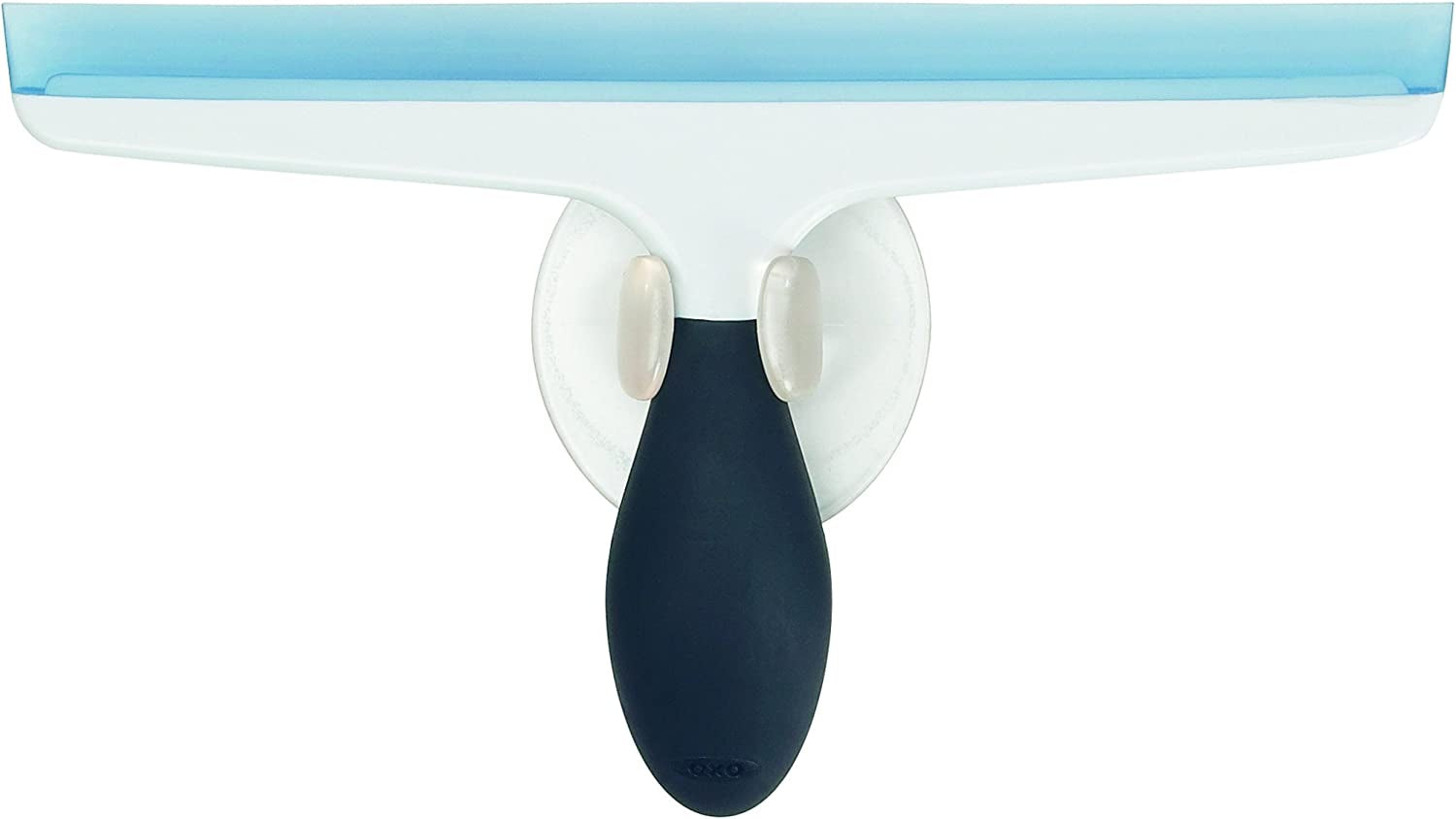
Keep the squeegee in the shower, not under the sink. Friction is what kills habits. An all-purpose squeegee with a suction cup stores on the wall inside the shower, and its flexible blade handles rippled or textured glass as well as flat panels.
Leave the door or screen open afterwards so the enclosure dries rather than staying humid.
Run the exhaust fan during and after. The "after" matters more — most of the moisture is still airborne when the water stops, so 15 to 20 minutes afterwards removes far more than running it only while you shower.
Removing What Has Already Built Up
Identify which deposit you have, because they respond to different things.
| Deposit | Looks like | Responds to |
|---|---|---|
| Soap scum | Cloudy, slightly waxy film | Mild alkaline cleaner, then rinse |
| Hard water / mineral | Chalky white spots or streaks | Mild acid such as white vinegar |
| Mould | Black or dark spots in grout and silicone | Dedicated mould treatment, then drying |
| Body oils | Smeary, worse at hand height | Detergent and warm water |
Give it dwell time. The most common mistake is spraying and immediately wiping. Most products need several minutes on the surface to work — applying, waiting, then wiping uses far less effort than scrubbing.
Work top-down. Glass and tiles first, then fittings, then the floor. Otherwise you clean the floor twice.
Never use an abrasive pad on glass. It produces fine scratches that trap more residue, and each clean gets harder. Those scratches cannot be undone.
Check the surface before using anything acidic. Vinegar suits glass and ceramic tile but can etch natural stone such as marble or travertine. If you are unsure, test somewhere hidden.
Grout and Silicone: A Moisture Problem
Mould in grout is not a cleaning failure. Grout is porous and silicone holds moisture at the edges — both grow mould because they stay damp, not because they are unclean. Scrubbing treats the symptom.
Dry the room and the problem slows dramatically. Ventilate, run the fan long enough, and leave the door open after showering.
Aim for 40% to 60% relative humidity. Sustained readings above 60% make mould growth on cold surfaces considerably more likely. Our guide on stopping condensation and damp covers the mechanism, and why an internal bathroom with a weak fan is the hardest case.
Absorbers help in enclosed spots, not open rooms. A fragrance-free moisture absorber works well inside a bathroom vanity or cupboard, where the air volume is small and unventilated. It will not keep pace with the room itself — that is what the fan is for.
Reseal grout periodically. Sealed grout absorbs far less and stays cleaner for longer.
If silicone is blackened through rather than on the surface, it has failed and needs replacing rather than cleaning. No product recovers it.
Storage Choices That Keep It Drier
Bathroom clutter holds water against surfaces, which is what causes marks under bottles and rust rings under tins.
Get items off the floor and off flat wet surfaces. An over-the-toilet storage shelf uses a hollow bottom specifically so air circulates and water drains rather than pooling — a genuinely useful detail in a wet room, and it carries up to 20 kg.
For more capacity, a freestanding 3-tier over-the-toilet rack measures 59 × 33 × 173 cm with the lowest shelf 86 cm off the ground, holds about 8 kg per shelf and needs no drilling — which matters in a rental.
Powder-coated steel chips, and chips rust. Check fixings and feet periodically, particularly near the coast.
Our guides on small bathroom storage ideas and how to choose a towel rail cover getting textiles drying properly rather than staying damp.
A Realistic Routine
| Frequency | Task |
|---|---|
| After each shower | Squeegee glass, fan on 15–20 min, door open |
| Weekly | Wipe tiles and fittings, clean the floor |
| Monthly | Treat glass for scum or mineral marks; check grout |
| Every 3 months | Clean the exhaust fan cover, check silicone |
| Annually | Reseal grout; check and replace failed silicone |
Cleaning the fan cover matters more than it sounds. A dust-clogged exhaust fan moves a fraction of the air it should, which quietly undoes the ventilation the whole routine depends on. Our guide on cleaning light fittings safely covers the power-off-first rule, which applies equally here.
Anything beyond cleaning the cover is electrical work. Replacing or rewiring an exhaust fan must be done by a licensed electrician in Australia.
Ready to Reset the Bathroom?
Start with the squeegee habit, because it prevents the problem rather than treating it, and it is the only step that pays off every single day. Then fix the ventilation so grout and silicone dry between uses. Chemicals are for what has already built up, not for what you can stop forming. Browse the full Pattan Australia range for squeegees, storage and moisture control.
Frequently asked questions
How do you keep shower glass clean?
Squeegee it after every shower, which takes about 30 seconds. The cloudy film is dissolved minerals and soap residue left behind when droplets evaporate on the glass, so removing the water prevents it forming. Leave the screen open afterwards and run the exhaust fan for 15 to 20 minutes.
What removes soap scum from a shower screen?
A mild alkaline bathroom cleaner with several minutes of dwell time, then a thorough rinse. Hard water marks are different — those are mineral deposits and respond to a mild acid such as white vinegar. Never use abrasive pads on glass, since the scratches trap more residue permanently.
Why does mould keep coming back in bathroom grout?
Because grout is porous and stays damp, not because it is unclean. Scrubbing treats the symptom. Improve ventilation, run the exhaust fan for 15 to 20 minutes after showering, keep humidity between 40% and 60%, and reseal grout periodically so it absorbs less moisture.
Can you use vinegar on bathroom tiles?
On glass and ceramic tile, yes — it is effective against mineral deposits. Avoid it on natural stone such as marble or travertine, where the acid can etch the surface. Test on a hidden area first if you are unsure what your tiles are.
How long should you run a bathroom exhaust fan?
During the shower and for 15 to 20 minutes afterwards. Most of the moisture is still airborne once the water stops, so the period after matters more than the period during. Keep the bathroom door closed while it runs so the fan extracts rather than spreading humid air through the house.
How do you stop rust marks under bottles in the shower?
Get items off flat wet surfaces so water cannot pool underneath them. Storage with a hollow or slatted base lets water drain and air circulate, which is what prevents both rust rings and the marks left under bottles on a solid shelf.