Cart
0
Quick answer: Clean and dry everything completely before storing it, keep cushions somewhere ventilated rather than sealed in plastic, and lift furniture off the ground so moisture cannot wick up into legs and feet.
TL;DR: Outdoor furniture in Australia fails from three things: UV, salt and trapped moisture. The first two are unavoidable and managed by material choice and placement. The third is entirely self-inflicted, and it is the one that destroys most cushions — storing them even slightly damp, or sealing them in airtight plastic where any residual moisture has nowhere to go. Covers have the same trap: a cover that keeps rain off also keeps evaporation in, so a non-breathable cover on damp furniture is worse than no cover. Clean, dry fully, store ventilated, and lift everything off the ground. Do that and most outdoor furniture lasts several times longer than it otherwise would.
Key facts
- Store cushions only when completely dry; sealed damp fabric develops mould and odour within weeks.
- Non-breathable covers trap evaporating moisture and can cause more damage than no cover.
- Powder-coated steel rusts once the coating chips; aluminium and good-grade stainless steel do not.
- Lift furniture off concrete or timber so moisture cannot wick into feet and legs.
- Australian UV degrades plastic joints and fabric faster than most northern-hemisphere guidance assumes.
- Coastal salt air attacks any break in a finish, so touch up chips early.
The Three Things That Destroy Outdoor Furniture
UV. Australian sun is harsher than most manufacturer guidance assumes. It fades fabric, chalks paint and makes plastic joints brittle over a few summers. Shade is the single best protection — our guide on getting your outdoor area ready for spring covers shading.
Salt. Within a few kilometres of the coast, salt finds every chip and scratch. Once powder coating breaks, rust starts underneath and spreads beneath the finish where you cannot see it.
Trapped moisture. The avoidable one. Water that cannot evaporate causes mould in fabric, rot in timber and rust in metal — and it is usually caused by how things are stored, not by rain.
Care by Material
| Material | Cleaning | Watch for |
|---|---|---|
| Aluminium | Mild detergent, rinse, dry | Nothing much — it does not rust |
| Powder-coated steel | Mild detergent, dry immediately | Chips; touch up early |
| Stainless steel | Mild detergent; check grade near coast | Surface tea-staining near salt |
| Timber (hardwood) | Soft brush, mild soap, dry fully | Greying is cosmetic; softness is rot |
| Synthetic rattan | Brush out debris, wipe, rinse | UV brittleness at joins |
| Glass tops | Squeegee or soft cloth | Never abrasives |
| Fabric cushions | Brush off, spot clean, dry fully | Mould from storage, not use |
Timber going grey is not damage. It is UV weathering the surface. Press a screwdriver into any dark or soft area — if it sinks easily, that is rot, and that is different.
Touch up powder-coat chips as soon as you see them. A chip the size of a pinhead becomes a rust patch the size of a coin within a season near the coast.
Glass tops respond well to a squeegee. An all-purpose squeegee with a flexible blade clears water without streaking and stores on a wall by its suction cup.
Cushions — Where Most of the Loss Happens
Cushions do not fail from use. They fail from storage.
Dry them completely before storing. This is the rule people break. Foam holds water in the core long after the cover feels dry to the touch — press hard and check, and give them a day longer than you think in real airflow.
Never seal them in airtight plastic for months. Any residual moisture has nowhere to go and the whole bag becomes a humid chamber. Use breathable containers instead.
Store them somewhere ventilated and off the floor. A set of foldable fabric storage bins at 25 × 25 × 25 cm each suits smaller cushions and folds flat when the season turns, which matters if storage space is the constraint.
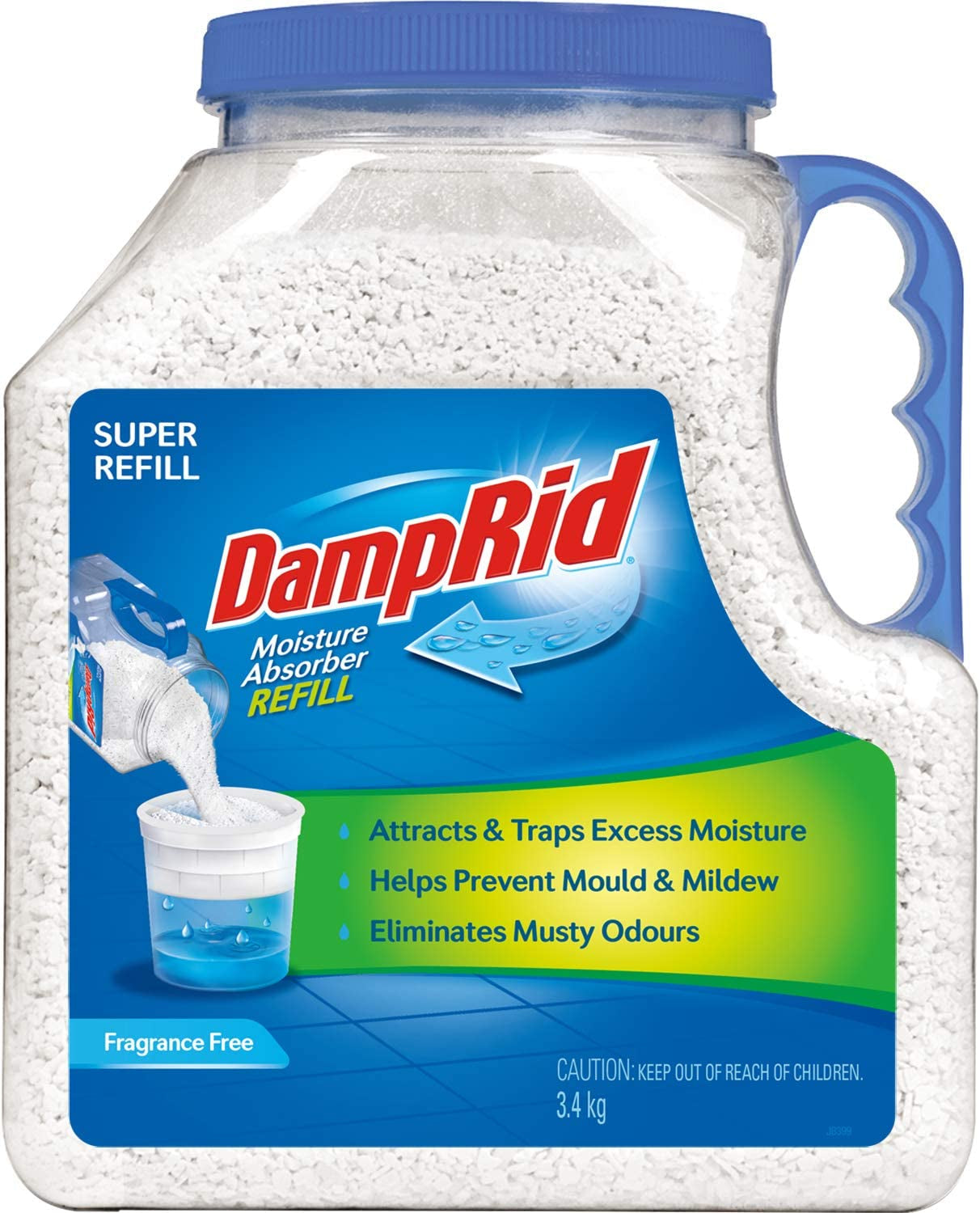
Add an absorber to any enclosed storage. A shed, a deck box or a cupboard is exactly the small unventilated volume where a fragrance-free moisture absorber works well. It is fragrance-free, so it will not scent the fabric.
Stand cushions on edge rather than stacking flat, so air moves between them.
Our cushion size and layering guide covers proportions when they come back out.
The Truth About Covers
A cover that keeps rain out also keeps evaporation in. This is the trade-off nobody mentions.
Only cover furniture that is completely dry. Covering damp furniture creates a humid enclosure and does more damage than leaving it uncovered.
Choose breathable covers, not solid plastic sheeting. Water-resistant and breathable is the combination you want.
Do not seal covers tight to the ground. Air needs to move underneath, or condensation forms on the furniture itself.
Check under the cover periodically. A cover left undisturbed for months is exactly where you find the surprise.
Lift Everything Off the Ground
Moisture wicks upward into timber legs and metal feet standing on concrete, pavers or decking.
Use feet, glides or a simple stand. Even a small gap breaks the moisture bridge, and it is the same principle as keeping pots off a deck to prevent staining.
On a balcony this matters more, because the surface is often concrete that holds water. Our guide on setting up a small balcony covers the weight and drainage considerations.
Seasonal Storage, Step by Step
- Clean everything according to material, using mild detergent rather than harsh chemicals.
- Dry completely. Several genuinely dry days for timber and foam, not a few hours of sun.
- Check and repair before storing — touch up chips, tighten fixings, replace perished feet. Damage stored is damage that worsens.
- Store cushions separately from frames, in breathable containers, off the floor, standing on edge.
- Stack frames stably and lift them off the ground.
- Add a moisture absorber to any enclosed space and check it mid-season.
Bringing it back out is the reverse, with one addition: check solar lighting and irrigation before you need them, since both fail quietly over months of disuse. Our guide on getting your outdoor area ready for spring covers that timeline, and keeping an outdoor area warm in winter covers what is worth leaving out year-round.
One safety note. Anything involving outdoor power points, hardwired lighting or a new circuit for a heater is electrical work, and in Australia must be carried out by a licensed electrician.
Ready to Protect Yours?
The rule that matters most is the simplest: nothing goes into storage damp. Clean, dry properly, store ventilated rather than sealed, and lift everything off the ground. Browse the full Pattan Australia range for storage and moisture control.
Frequently asked questions
How should you store outdoor cushions over winter?
Clean them, dry them completely including the foam core, and store them in breathable containers rather than sealed plastic. Keep them off the floor and standing on edge so air circulates. Adding a moisture absorber to an enclosed shed or deck box helps considerably.
Do outdoor furniture covers cause mould?
They can. A cover that keeps rain out also prevents evaporation, so covering furniture that is even slightly damp creates a humid enclosure and causes more damage than no cover. Use breathable water-resistant covers, only on completely dry furniture, and do not seal them tight to the ground.
How do you stop outdoor furniture rusting?
Choose aluminium or good-grade stainless steel near the coast, since neither rusts the way powder-coated steel does once its coating chips. Touch up any chip or scratch immediately, dry furniture after cleaning rather than leaving it wet, and lift feet off the ground so moisture cannot wick upward.
Why is my outdoor timber furniture turning grey?
That is UV weathering the surface, and it is cosmetic rather than structural. It can be sanded and re-oiled if you prefer the original colour. What does matter is softness — press a screwdriver into any dark area, and if it sinks easily that is rot rather than weathering.
Should outdoor furniture be stored indoors over winter?
Not necessarily, but it must be dry and lifted off the ground wherever it is stored. Cushions benefit most from coming inside since fabric and foam suffer most from trapped moisture. Frames in durable materials such as aluminium generally cope outdoors if they are covered breathably or left to drain and dry.
How do you clean glass outdoor table tops?
Use a soft cloth or a squeegee with mild detergent, then dry to prevent water marks. Never use abrasive pads, which leave fine scratches that trap dirt and cannot be undone. A squeegee is quicker and leaves fewer streaks than wiping dry with cloth alone.