Cart
0
TL;DR: The core of any cushion size and layering guide is two numbers and one rule. The two numbers are the standard Australian sizes, 45 x 45 cm for the everyday square, 65 x 65 cm for a European square, and 30 x 50 cm for a lumbar. The rule is to buy your insert 5 cm larger than the cover, so a 45 cm cover takes a 50 cm insert. That single adjustment is the difference between a cushion that looks plump and one that looks half-empty. Layer back to front and tall to short: on a bed, sleeping pillows, then Europeans, then squares, then one lumbar at the front. On a sofa, work in odd numbers with the largest cushions in the outside corners.
Cushions are a low-effort way to change how a room feels, and an easy thing to get slightly wrong. Most of the time the problem is not taste, it is geometry. Covers bought without checking the insert size sag in the middle. Every cushion is the same size, so the arrangement looks flat. There are four on a sofa instead of three or five, so nothing has a focal point.
This guide covers the standard sizes you will actually encounter in Australia, why insert sizing matters more than anything else, layering formulas for each bed size and sofa configuration, and how to work texture in through winter without simply piling on more cushions.
Standard Cushion Sizes in Australia
Most cushion covers sold here fall into a handful of sizes. Knowing them saves a lot of guesswork.
| Name | Size | Typical use |
|---|---|---|
| Standard square | 45 x 45 cm | The everyday workhorse; sofas, armchairs, front row on a bed |
| Large square | 50 x 50 cm | Deeper sofas; a slightly more generous look |
| European square | 65 x 65 cm | Back row on a bed, against the bedhead |
| Oversized square | 60 x 60 cm | Large sectionals and deep-seated lounges |
| Lumbar / rectangular | 30 x 50 cm | Front row on a bed; lower back support on a sofa |
| Long lumbar | 35 x 60 cm | Wide sofas and bench seating |
| Standard bed pillow | 48 x 73 cm | Sleeping, not styling |
Two things worth noting. First, a European square is 65 x 65 cm, not 60 x 60 cm, and mixing the two on the same bed will look uneven. Second, a standard sleeping pillow at 48 x 73 cm is not a styling cushion. It goes at the very back, under everything else, or gets tucked away during the day. It is the wrong shape to do decorative work.
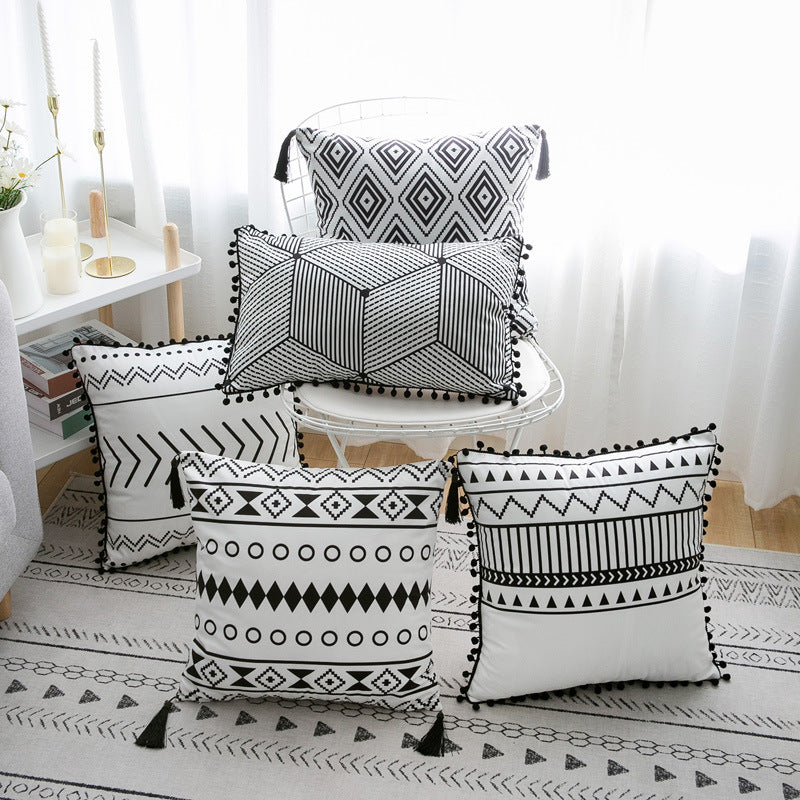
Most decorative covers, including the Nordic Bohemian Cushion Cover and the Vintage Linen Cushion Cover, are made to the 45 x 45 cm standard, which is why that size is the safest default if you are building a collection over time.
The Insert Rule: Buy 5 cm Larger Than the Cover
This is the single most useful thing in this guide, and it is the step most people skip.
Buy your cushion insert 5 cm larger than the cover on each dimension.
- 45 x 45 cm cover, use a 50 x 50 cm insert
- 50 x 50 cm cover, use a 55 x 55 cm insert
- 65 x 65 cm cover, use a 70 x 70 cm insert
- 30 x 50 cm lumbar cover, use a 35 x 55 cm insert
A cover filled with an insert of exactly the same size will always look slightly deflated, because the fabric needs something pressing outward into the corners to hold its shape. An insert 5 cm larger fills those corners, gives the cushion a firm face, and lets it hold a karate chop or a soft dent instead of collapsing.
Insert filling matters too:
- Feather and down gives the softest, most sinkable result and moulds beautifully, but needs plumping regularly and is not suitable for anyone with a feather allergy.
- Polyester fibre holds its shape with no maintenance, is easy to wash, and is allergy-friendly. It does not soften and drape the way feather does.
- Feather-and-fibre blends sit between the two and are a sensible middle ground for a sofa that gets daily use.
If you would rather not size inserts separately, some covers are available as a set with the insert included. The Tassel Tufted Cushion Cover comes either as a cover on its own or as a complete set with the pillow core, in both 45 x 45 cm and 30 x 50 cm.
Layering a Bed: The Formula by Bed Size
The principle is simple: work back to front, tall to short, plain to patterned. The back row is the largest and quietest, and each row forward gets smaller and more decorative.
Single or king single Two sleeping pillows at the back, one 45 x 45 cm square in front, one 30 x 50 cm lumbar at the very front. Four pieces total. Anything more crowds the bed.
Double Two sleeping pillows, two 45 x 45 cm squares, one lumbar. Five pieces. A double is not wide enough to carry Europeans plus squares without looking stacked.
Queen Two sleeping pillows, two 65 x 65 cm Europeans, two 45 x 45 cm squares, one lumbar. Seven pieces, in four clear rows. This is the arrangement that reads as a properly made bed in most Australian homes, and the queen is among the more common bed sizes here.
King Two or three sleeping pillows, three 65 x 65 cm Europeans, two or three 45 x 45 cm squares, one long lumbar. A king is wide enough that three Europeans across the back looks deliberate where two would leave visible gaps at each end.
Three rules that apply regardless of size:
- Keep the back row plain. Europeans in a solid colour or a subtle texture give the patterned front cushions something to sit against. Pattern behind pattern cancels itself out.
- Odd numbers in the front row. One lumbar, or three small squares. An even number in the front row splits the bed visually down the middle.
- Repeat one colour twice, not once. A single accent colour appearing on exactly one cushion looks accidental. The same colour appearing on two cushions in different rows looks planned.
If you are also thinking about how the bed performs rather than just how it looks, our guide on choosing a doona warmth rating covers the layer underneath all of this.
Layering a Sofa: Odd Numbers and Corner Weight
Sofas follow a different logic to beds. There is no back-to-front build, so the arrangement is left to right, with weight in the outside corners.
Two-seater or loveseat: three cushions. Two 45 x 45 cm in the corners and one lumbar off-centre, or two in one corner and one in the other.
Three-seater: five cushions. Two at each end, one lumbar sitting slightly off-centre. Within each pair, put the larger cushion at the back and the smaller in front.
Sectional or L-shaped: six or seven. Anchor the outside corner of each arm with the largest size, work inward with smaller cushions, and use the internal corner of the L for one oversized cushion or a long lumbar.
Armchair: one. A single lumbar in the small of the back, or one 45 x 45 cm square. An armchair with three cushions on it is an armchair nobody sits in.
Three sofa-specific rules:
- Size the cushion to the seat depth. A deep-seated lounge swallows a 45 cm cushion. If your sofa has a deep seat, 50 x 50 cm or 60 x 60 cm will hold the space properly.
- Asymmetry beats symmetry. Two matching cushions at each end and nothing else looks like a showroom. Shifting one lumbar off-centre makes the whole arrangement look lived in.
- Leave sitting room. If the cushions have to be moved before anyone can sit down, there are too many. The test is whether two people can sit comfortably without relocating anything.
Working Texture In Through Winter
Through an Australian winter, the shift is textural rather than numerical. You are not adding more cushions, you are swapping surfaces.
Summer favours flat weaves, linen looks and cotton. Winter favours knits, chunky weaves, tufting, velvet and boucle, because the surfaces themselves read as warm before anyone touches them. A tufted weave like the tassel tufted cover carries visible texture and depth that a smooth cover does not, and that is what does the work in a winter scheme.
A practical approach that avoids buying twice:
- Keep the back row constant all year. Plain Europeans and sleeping pillows do not need to change.
- Swap the front row seasonally. Two or three covers is enough to change the character of the whole bed or sofa. Covers store flat, so you are not finding space for a second set of inserts.
- Add one throw, not four cushions. A knitted throw across the foot of the bed or over the arm of the sofa adds more warmth to a room, visually and actually, than another pair of cushions. Something like the Nordic Knitted Throw Blanket at 127 x 172 cm is long enough to run the width of a queen bed or drape properly over a three-seater.
- Repeat a texture across the room. If the cushions are knitted, echo it in the throw. A room where the textures speak to each other feels cohesive rather than collected.
For the broader question of making a bedroom feel warm through the colder months, from floor coverings to lighting, our guide on making your bedroom cosy in winter covers the rest of the room.
Cushion Layering at a Glance
| Where | How many | The formula |
|---|---|---|
| Single / king single bed | 4 | 2 sleeping + 1 square + 1 lumbar |
| Double bed | 5 | 2 sleeping + 2 squares + 1 lumbar |
| Queen bed | 7 | 2 sleeping + 2 Europeans + 2 squares + 1 lumbar |
| King bed | 8-9 | 2-3 sleeping + 3 Europeans + 2-3 squares + 1 long lumbar |
| Two-seater sofa | 3 | 2 corner squares + 1 lumbar off-centre |
| Three-seater sofa | 5 | 2 at each end + 1 lumbar off-centre |
| Sectional / L-shape | 6-7 | Largest in outside corners, smaller inward |
| Armchair | 1 | One lumbar or one square |
Ready to Refresh Yours?
Start by measuring what you already own. Check your cover sizes, check the inserts inside them, and replace any insert that matches the cover exactly with one 5 cm larger. Then decide what is missing from the formula for your bed or sofa size, and browse the full Pattan Australia range to fill the gaps.
Frequently asked questions
What size cushion insert do I need for a 45 x 45 cm cover?
Use a 50 x 50 cm insert. Buying the insert 5 cm larger than the cover fills the corners and gives the cushion a plump, firm shape. An insert the same size as the cover will always look slightly deflated.
What are the standard cushion sizes in Australia?
The standard square is 45 x 45 cm, the large square is 50 x 50 cm, and the European square is 65 x 65 cm. Lumbar cushions are usually 30 x 50 cm, with a long lumbar at 35 x 60 cm. A standard sleeping pillow is 48 x 73 cm.
How many cushions should be on a queen bed?
Seven works well: two sleeping pillows at the back, two 65 x 65 cm European squares, two 45 x 45 cm squares, and one lumbar at the front. Build back to front, largest to smallest, keeping the back row plain and the front row patterned.
How many cushions go on a three-seater sofa?
Five. Place two at each end with the larger cushion behind the smaller, then add one lumbar slightly off-centre. Odd numbers stop the arrangement splitting down the middle, and off-centre placement keeps it from looking like a showroom.
Should cushion inserts be feather or polyester?
Feather and down is softer and moulds well but needs regular plumping and is unsuitable for feather allergies. Polyester fibre holds its shape without maintenance and washes easily. A feather-and-fibre blend suits a sofa in daily use.
How do you make cushions feel warmer in winter?
Swap the front row of covers for knits, tufting, velvet or boucle rather than adding more cushions, and keep the plain back row unchanged. Adding one knitted throw across the bed or sofa does more for warmth than an extra pair of cushions.