Cart
0
Quick answer: Deal with water, food and appearance — a burst hose, a fridge full of spoiling food and a house that obviously looks empty cause almost every problem people return to.
TL;DR: Most going-away checklists are long and unranked, which is why people do the easy items and skip the ones that matter. Three categories account for nearly all the damage. Water is first: a failed washing machine hose or a leaking connection with nobody home is the most expensive thing that can happen, and turning off the taps takes a minute. Food is second, and the mistake is leaving a fridge half-full rather than emptying it or turning it off properly. Appearance is third — an unemptied letterbox and a house dark every single night are the two clearest signals that nobody is home. Everything else is comfort rather than protection.
Key facts
- Turning off washing machine and dishwasher taps is the highest-value minute of the whole process.
- An accumulating letterbox is the clearest signal that a house is unoccupied.
- Lights on a varying schedule read as occupied; the same light every night does not.
- Empty the fridge rather than leaving it half-full, and only turn it off if you empty it completely.
- A closed-up house accumulates moisture, so absorbers in cupboards prevent a musty return.
1. Water — Do This First
A failed hose with nobody home is the most expensive thing on this list, and it is also the cheapest to prevent.
Turn off the taps behind the washing machine and dishwasher. Braided hoses fail, and they fail under pressure. This one action takes a minute.
Turn off the main if you will be away more than a couple of weeks, unless something needs it — irrigation, a pool system, or a tenant.
Check under sinks before you go. A slow leak you have not noticed becomes a serious problem over three weeks.
Clear gutters if you are travelling into storm season. Blocked drainage is how rain gets inside — our guide on storm season and blackout prep covers the rest, since Australian storm season runs roughly October to April.
Drain and store hoses, and check outdoor taps are properly off.
2. Food and the Fridge
Empty rather than half-empty. A fridge with three things in it uses the same power and gives you three things to throw out.
Eat down for the week before. Plan the last few days around what is already there.
Only turn the fridge off if you empty it completely and prop the door open. A closed, switched-off fridge grows mould reliably, and that smell is very hard to remove afterwards.
Leave it running if you are keeping anything, and check the temperature is at or below 5°C — our guide on how to organise a fridge covers why that threshold matters.
Freezer stays on. Our guide on how to organise a freezer covers the −18°C rule, and a full freezer holds temperature better than an empty one if there is an outage while you are away.
Take the bins out. Including the small ones in bathrooms and bedrooms, which is the step most often forgotten and most often regretted.
3. Make It Look Occupied
An accumulating letterbox is the clearest signal a house is empty. Ask someone to clear it, or arrange a mail hold.
Vary the lighting. A single lamp on the same timer every night reads as a timer. Two or three lights on different schedules reads as people. A WiFi smart dimmable bulb can be controlled remotely, which lets the pattern change rather than repeat.
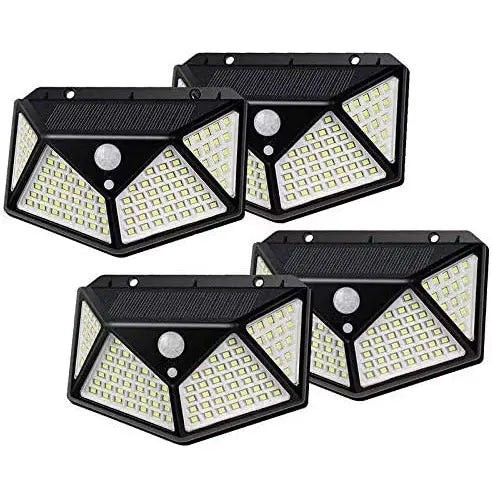
Motion-activated outdoor lighting is worth more than a light left on. A light that is always on tells you nothing; a light that comes on tells you something moved. A solar motion sensor wall light offers a 120-degree angle and 8 to 10 m detection, needs no wiring, and recharges itself — which matters when nobody is there to maintain it.
Do not announce it publicly. Posting travel plans before you leave is the modern equivalent of leaving a note on the door.
Ask someone to move a bin on collection day. It is a small detail that reads strongly as occupied.
Keep the garden looking maintained. An overgrown lawn after three weeks is visible from the street.
4. Power and Appliances
Unplug what does not need to run. Standby power costs money continuously, and unplugged devices are safe from surge if there is a storm.
Leave running: fridge, freezer, anything on a medical or security circuit, and the modem if anything depends on it.
Turn off at the wall: entertainment units, chargers, kitchen appliances, computers.
Our guide on reducing energy bills covers why standby is a genuine continuous load rather than a rounding error.
Anything involving the switchboard is electrical work and in Australia must be done by a licensed electrician.
5. Come Back to a House That Smells Right
A closed-up house accumulates moisture, and three weeks of no ventilation is exactly the condition that produces a musty return.
Put absorbers in the enclosed spaces before you go. A fragrance-free moisture absorber works in wardrobes, linen cupboards and under-sink cabinets — the small unventilated volumes where musty smells start. Our guide on getting rid of musty smells covers why those spots go first.
Leave internal doors open so air can move through the house rather than sitting in closed rooms.
Do the laundry before you go, and make sure everything is completely dry before it goes into a drawer or cupboard. Damp fabric in a closed house for three weeks is the single most reliable way to come home to a smell.
Leave the washing machine door ajar.
The Short Version
| Priority | Task | Why |
|---|---|---|
| 1 | Turn off washing machine and dishwasher taps | Highest-cost failure, one-minute fix |
| 2 | Empty the fridge; bins out | Prevents the worst returns |
| 3 | Stop the mail; vary the lights | The two clearest empty-house signals |
| 4 | Unplug non-essentials | Cost and surge protection |
| 5 | Absorbers in cupboards; doors open | Prevents a musty return |
Ready to Go?
Do the water first, because it is the cheapest minute with the largest downside. Then empty the fridge properly rather than halfway, stop the mail, and vary the lighting so the house reads as lived in. Browse the full Pattan Australia range for security lighting and moisture control.
Frequently asked questions
What should you turn off before going on holiday?
Turn off the taps behind the washing machine and dishwasher first, since a failed hose with nobody home is the most expensive thing that can happen. Unplug entertainment units, chargers and kitchen appliances. Leave the fridge, freezer, modem and any security or medical circuit running.
Should you turn the fridge off when going away?
Only if you empty it completely and prop the door open. A closed, switched-off fridge grows mould reliably and the smell is very difficult to remove afterwards. If you are keeping anything in it, leave it running and confirm it is at or below 5°C.
How do you make a house look occupied while away?
Stop the mail or have someone clear the letterbox, since an accumulating letterbox is the clearest signal. Vary lighting across two or three lights on different schedules rather than one lamp on the same timer every night, and ask someone to move a bin on collection day.
How do you stop a house smelling musty while away?
Put moisture absorbers in wardrobes, linen cupboards and under-sink cabinets before leaving, keep internal doors open so air can move, leave the washing machine door ajar, and make certain all laundry is completely dry before it goes into any drawer or cupboard.
Should you turn the water off when going away?
Turning off the washing machine and dishwasher taps is worth doing for any absence. Turning off the main is sensible for absences longer than a couple of weeks, unless irrigation, a pool system or a tenant needs it. Check under sinks for slow leaks before you go.
Is it safe to leave lights on a timer?
A timer is better than nothing but a single lamp on the same schedule every night reads as a timer rather than as people. Use two or three lights on differing schedules, and add motion-activated outdoor lighting, which is more informative than a light simply left on.