
Cart
0
Quick answer: Find the moisture causing it and dry that source out — musty smell is microbial growth on damp material, so any air freshener only masks it while the cause continues.
TL;DR: A musty smell is information. It means something is damp enough for mould or mildew to grow, and the smell will return every time until that stops. This is why the usual approach fails: people deodorise the room, the smell fades for a day, and comes back. The fix is a search, not a spray. Work through the usual suspects in order — enclosed cupboards on external walls, textiles that were stored damp, under-sink cabinets, and anything behind furniture pushed flat against a cold wall. Then dry it properly, which usually means ventilation rather than heat. Absorbers genuinely help, but only in small enclosed volumes, and they are a support to airflow rather than a substitute for it.
Key facts
- Musty smell is microbial growth on damp material, not dirt.
- Air fresheners mask the smell without addressing the moisture causing it.
- Wardrobes and cupboards on external walls are the most common indoor source.
- Textiles stored even slightly damp will smell within weeks.
- Aim to hold indoor humidity between 40% and 60%.
- Absorbers work in small enclosed volumes, not open rooms.
Find the Source First
Do not deodorise until you have found it. Masking removes the only signal you have.
Work through these in order — this is roughly how often each turns out to be the cause:
- Wardrobes and cupboards on external walls. Still air against the coldest surface in the room. This is the most common single source.
- Textiles stored damp. Bedding, towels, seasonal clothing, outdoor cushions. Anything put away before it was completely dry.
- Under-sink cabinets. Slow leaks are frequently discovered by smell rather than sight.
- Behind furniture pushed flat against an external wall. No airflow, cold surface, condensation.
- Carpet or underlay that has been wet at some point.
- The washing machine itself, particularly front-loaders — check the door seal and detergent drawer.
- Bathroom silicone and grout, if the smell is localised there.
Smell is directional if you let it be. Close doors, then open one space at a time. The smell will be strongest at the source.
If it is worse after rain rather than after a cold night, you are looking at a leak or a building fault rather than condensation.
Dry It Out Properly
Ventilation removes moisture. Heat alone just moves it. Warming a closed room raises the air's capacity to hold water without removing any of it, so it condenses again on the next cold surface.
Cross-ventilate. Two openings on opposite sides for ten minutes exchanges the air in a room far more effectively than one window ajar all day.
Empty the space completely and leave it open. A wardrobe cannot dry while full and shut.
Give it days, not hours. Anything absorbent — timber, plaster, carpet, foam — holds moisture well past the point of feeling dry.
Aim for 40% to 60% relative humidity. Sustained readings above 60% support both mould growth and dust mites. Our guide on stopping condensation and damp covers the physics, including why a house that dries washing indoors is fighting itself.
Where Absorbers Genuinely Work
In small, enclosed, unventilated volumes. That is the honest scope.
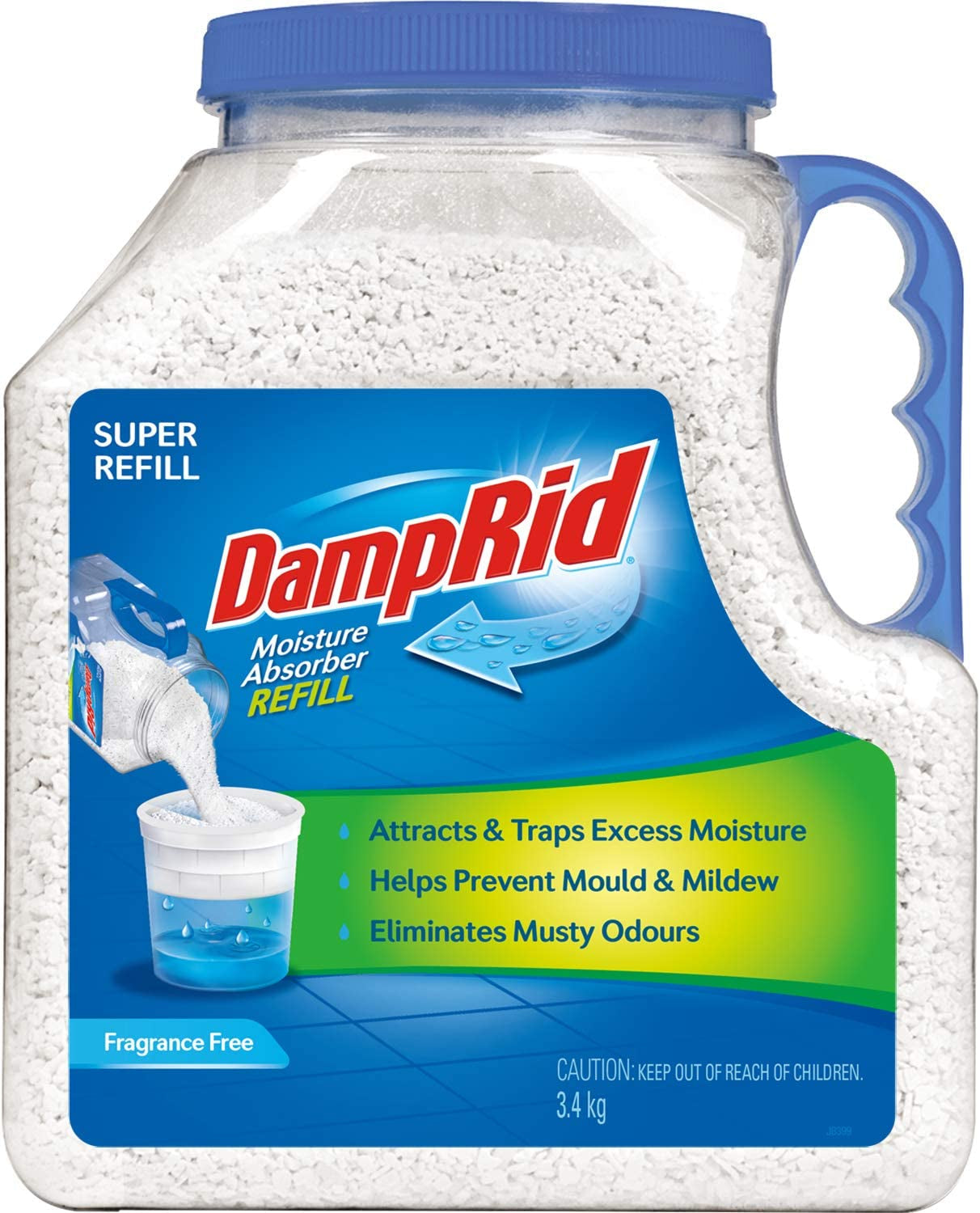
A fragrance-free moisture absorber suits a wardrobe, linen cupboard, under-sink cabinet, caravan, garage or a spare room nobody heats. Fragrance-free matters here — a scented one masks the very signal you are trying to monitor, and it scents stored linen.
They cannot manage a whole house. A family of four generates 10 to 15 litres of water vapour a day, and nothing passive keeps pace with that. Absorbers are for the pockets; ventilation is for the rooms.
Check and replace them. A saturated absorber does nothing, and this is the most common reason people conclude they do not work.
Fixing the Textiles
Anything that smells must be washed, not aired. Airing reduces the smell temporarily; the microbial growth remains in the fibres.
Wash, then dry completely — ideally in direct sunlight, which is both effective and free in Australia.
Do not put it back until the space is dry too, or you are returning clean fabric to the conditions that caused the problem.
Bedding is the volume case. Our guide on how often to wash your sheets covers the frequency table, including the mattress protector every one to two months and the pillows two to four times a year — both commonly missed and both absorbent.
Store dry, breathable and labelled. A set of foldable fabric storage bins at 25 × 25 × 25 cm each suits seasonal items — and avoid sealing textiles in airtight plastic for months, where residual moisture has nowhere to go. Our guides on wardrobe organisation and the indoor spring reset cover the seasonal changeover, where this problem is usually created.
Outdoor cushions are the classic offender. Our guide on storing and caring for outdoor furniture covers why foam cores hold water long after the cover feels dry.
Prevent It Coming Back
- Pull furniture 5 cm to 10 cm off external walls so air can move behind it.
- Leave wardrobe doors open periodically, particularly after a wet week.
- Never store anything damp, which covers most cases outright.
- Ventilate the bathroom properly — fan on during and for 15 to 20 minutes after. Our guide on cleaning bathroom glass and tiles covers why grout and silicone are a moisture problem rather than a cleaning one.
- Leave the washing machine door ajar between loads.
- Keep an absorber in the known problem spots and check it seasonally.
When It Is Not a Housekeeping Problem
If the smell persists after the space is genuinely dry and ventilated, or if it worsens after rain rather than after cold, stop treating it as cleaning.
Rising damp appears at floor level and works upward, often with a tide mark. A leak is localised and rain-driven. Both are building faults and need a builder or a qualified damp specialist rather than another absorber.
Ready to Track It Down?
Find the source before you deodorise, because masking removes your only signal. Then dry it with airflow rather than heat, and give it days. Absorbers are worth using in the cupboards and wardrobes where the problem usually starts — just not as a substitute for opening windows. Browse the full Pattan Australia range for moisture control and storage.
Frequently asked questions
What causes a musty smell in a house?
Microbial growth on damp material — mould or mildew feeding on moisture in fabric, timber, plaster or carpet. It is a moisture problem rather than a dirt problem, which is why cleaning and deodorising alone do not resolve it while the source stays damp.
Why does my wardrobe smell musty?
A wardrobe on an external wall is a small volume of still air against the coldest surface in the room, so moisture condenses there and stays. Pull furniture 5 cm to 10 cm off external walls, leave doors open periodically, and use a moisture absorber inside the enclosed space.
Do moisture absorbers actually work?
Yes, in small enclosed volumes such as a wardrobe, linen cupboard, caravan or unheated spare room. They cannot keep pace with a whole house, which generates 10 to 15 litres of vapour a day for a family of four. Check and replace them, since a saturated absorber does nothing.
How do you get a musty smell out of clothes?
Wash them rather than airing them, since airing only reduces the smell temporarily while the growth remains in the fibres. Dry completely, ideally in direct sunlight, and do not return them to storage until that space is dry too.
Does an air freshener fix a musty smell?
No. It masks the smell while the moisture causing it continues, so the smell returns. Worse, it removes the only signal you have for locating the source — so find and dry the source before deodorising anything.
When should you call someone about a damp smell?
When the smell persists after the space is genuinely dry and ventilated, when it appears at floor level with a tide mark, or when it worsens after rain rather than after a cold night. Those point to rising damp or a leak, which are building faults rather than housekeeping problems.