Cart
0
Quick answer: Put everything for one drink within arm's reach of where it is made — cups, beans or leaves, spoon, sugar — so the whole routine happens in one place instead of crossing the kitchen four times.
TL;DR: A coffee station is a zoning exercise, not a decorating one. The test is simple: can you make a cup without moving your feet? If you are reaching into three cupboards and a drawer, the zone is not working, and that is what causes the morning mess — things get taken out and put down rather than taken out and put back. Group everything for the drink in one place, keep it off the main preparation bench so it does not compete with cooking, and store beans and tea properly, because both degrade faster than people expect. Ground coffee is the biggest offender: it loses most of its aromatic quality within a couple of weeks of grinding, and storing it in the fridge makes it worse, not better.
Key facts
- Everything for making one drink should sit within arm's reach of the appliance.
- Site the station away from the main food preparation zone so the two do not compete.
- Store coffee in an airtight, opaque container at room temperature — not in the fridge.
- Ground coffee loses most of its aromatic quality within about two weeks.
- Tea absorbs surrounding odours, so it needs a sealed container of its own.
- Australian bench depth is around 60 cm, with only about 40 cm genuinely usable.
Choose the Location Before Anything Else
Away from the main preparation bench. The station will be used at the same time someone is making breakfast, so putting them in the same stretch guarantees a bottleneck.
Near a power point and, ideally, near the sink. Filling and rinsing is half the routine.
Not in a corner if more than one person uses it at once.
Consider a bench that is otherwise dead space. A short stretch beside the fridge, or the end of a run, is often unused and perfect. Our guide on organising a kitchen benchtop covers which parts of a bench are genuinely valuable — corners are the least useful for preparation and the best for a station.
Australian benches are typically about 60 cm deep with only around 40 cm usable, so a station needs a defined footprint rather than sprawling.
The Arm's-Reach Test
Stand where you make the drink. Can you reach everything without moving your feet?
If yes, the zone works. If no, the things you have to walk for are the things that will end up left on the bench.
What belongs in the zone:
- The machine, kettle or press
- Cups and mugs actually used daily
- Beans or leaves, in proper storage
- Spoons or a scoop
- Sugar or sweetener
- Filters or pods if relevant
What does not belong:
- The occasional-use teapot
- Six mugs nobody drinks from
- Anything for another task entirely
Be honest about mug count. Most households use three or four daily mugs and store fifteen. The rest belong elsewhere.
Storing Coffee Properly
Airtight, opaque, room temperature. Those three, in that order.
Not in the fridge. This is the most common mistake. Coffee is porous and absorbs surrounding odours, and moving it in and out of cold creates condensation on the beans, which degrades them faster.
Not in a clear jar on a sunny bench, however good it looks. Light degrades coffee.
Whole beans keep considerably longer than ground. Ground coffee loses most of its aromatic quality within about two weeks. If you grind, grind close to when you brew.
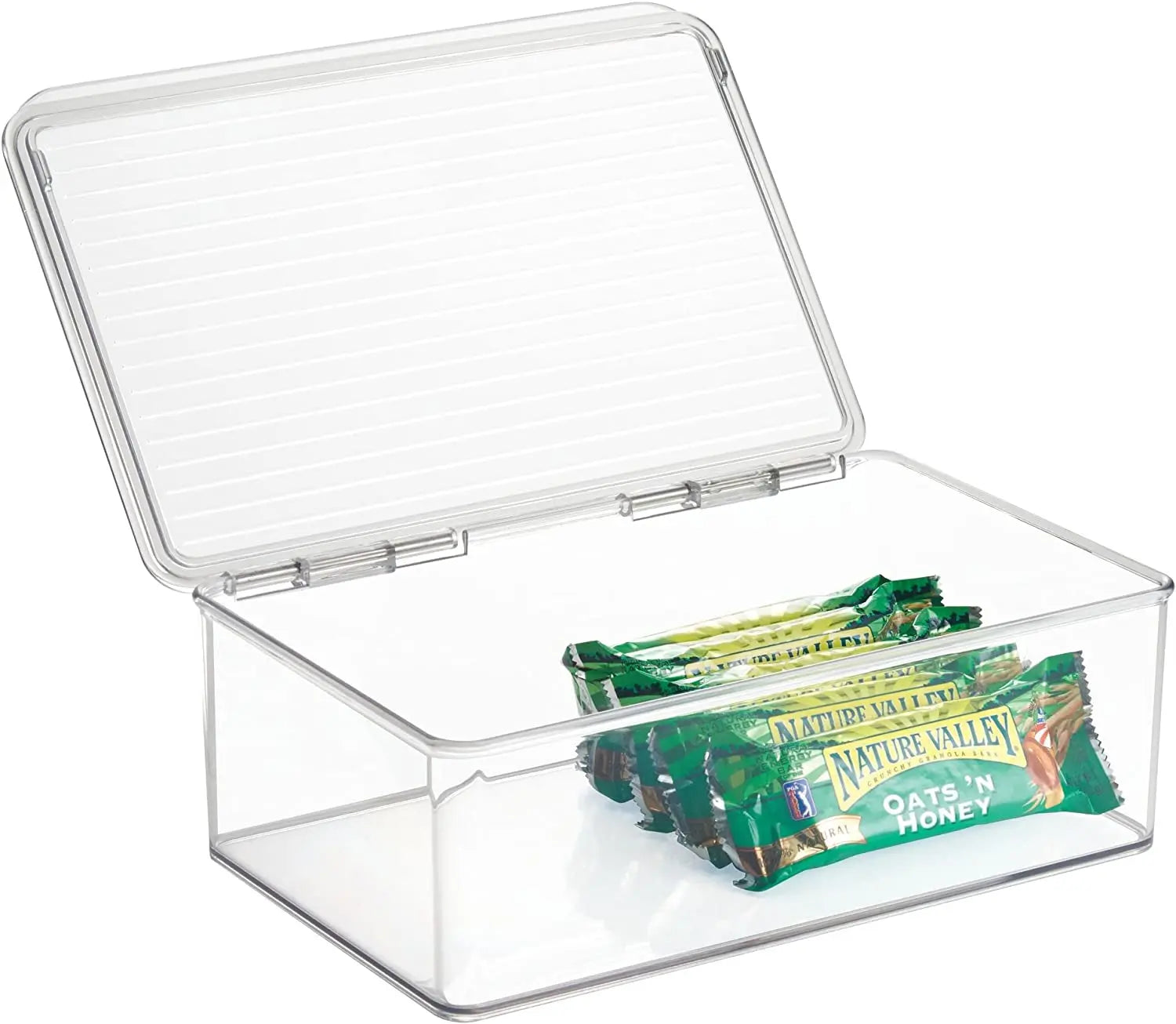
A stackable container with a sealing lid works well. A large stackable kitchen container at 27.5 × 18.5 × 9.5 cm is BPA-free with a hinged lid, and stacks so the zone stays compact rather than spreading sideways.
Storing Tea Properly
Tea absorbs odours even more readily than coffee, which is why loose leaf stored near spices tastes of spices.
Sealed, opaque, away from heat. Same principles.
Keep varieties separate. A single container of mixed tea bags means every variety tastes faintly of the strongest one — usually anything with peppermint or chai in it.
Divided storage is the practical answer. A container set with compartments in graduated sizes lets each variety keep to itself while staying in one place.
Contain the Zone
A tray or a bin defines the station and stops it creeping along the bench. It also means the whole thing lifts off in one movement when you clean.
Small items need a home or they migrate. A set of clear organiser bins at 25 × 15 × 7.6 cm each corrals sachets, pods and spoons inside a cupboard above the station.
Go vertical for anything that must stay out. Height costs no bench area. Our guide on small kitchen storage ideas covers finding that space, and how to organise a pantry covers where the backstock lives — buying in bulk is fine, but the bulk does not belong in the zone.
Keep bulk supply out of the station. Only the working amount stays; the rest goes in the pantry.
Keep It Working
Reset it after the morning rush, not at the end of the day. Thirty seconds while the kettle is still warm.
Wipe as you go. Coffee and tea both stain, and both are far easier to remove immediately than later.
Descale the kettle or machine on a schedule. Hard water areas need it more often, and a scaled element is both slower and more expensive to run.
Store the working amount only, so the container stays small enough to fit the zone.
Ready to Build Yours?
Pick a spot away from the preparation bench, then apply the arm's-reach test — if you have to walk for something, it is in the wrong place. Store beans and leaves airtight and opaque at room temperature, never in the fridge, and keep bulk supply out of the zone entirely. Browse the kitchen storage collection for containers and organisers.
Frequently asked questions
How do you set up a coffee station at home?
Choose a spot away from the main food preparation bench, ideally near a power point and the sink, then group everything needed for one drink within arm's reach — machine, daily mugs, beans or leaves, spoon and sweetener. If you have to walk for something, it will end up left on the bench.
Should you store coffee in the fridge?
No. Coffee is porous and absorbs surrounding odours, and moving it in and out of the fridge creates condensation on the beans that degrades them faster. Store it airtight, opaque and at room temperature, away from direct light.
How long does ground coffee stay fresh?
Ground coffee loses most of its aromatic quality within about two weeks. Whole beans keep considerably longer, which is why grinding close to when you brew makes a noticeable difference. Buy in quantities you will use rather than storing large amounts ground.
How should you store tea?
Sealed, opaque and away from heat, with varieties kept separate. Tea absorbs surrounding odours even more readily than coffee, so loose leaf stored near spices will taste of them, and mixed tea bags in one container all end up tasting of the strongest variety present.
Where should a coffee station go in a small kitchen?
On a stretch of bench that is otherwise dead space — beside the fridge or at the end of a run — rather than on the main preparation area. Corners are the least valuable bench space for preparation and among the best for a station, and going vertical keeps the footprint small.
How do you stop a coffee station taking over the bench?
Define it with a tray or bin so it has an edge, keep only the working amount of beans or tea in the zone with bulk supply in the pantry, and be honest about mug count — most households use three or four daily and store far more.