Cart
0
Quick answer: Fix four things in order — darkness, temperature, noise, then bedding — because the first two do more for sleep quality than anything you can buy for the bed.
TL;DR: Sleep environment advice usually starts with the mattress, which is the most expensive variable and rarely the limiting one. Light and temperature matter more, and both are cheaper to fix. Light exposure suppresses melatonin, so a room that is dark at 10pm and light at 6am works with your body rather than against it — and in Australia, where summer sunrise is early, blocking that morning light is often the single biggest available win. Temperature is next: a cooler room supports sleep, and roughly 18°C to 20°C is the range worth aiming at. Noise third. Bedding last — not because it does not matter, but because good bedding in a bright, hot room will not rescue the sleep.
Key facts
- Roughly 18°C to 20°C is the bedroom temperature range that supports sleep.
- Light exposure suppresses melatonin, so darkness at bedtime matters more than most bedding choices.
- Australian summer sunrise is early, making morning light a common cause of waking too soon.
- Warm light around 2700 K suits evening; daylight-white belongs in a kitchen, not a bedroom.
- An adult loses roughly 500 mL of moisture over an average night's sleep.
- Breathable bedding outperforms high thread count in a warm climate.
1. Darkness First
Light is the strongest environmental signal your body uses to decide whether it is night. Even modest light exposure at bedtime suppresses melatonin.
Deal with the morning, not just the evening. Australian summer sunrise is early, and a bedroom that admits it will wake you before you intended regardless of when you went to bed. This is the most commonly overlooked fix in Australian bedrooms.
Block at the window, not with an eye mask, if you can — blockout curtains or blinds address the room rather than one sleeper.
Deal with device and standby lights. A charging light, a television standby LED and a clock face all add up in a genuinely dark room. Cover them or move them.
If you need light at night, make it dim and warm. A star projector night light runs from any USB source and projects softly rather than lighting the room, which suits a child's room or a hallway marker. Flameless LED tea lights give low warm light with no flame — the right choice beside a bed, where a real candle near bedding is a genuine hazard.
Evening light should be warm, around 2700 K. Daylight-white globes belong in a kitchen. Our guide on warm white versus cool white covers the choice, and how many lumens you need per room covers not over-lighting a bedroom, which is a common mistake.
A lamp you can reach beats the overhead light, because it means the room never has to go from bright to black. Our guide on styling a bedside table covers getting the lamp height right against your shoulder when sitting up.
Anything hardwired is electrical work and in Australia must be done by a licensed electrician. Lamps and globes are not.
2. Temperature
Aim for roughly 18°C to 20°C. A cooler room supports sleep; an over-warm one is one of the most common causes of waking through the night.
Air movement helps more than lowering the thermostat further. A ceiling fan on low makes a warmer room feel comfortable without the running cost of pushing the air conditioner harder. A reversible DC motor ceiling fan at 65 cm suits rooms of 8 to 20 m² and is only 15 cm tall, which matters in a low bedroom.
Direction matters seasonally. Counterclockwise in summer pushes air down for a cooling draught; clockwise in winter circulates warm air without one. Our guides on keeping a house cool in summer and keeping a house warm in winter cover the wider room.
Aim air across the bed, not at your face.
3. Noise
Consistent sound beats intermittent sound. A fan running at a steady low speed masks irregular noise better than silence does, which is part of why fans help sleep beyond the cooling.
Deal with the specific intrusion. Traffic, a noisy fridge, a partner's alarm — each has a different fix, and a general solution rarely addresses any of them well.
Soft furnishings absorb. Rugs, curtains and upholstered surfaces reduce echo in a hard-surfaced room.
4. Bedding — Last, Not Least
An adult loses roughly 500 mL of moisture over an average night. Bedding that traps that moisture is what makes a bed feel clammy, and it matters more in Australia than thread count ever will.
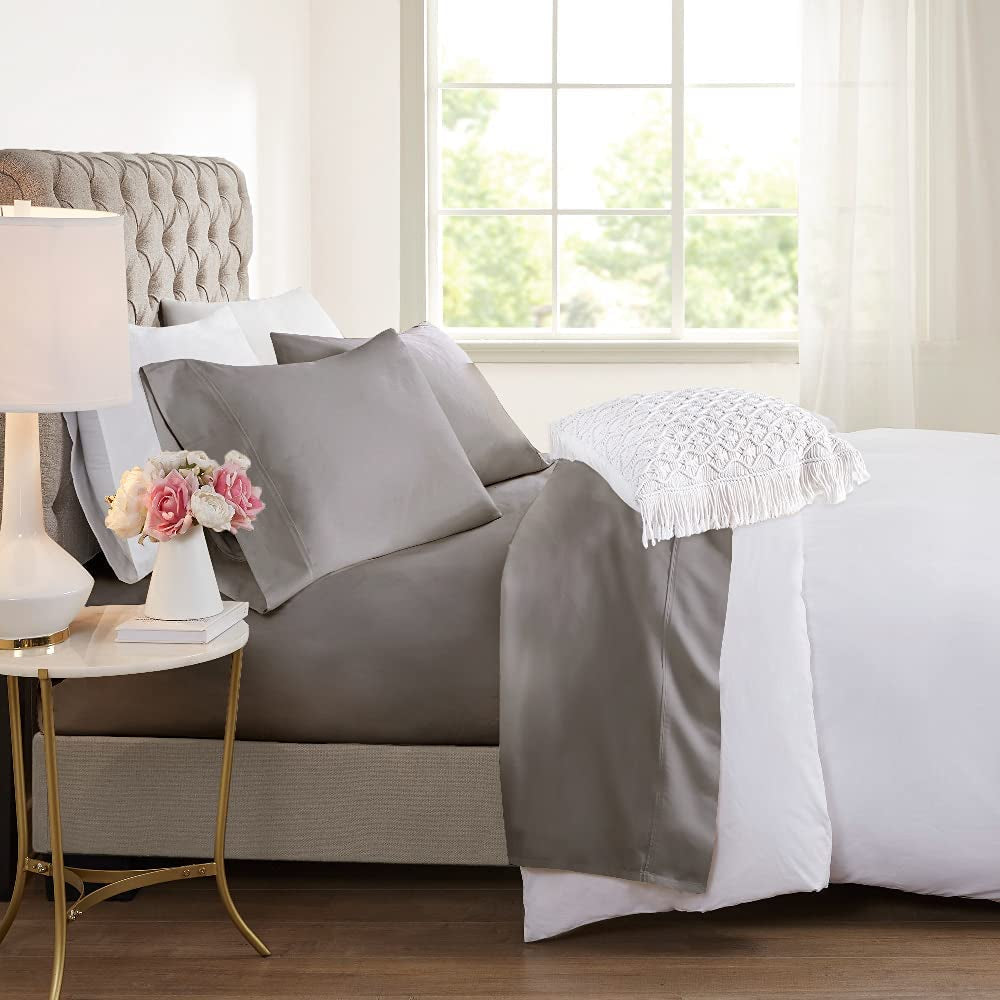
Breathable beats dense. A cooling bamboo sheet set is built around airflow and moisture handling rather than density alone, and includes a fitted sheet, flat sheet and two pillowcases.
Check the layer underneath too. A waterproof mattress protector that does not breathe undoes good sheets entirely. An all-seasons eucalyptus Tencel protector is designed for temperature regulation rather than waterproofing — our guide on choosing a mattress protector covers when you need a membrane and when you do not.
Get the size right. Our Australian bed sizes chart covers every size in centimetres and the fitted-sheet depth issue that causes sheets to pop off thick mattresses.
Change the doona seasonally rather than using one weight year-round — our doona warmth rating guide covers matching it to the season.
Wash it often enough. Every 7 to 14 days, weekly in summer. Our guide on how often to wash your sheets has the full table.
The Order, in One Place
| Priority | Fix | Why it ranks here |
|---|---|---|
| 1 | Block light, especially morning | Strongest signal, cheapest fix, most overlooked |
| 2 | Temperature 18–20°C with air movement | Second strongest, and fans cost little to run |
| 3 | Consistent sound, address specific noise | Masking beats silence for most people |
| 4 | Breathable bedding, right size, washed often | Real, but cannot rescue a bright hot room |
Ready to Reset the Room?
Start with the windows, because morning light is the most common Australian sleep disruptor and the cheapest to fix. Then get the temperature into the 18°C to 20°C range with a fan rather than a colder thermostat. Bedding is worth doing well, but do it after the room is dark and cool. Browse the full Pattan Australia range for bedding, fans and bedroom lighting.
Frequently asked questions
What is the best bedroom temperature for sleep?
Roughly 18°C to 20°C. A cooler room supports sleep, and an over-warm bedroom is one of the most common causes of waking through the night. Air movement from a ceiling fan on low makes a slightly warmer room feel comfortable without pushing the air conditioner harder.
How do you make a bedroom darker?
Block at the window with blockout curtains or blinds rather than relying on an eye mask, since that addresses the whole room. Then deal with device and standby lights — charging LEDs, television standby lights and clock faces are all noticeable in a genuinely dark room.
Why do I keep waking up early in summer?
Usually early sunrise. Australian summer daylight arrives well before most people intend to wake, and a bedroom that admits it will wake you regardless of bedtime. Blocking morning light at the window is often the single largest available improvement to sleep in an Australian bedroom.
What colour light is best in a bedroom at night?
Warm light around 2700 K. Daylight-white and cool-white globes suppress melatonin more and belong in kitchens and workspaces. A reachable bedside lamp is also better than the overhead light, because it means the room never has to jump from fully bright to fully dark.
Does bedding really affect sleep quality?
Yes, but less than light and temperature. An adult loses roughly 500 mL of moisture over a night, so breathable bedding that moves that moisture matters more than thread count in a warm climate. Check the mattress protector too, since a non-breathable one undoes good sheets.
Do fans help you sleep?
In two ways. Air movement makes a warmer room feel comfortable without lowering the thermostat, and the consistent low-level sound masks irregular noise better than silence does. Aim the airflow across the bed rather than directly at your face.