Cart
0
Quick answer: Most household dust comes from inside — textiles shedding fibres and skin cells — so reducing it means dealing with fabric and airflow, not cleaning harder.
TL;DR: People assume dust blows in from outside, and some does, but the majority of what settles on your surfaces is generated indoors: fibres shed by carpet, bedding, curtains and upholstery, plus skin cells. That changes the strategy completely. Cleaning more often removes dust after it has landed; reducing textile shedding, sealing the gaps dust rides in through, and managing airflow reduces how much lands in the first place. The order also matters — cleaning bottom-up means doing the job twice, because everything above drops onto what you have just finished. And in Australia, humidity is the variable most people miss: dust mites thrive above about 50% relative humidity, which describes most of coastal Australia for much of the year.
Key facts
- The majority of household dust is generated indoors from textiles and skin cells, not blown in.
- Always clean top-down; cleaning bottom-up means repeating the job.
- Dust mites thrive above roughly 50% relative humidity — aim to hold indoors at 40% to 60%.
- Ceiling fan blades collect dust on the upper face, invisible from below, then redistribute it.
- Damp or electrostatic cloths capture dust; dry feather dusters mostly relocate it.
- Washing bedding every 7 to 14 days is one of the highest-impact dust controls available.
Where Dust Actually Comes From
Indoors, mostly. Carpet, rugs, curtains, upholstery and bedding shed fibres continuously. Skin cells add to it. Together these make up the bulk of what settles on a shelf.
Outdoors contributes through open windows, doors, gaps and on shoes and pets — more if you live near a road, on a building site, or in a dry inland area.
Why this matters: if most dust is generated inside, then the highest-leverage actions are about textiles and airflow, not about cleaning frequency. Cleaning is downstream of the problem.
Reduce What Is Generated
Bedding is the biggest single textile source, because it is fabric you spend eight hours a night in contact with. Washing sheets every 7 to 14 days — weekly in summer — removes both fibres and the skin cells feeding dust mites. Our guide on how often to wash your sheets covers the full frequency table, including the items people forget: the mattress protector every one to two months and the pillows themselves two to four times a year.
A mattress protector contains a great deal of it. A bamboo terry protector is washable and sits between you and the mattress, which is otherwise a reservoir you cannot clean. Our guide on choosing a mattress protector covers depth and breathability.
Wash or replace tired textiles. Old carpet, worn cushions and ageing curtains shed considerably more than newer ones.
Contain what you can. Storing textiles in closed containers rather than open shelving stops them shedding into the room. A set of foldable fabric storage bins with lids at 25 × 25 × 25 cm works for linen and seasonal items — and our wardrobe organisation guide covers keeping stored fabric contained rather than open to the room.
Shoes off at the door removes a genuine share of tracked-in grit. Our guide on organising a small entryway covers making that practical rather than aspirational.
Clean in the Right Order
Top-down, always. Gravity decides this and ignoring it means cleaning twice.
- Ceiling fans and light fittings first. Blades collect dust on the upper face where nobody sees it, and running a fan before cleaning it redistributes that across the entire room. Our guide on cleaning a ceiling fan covers the pillowcase method, which traps dust instead of releasing it.
- Light fittings and shades. Our guide on cleaning light fittings safely covers the power-off-first rule and which materials tolerate moisture.
- Shelves, tops of wardrobes, picture rails.
- Surfaces and furniture.
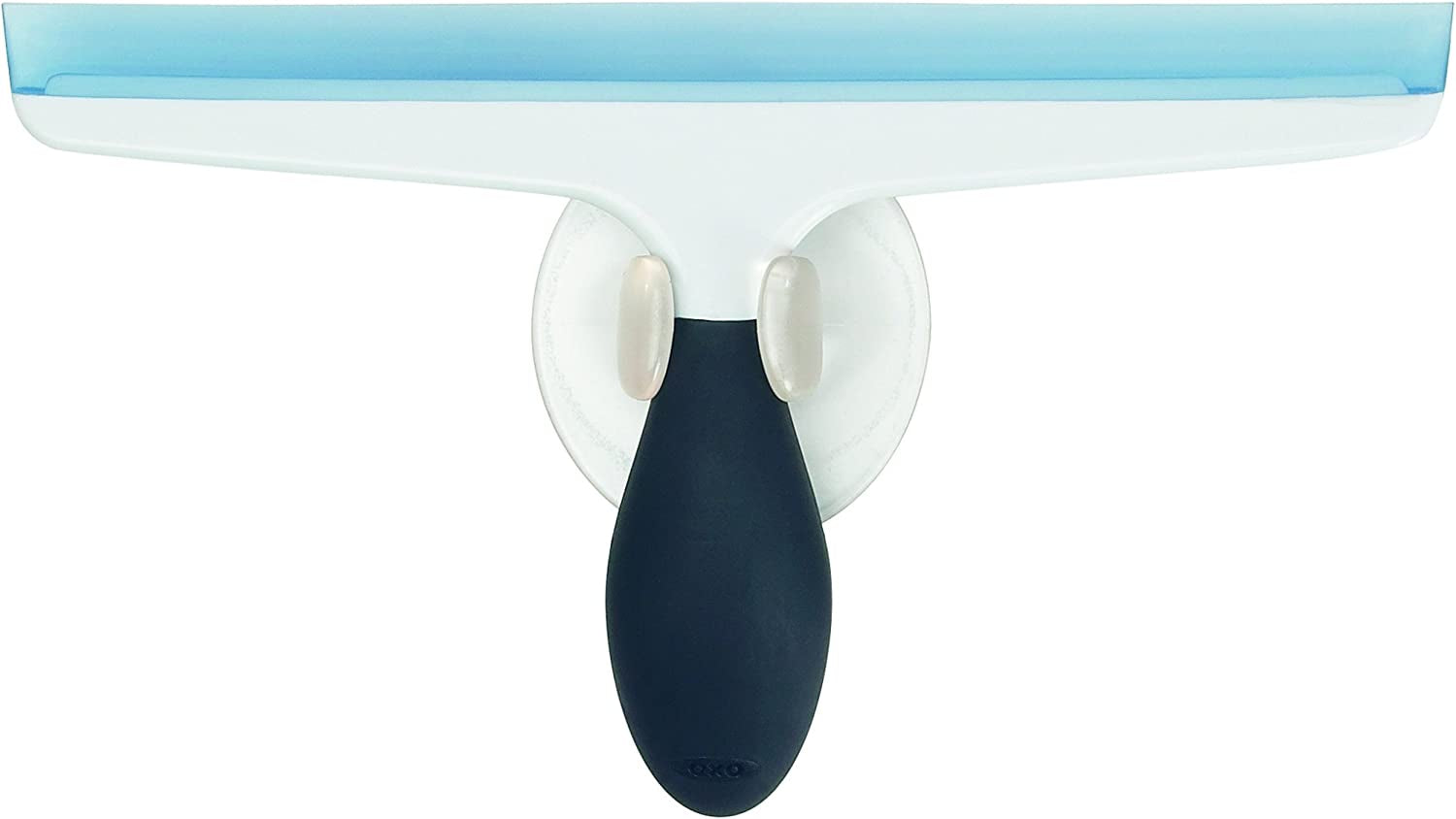
- Glass and hard surfaces. An all-purpose squeegee with a flexible blade handles glass without leaving the streaks that show dust more clearly afterwards.
- Floors last. Vacuum before mopping.
Use a damp or electrostatic cloth, not a dry feather duster. A dry duster mostly relocates dust into the air, where it settles again within hours. Capture beats redistribution.
Empty vacuum bags and clean filters. A clogged vacuum exhausts fine dust back into the room, which is why some homes feel dustier immediately after vacuuming.
Manage Airflow and Humidity
Ventilate deliberately rather than constantly. Cross-ventilating two windows for ten minutes exchanges the air efficiently; leaving one window open all day near a road simply invites more in.
Dust mites thrive above roughly 50% relative humidity. Aim to hold indoors between 40% and 60%. Sustained higher readings support both mites and mould — our guide on stopping condensation and damp covers the mechanism and the ventilation habits.
Absorbers work in enclosed spaces. A fragrance-free moisture absorber suits a wardrobe or linen cupboard, where stored fabric sits in still, humid air. It will not manage a whole room — that is what ventilation is for.
Run ceiling fans on low rather than high when the room is occupied. High speed lifts settled dust back into the air; gentle circulation does not.
Change air conditioner and heater filters. A blocked filter both performs worse and pushes accumulated dust back out.
A Realistic Routine
| Frequency | Task |
|---|---|
| Weekly | Wash bedding; vacuum floors and rugs; damp-dust surfaces |
| Fortnightly | Vacuum upholstery; wipe skirtings and window sills |
| Monthly | Wash the mattress protector; clean vacuum filters |
| Seasonally | Ceiling fans and light fittings; curtains; under furniture |
| 2–4 times a year | Wash pillows themselves; check filters on heating and cooling |
Pair fan cleaning with the seasonal direction switch so neither gets forgotten — our indoor spring reset checklist puts fans first in the room order for exactly this reason.
Ready to Cut It Down?
Start with bedding, because it is the largest indoor source and washing it is already on your list. Then clean top-down so you stop repeating work, switch to damp cloths, and hold humidity between 40% and 60%. Browse the full Pattan Australia range for storage, moisture control and cleaning tools.
Frequently asked questions
Why is my house so dusty?
Most household dust is generated indoors rather than blown in — textiles such as carpet, curtains, upholstery and bedding shed fibres continuously, and skin cells add to it. That is why cleaning more often helps less than reducing shedding, containing stored fabric and managing airflow.
What order should you clean to reduce dust?
Top-down every time: ceiling fans and light fittings first, then shelves and high surfaces, then furniture, then glass, then floors last. Cleaning bottom-up means everything above drops onto surfaces you have already finished, so the job gets done twice.
Do feather dusters work?
Not well. A dry feather duster mostly relocates dust into the air, where it settles again within hours. A damp or electrostatic cloth captures dust instead of redistributing it, which is the difference between removing it and moving it.
What humidity level reduces dust mites?
Keep indoor humidity between 40% and 60%. Dust mites thrive above roughly 50% relative humidity, which describes much of coastal Australia for large parts of the year, so humidity control is one of the few genuine levers available against them.
How often should you wash bedding to control dust?
Every 7 to 14 days, and weekly through an Australian summer. Also wash the mattress protector every one to two months and the pillows themselves two to four times a year — those two are the most commonly forgotten and among the most significant.
Does vacuuming make dust worse?
It can, if the vacuum has a full bag or a clogged filter, since fine dust is then exhausted back into the room. Empty bags and clean filters regularly, and vacuum before mopping rather than after so you are not spreading what the vacuum missed.