Cart
0
TL;DR: Working out how to organise a small entryway comes down to four things: a wall-mounted spot for coats, bags and helmets so nothing lands on a chair, vertical shoe storage instead of a floor pile, a small "landing zone" for keys, wallet and mail, and one daily habit that resets the space in under a minute. None of it needs a dedicated mudroom — just the strip of wall and floor already sitting inside your front door.
Many Australian homes, especially units and townhouses, skip the purpose-built mudroom entirely. What's left is a narrow hallway, a stretch of wall behind the door, or sometimes just the door itself. That's still enough to work with. The trick is treating the space as a small system with specific jobs — hang things, store shoes, catch small items, reset daily — rather than trying to fit a full-sized mudroom's worth of furniture into a footprint that was never designed for it. Get those four jobs sorted and even the tightest entry can function properly.
Wall-mounted hooks vs freestanding racks for coats and bags
For most small entryways, wall-mounted hooks make better use of the space than a freestanding coat rack. A rack needs its own patch of floor, which is exactly what a tight entry doesn't have to spare, and a narrow hallway means it's more likely to get bumped or knocked over. Hooks fixed straight to the wall use vertical space that would otherwise sit empty, take up no floor area at all, and let you group items logically — one row for jackets at adult height, a lower row for kids' bags, a separate hook for a helmet if someone in the household rides to work or school.
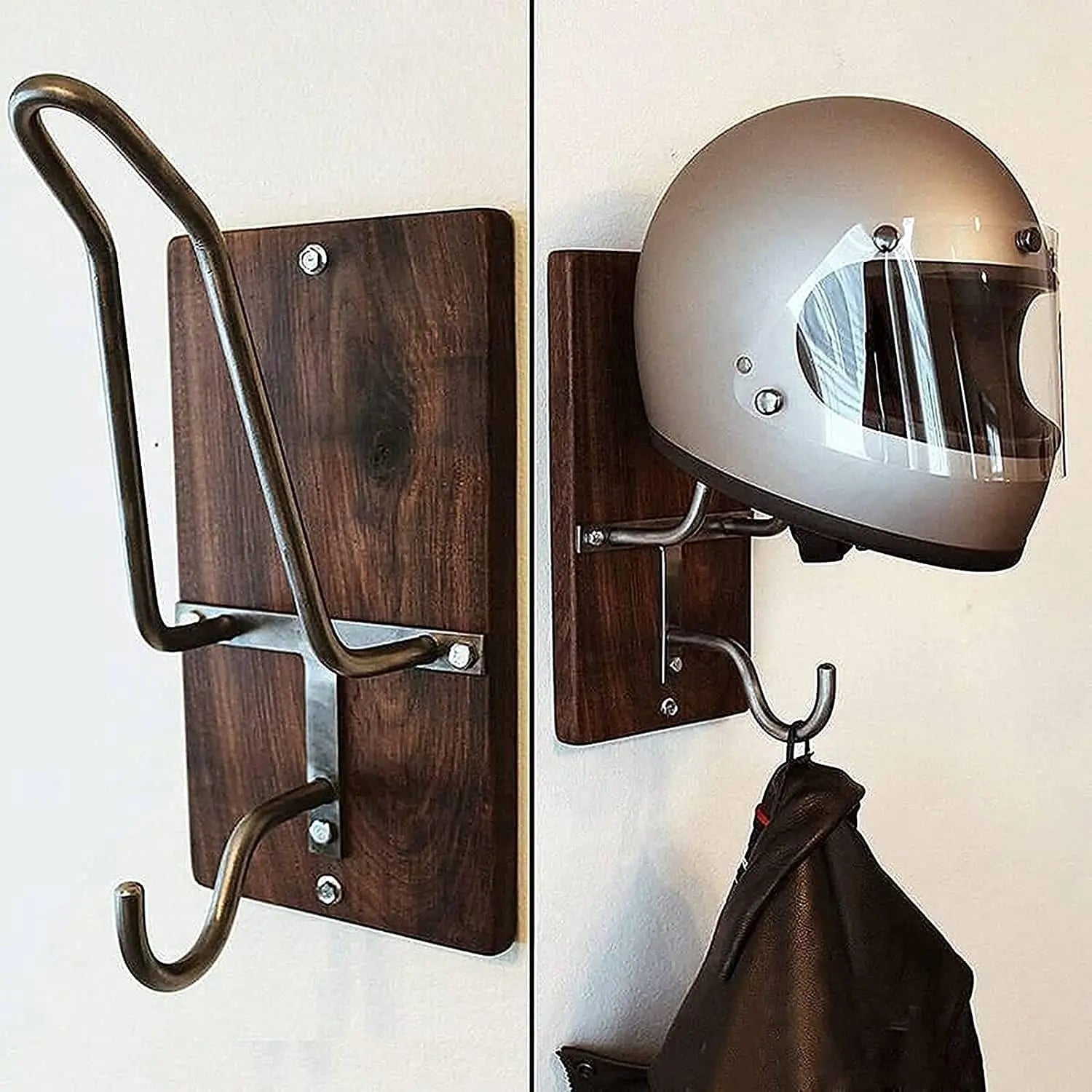
A freestanding rack still earns its place if you're renting and can't put holes in the wall, or if you want something that comes with you between homes. In that case, look for a narrow footprint and a genuinely stable base rather than the widest, busiest option available. Where wall space is free, though, a mounted option like a Wall Mount Coat Hook and Jacket Hanger Rack keeps coats, bags and even a motorcycle helmet off the floor and off the nearest chair, which is usually where clutter starts creeping into a small entry in the first place. If you're rethinking hanging storage further into the house too, our guide to wardrobe organisation ideas covers the same hang-versus-shelve logic for the bedroom.
Vertical shoe storage to avoid a floor pile
Shoes are usually the first thing to sprawl across an entryway floor, because kicking them off at the door is the easiest habit in the house to keep and the hardest one to contain. A shoe pile grows sideways along the skirting board, which is exactly the direction a small entryway can least afford to give up. The fix is to store shoes vertically instead, in stacked tiers rather than a single line.
A tiered metal shoe organiser holds a household's worth of pairs in roughly the same footprint one shoe would normally claim on the floor. Adjustable flat or angled shelves mean you can fit anything from school shoes to boots without wasting height between levels, and stacking two units means a family entry can hold dozens of pairs without shoes ever touching the actual floor. An 8-Tier Shoe Organizer Rack for Entryway works well tucked against a side wall, out of the direct walking path but still close enough to the door that shoes actually make it onto the shelf instead of the floor.
A landing zone for keys, wallet and mail
Every household loses a few minutes a week to patting down pockets for keys or hunting for the one piece of mail that needs a signature. A landing zone solves this with a single fixed spot, close to the door, for the small things you touch on the way in and out — keys, wallet, sunglasses, loose change, the post.
It doesn't need to be elaborate. A small tray or bowl on a shelf, a shallow dish on a console table, or even a set of hooks at wrist height for keys will do the job, as long as it's the same spot every single time. If you've got the width for a console table near the door, our piece on styling a console table has ideas for keeping that surface useful rather than just another place clutter collects. The test for whether a landing zone is working isn't how it looks — it's whether you can find your keys without looking twice.
Keeping a tight footprint feeling open, not cluttered
A small entryway can hold a surprising amount of storage and still feel open, but only if the storage stays vertical and close to the wall rather than spreading across the floor. Floor space is what makes a narrow entry feel like a corridor rather than a room, so protecting it matters more than fitting in one extra item.
A few habits help here. Keep anything freestanding pushed hard against the wall rather than floating in the middle of the path. Choose storage in colours that blend with the wall or door rather than a bold, heavy piece that draws the eye and visually shrinks the space. And resist the urge to store everything the household owns in the entry — a small entryway is most useful as a landing spot for daily essentials, not a catch-all for anything that doesn't have another home. If an item hasn't been used from the entryway in weeks, it likely belongs somewhere else in the house.
A simple daily habit that keeps it working
Every organised entryway eventually drifts back into a pile unless there's a quick daily reset attached to it. The habit that sticks is usually the smallest one: a 60-second sweep each evening where shoes go back on their tier, coats go back on their hook, and anything on the landing tray that needs to leave the house tomorrow — signed forms, library books, parcels for return — gets put by the door.
This works because it treats the entryway as a system that needs light daily maintenance, not a one-off project that stays tidy forever once it's set up. A household that does the 60-second reset each night rarely needs to "reorganise" the entryway again, because the system never gets the chance to fall apart in the first place.
Frequently asked questions
Do I need a dedicated mudroom to organise a small entryway?
No. Most of the value comes from wall-mounted hooks, vertical shoe storage and a small landing zone for keys and mail — all of which fit into the strip of wall and floor just inside a front door, without needing a purpose-built room.
Should I use hooks or a coat rack in a small entryway?
Wall-mounted hooks generally suit small entryways better, since they use vertical space and take up no floor area. A freestanding rack is a reasonable option for renters who can't drill into walls, provided it has a narrow, stable base.
How do I stop shoes piling up near the front door?
Switch from a single line of shoes along the floor to a tiered rack with adjustable flat or angled shelves. Storing shoes vertically against a side wall holds far more pairs in the same footprint and keeps the floor path clear.
What goes in an entryway landing zone?
The small things you handle on the way in and out — keys, wallet, sunglasses and mail. A shallow tray, bowl or dedicated hook works, as long as it's in the same fixed spot every time so items don't drift elsewhere.
What's the simplest way to keep a small entryway organised long-term?
A short daily reset. Spending under a minute each evening returning shoes to their rack, coats to their hooks and outgoing items to the landing zone stops clutter building up, so the space never needs a full reorganisation.