Cart
0
TL;DR: If you spend long stretches standing at the bench cooking, prepping or washing up, an anti-fatigue kitchen mat can make that time noticeably more comfortable by cushioning your feet against hard tile, timber or stone flooring. The right mat is thick enough to compress slightly underfoot, has a non-slip base so it stays put, and is waterproof so spills near the sink or stove wipe away easily. It's a comfort upgrade, not a medical treatment — if you're dealing with ongoing foot, knee or back pain, it's worth chatting to a health professional as well.
Anyone who cooks regularly knows the feeling: twenty minutes into meal prep and your feet start to ache, your lower back tightens, and standing on hard flooring starts to feel like a chore rather than something enjoyable. Kitchens with tile, hardwood, laminate or stone floors are often the worst offenders, since these surfaces offer almost no give underfoot. A well-chosen kitchen mat won't change your flooring, but it does change what your feet feel while you're standing on it. This guide walks through how anti-fatigue mats work, what to look for before you buy, how to size one for your space, where to put it, and how to keep it clean.
How does an anti-fatigue kitchen mat actually help?
This is the question most people ask before buying one, and it's a fair one — do anti fatigue mats work, or is it just a soft rug with a fancy name? The honest answer is that it comes down to material and design, not marketing. Anti-fatigue mats are built with a cushioned core, usually a dense foam or gel layer, that compresses slightly with your body weight. That small amount of give encourages tiny, constant micro-movements in your calves and feet as you shift your weight, rather than locking your legs into one static position on a hard surface.
Standing still on unforgiving flooring for long periods is what tends to make feet, knees and lower backs feel tired and stiff — a cushioned surface simply takes some of that pressure away. It's worth being clear-eyed here: a mat is a comfort tool, not a cure for a medical condition. If sore feet, knee pain or back discomfort is a regular or worsening issue for you, that's a conversation for a podiatrist, physiotherapist or GP rather than something a mat can resolve on its own.
What to look for in a kitchen mat for standing
Not every mat sold as "anti-fatigue" performs the same way in a real kitchen. If you're comparing options for the best kitchen mat for standing at the sink, stove or prep bench, focus on three things.
- Thickness. Most genuine anti-fatigue mats sit somewhere around 15–20mm thick. Thinner than that and you're mostly just adding a layer of fabric, with little real cushioning underfoot.
- A non-slip base. A mat that slides around on tile or timber is more of a hazard than a help, especially near water. Look for a textured or grippy underside designed to stay anchored on smooth kitchen flooring.
- A waterproof, easy-clean surface. Kitchens mean spills — water at the sink, oil near the stove, sauce during prep. A wipeable, waterproof top layer (rather than an absorbent fabric one) means you're not left with a damp, stained mat after every cook-up.
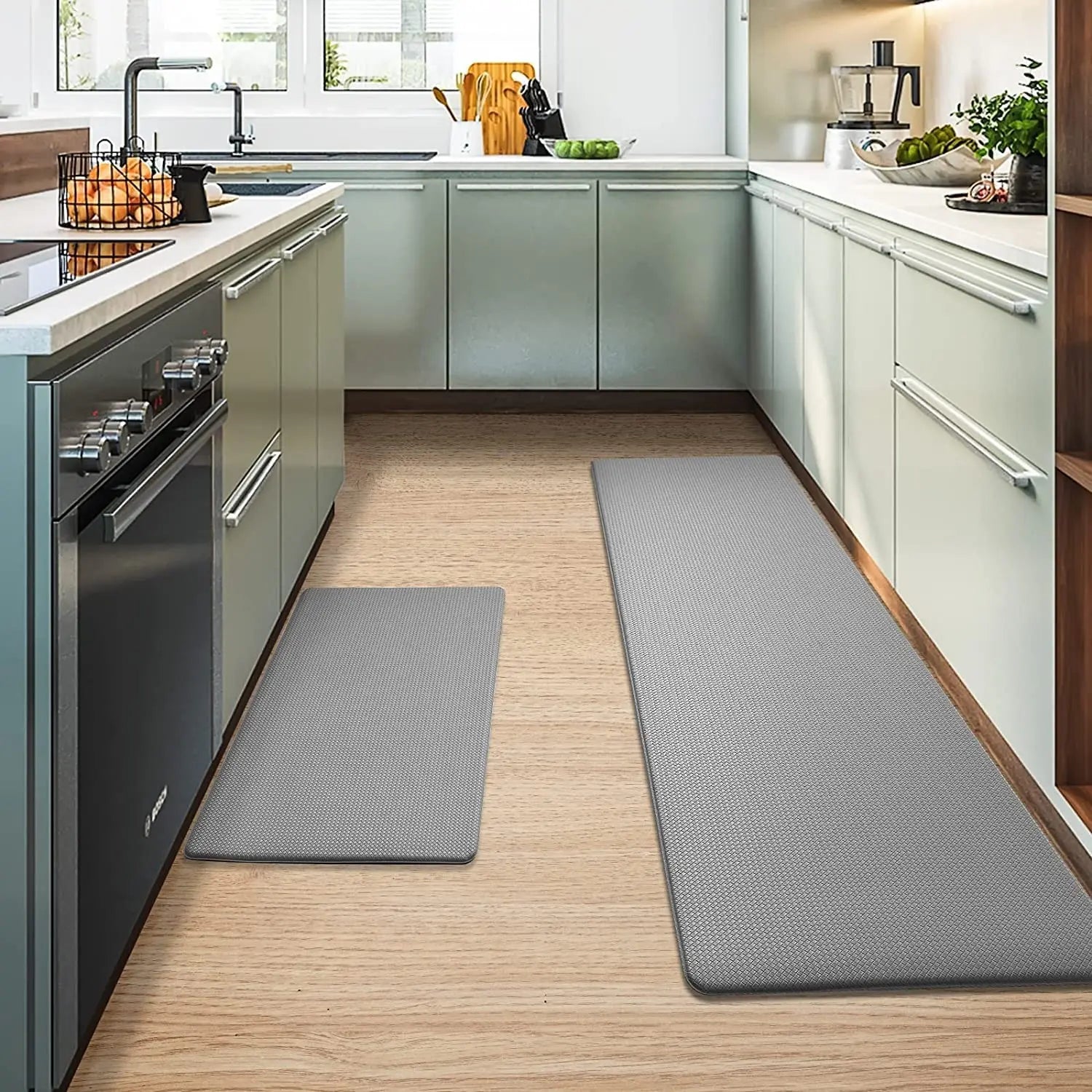
Pattan Australia's Anti Fatigue Kitchen Mat, Thick Cushioned, Waterproof (2 Pack) is built around exactly this combination — a cushioned core, non-skid base and waterproof surface — which makes it a straightforward option if you want cushioning at more than one spot in the kitchen without overthinking the decision.
What size anti-fatigue mat do you need for your kitchen?
Sizing depends on how you actually move while you work. A small mat in front of the sink is fine if that's your only standing spot, but many people find they also need coverage in front of the stove or along a longer prep bench. Measure the length of the area you typically stand or shuffle along, and choose a mat (or a set of two different sizes) that comfortably covers it with a little room either side.
| Kitchen zone | Typical space | Suggested mat approach |
|---|---|---|
| Sink only | Roughly 60–90cm wide | One standard mat, centred on the sink |
| Sink + stove | Two separate zones | A two-piece set, one mat per zone |
| Long prep bench or galley kitchen | 1.5m or more | A longer runner-style mat alongside a standard mat |
| Mixed zones (sink, stove, prep) | Multiple spots | A multi-size set to cover each area separately |
If your kitchen has more than one zone where you spend real time standing, a set that includes both a smaller mat and a longer runner tends to be more useful than one large mat. The Anti Fatigue Kitchen Rugs and Mats, 2 Piece Set (44x75cm + 44x150cm) covers this scenario well, pairing a shorter mat for the sink with a longer one for a stove or bench run.
Where to place mats: sink, stove and prep bench
Think about where your feet actually stand still for more than a minute or two, rather than covering the whole floor. The three most common spots are:
- In front of the sink — this is usually where people stand longest, whether washing dishes by hand or prepping vegetables. If you've recently sorted your drying setup, it's worth reading our guide on how to choose a dish drying rack to pair a mat with a rack that suits your bench layout.
- In front of the stove — useful if you do a lot of stovetop cooking, stirring, or standing over pots for extended periods.
- Along the main prep bench — helpful in galley-style kitchens or anywhere chopping and prepping happens away from the sink.
Placing a mat at each of these zones, rather than one mat that tries to cover everything, generally gives better coverage where it's actually needed.
Caring for and cleaning your anti-fatigue kitchen mat
A waterproof mat is only low-maintenance if you clean it the right way. For everyday spills, a damp cloth with a mild dish soap solution is usually enough — wipe, rinse, and let it air dry before putting it back down. For a deeper clean, most waterproof kitchen mats can be hosed off outside or wiped down in the shower, then hung to dry rather than left folded while damp, which helps avoid any musty smell building up.
Check the care instructions for your specific mat, since foam density and surface coating can vary between products. Avoid harsh abrasive scrubbers on the top layer, as these can wear down the waterproof coating over time and shorten the mat's usable life.
Once the practical side of your kitchen is sorted, it's worth turning the same attention to the dining space where the food actually gets served — our guide on how to set a dining table covers the basics for everyday meals and guests alike.
Frequently asked questions
Do anti-fatigue mats really work?
For most people, yes — in terms of comfort. The cushioned layer reduces the constant pressure of standing on hard flooring and encourages small postural shifts that can make longer stints in the kitchen feel less tiring. They're a comfort aid, not a treatment for any medical condition.
What is the best kitchen mat for standing at the sink or stove?
Look for a mat around 15–20mm thick with a non-slip base and a waterproof, wipeable surface. A two-piece set lets you cover both the sink and stove separately, which suits most standard kitchen layouts.
How thick should an anti-fatigue kitchen mat be?
Most effective anti-fatigue mats sit around 15–20mm thick. Much thinner than that and the mat won't offer meaningful cushioning; much thicker can sometimes feel unstable underfoot near a stove.
Can I put an anti-fatigue mat in the washing machine?
Generally no. Most waterproof anti-fatigue mats are designed to be wiped down or rinsed rather than machine washed, since the foam core and coating can be damaged by a washing machine cycle. Check the specific care instructions for your mat.
Will an anti-fatigue mat help with sore feet from cooking?
It may help make standing more comfortable by cushioning pressure points and reducing static load on your feet. It isn't a medical solution, so if sore feet are a regular or worsening problem, it's worth speaking with a health professional as well.