Cart
0
TL;DR: To organise a linen cupboard, empty it completely, sort and cull what you no longer use, then give each shelf a single job: everyday sheets at eye level, spares and seasonal bedding up high, towels together, and small items in labelled baskets. Store each sheet set folded inside one of its own pillowcases so the set stays together, and use baskets and shelf dividers to stop stacks toppling. Work top to bottom, one shelf at a time, and label as you go.
A linen cupboard is one of those spaces that quietly descends into chaos. Fitted sheets never fold the same way twice, spare doonas eat a whole shelf, and the guest towels end up behind the beach towels. The fix is not more shelves, it is a system: sort ruthlessly, zone by shelf, and contain the small stuff. Here is how to do it in an afternoon.
Step 1: Empty it completely and sort
Take everything out. You cannot organise around piles you are working around, and an empty cupboard shows you the real shelf heights and depths you have to work with.
As you empty, sort into four groups:
- Keep and use — the sheets, towels and bedding you actually reach for.
- Store — spare and seasonal items you keep but rarely touch (winter doonas in summer, guest bedding).
- Repurpose — worn towels and sheets that become cleaning rags, drop sheets or pet bedding.
- Donate or bin — anything stained, threadbare or unused for a year.
Most linen cupboards are holding at least one shelf of things nobody will use again. Culling first means everything that goes back has earned its place, and the whole system has room to breathe.
Step 2: Give every shelf one job (zoning)
The core principle is one category per shelf, arranged by how often you reach for it. Put daily items at the easiest height and push rarely-used items to the extremes (high or low).
| Shelf position | What goes there | Why |
|---|---|---|
| Top shelf | Spare and seasonal bedding, spare pillows | Rarely needed, out of the daily way |
| Eye level | Everyday sheet sets, in-use bedding | Easiest to reach, used most |
| Middle | Bath towels and hand towels | Frequent, easy to grab |
| Lower | Beach towels, picnic rugs, spare blankets | Bulky, occasional |
| Floor / base | Baskets of small items, cleaning textiles | Contained, out of sight |
If different people or bedrooms use different linen, you can zone by room instead: one shelf per bedroom, each holding that bed's sheet sets. Either way, the rule holds — a shelf should have a single, obvious purpose so anyone in the house can find and return things without thinking.
Step 3: Store sheet sets inside a pillowcase
This is the trick that keeps a linen cupboard tidy for good. Instead of stacking flat sheets, fitted sheets and pillowcases separately (where they drift apart and unravel), fold the whole set and tuck it inside one of its own pillowcases.
The result is a single neat parcel per set: fitted sheet, flat sheet and the second pillowcase, all bundled in the first. You grab one packet and you have the complete set, sized and matched, with nothing left behind. Stack the packets by bed size so the queen sets and the king sets do not mix.
How to fold a fitted sheet for storage
Fitted sheets are the reason linen cupboards look messy. To tame one: tuck the corners of one short end into the corners of the other to square it off, keep tucking until the elastic edges form a rectangle, then fold that rectangle down to the depth of your shelf. It does not need to be perfect — once it is inside its pillowcase parcel, only the neat outside shows.
Step 4: Contain the small stuff in baskets
Loose small items are what make a tidy cupboard look messy again: spare pillowcases, face washers, tea towels, travel toiletries, spare toilet rolls. Corral them into baskets or fabric bins, one basket per category, so a whole group lifts out and back in one movement.
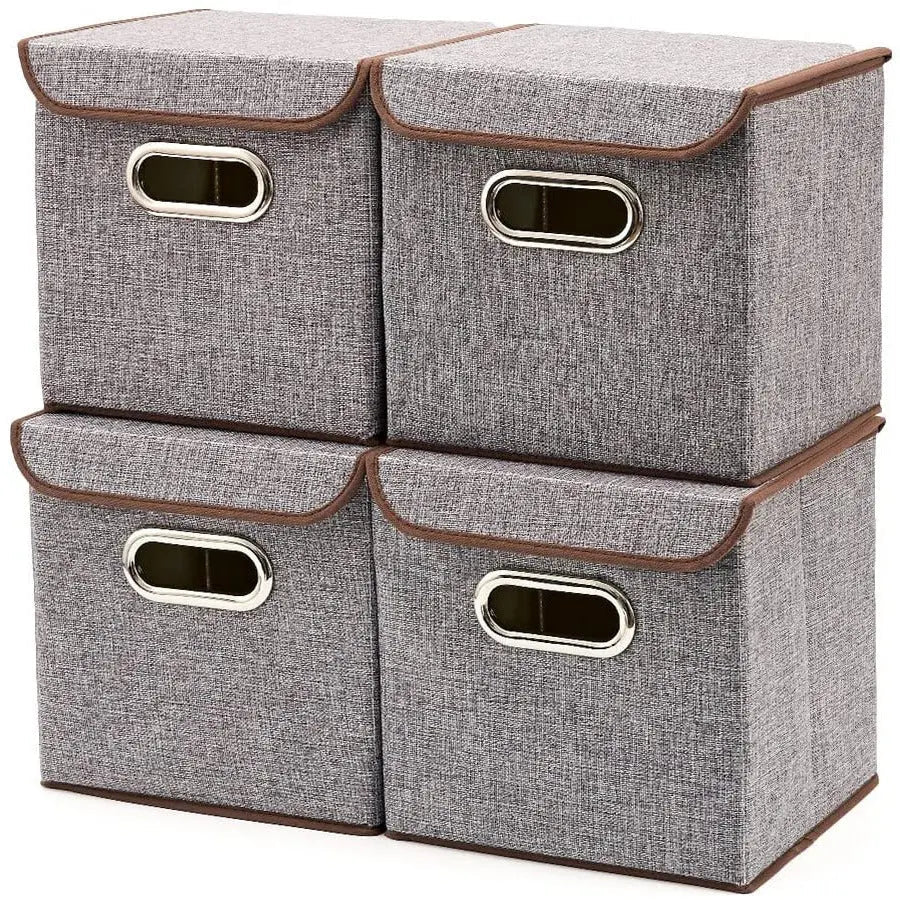
Fabric storage cubes suit a linen cupboard well because they are soft, sit flush on a shelf, and often come with handles so you can pull them down easily. Clear or labelled bins work for anything you want to see at a glance. The point is that nothing loose sits directly on the shelf — if it is small, it lives in a basket.
Step 5: Use the vertical space and label
Linen cupboards usually have tall gaps between shelves, and that air is wasted storage.
- Add a shelf divider between stacks so the towels do not slump into the sheets.
- Add a free-standing tier or an extra shelf in a tall gap to double the usable height, especially above shorter stacks of folded towels.
- Store on the shelf edge, not buried — keep the set you use next at the front of each stack so you are not pulling the whole pile out.
- Label the shelves or baskets (sheet size, towel type, room). Labels are what keep the system alive after the first month, because everyone returns things to the right place.
Keeping it tidy
A linen cupboard stays organised when returning things is as easy as taking them out. Fold the clean set back into its pillowcase parcel before it goes in, keep one basket for the odds and ends so they never sit loose, and do a quick cull each season as you swap winter and summer bedding. Ten minutes at the change of season beats another full weekend reset later.
The pieces that make it work
A few Pattan Australia storage pieces that suit a linen cupboard:
- The EZOWare Foldable Fabric Storage Bins (4-Pack, with lids) are soft linen-fabric cubes with handles, ideal for grouping spare pillowcases, face washers and small items on a shelf.
- The 4-Tier Plastic Storage Rack adds extra tiers inside a tall cupboard or beside it, turning wasted vertical space into usable shelves.
- The Clear Stackable Organiser Bins (8-Pack) let you see contents at a glance and stack neatly for travel toiletries, spare toiletry stock and first-aid items.
Sorting the rest of the house too? Our guide to small kitchen storage ideas uses the same zone-by-zone method for drawers, benchtops and the pantry.
Frequently asked questions
What is the best way to store sheet sets in a linen cupboard?
Fold the whole set — fitted sheet, flat sheet and pillowcases — and tuck it inside one of its own pillowcases to make a single parcel. The set stays together and matched, and you grab the complete set in one movement. Stack the parcels by bed size.
How do I organise a linen cupboard by shelf?
Give each shelf one job, arranged by how often you use it: everyday sheets at eye level, towels in the middle, spare and seasonal bedding up high, and bulky or occasional items low. Contain small loose items in labelled baskets on the base or a lower shelf.
How do you fold a fitted sheet for storage?
Square it off by tucking the corners of one short end into the corners of the other, keep tucking until the elastic edges form a rectangle, then fold to the depth of your shelf. It does not need to be perfect once it is bundled inside its pillowcase parcel.
How can I organise a small linen cupboard?
Cull hard so only what you use goes back, use the vertical gaps with shelf dividers or an extra tier, store each sheet set as a single pillowcase parcel to save space, and contain small items in baskets. Zoning one category per shelf matters even more when space is tight.
How often should I reorganise my linen cupboard?
A quick cull and tidy each season — as you swap winter and summer bedding — keeps it in order. Ten minutes at the change of season, plus returning clean sets as pillowcase parcels, prevents the slow slide back into clutter.