Cart
0
Quick answer: Measure the clearance first, then store only low-frequency, non-perishable items in sealed, labelled containers — because under-bed space is a dust and moisture trap, not a cupboard.
TL;DR: Under-bed storage is the largest unused space in most bedrooms and the easiest to use badly. Two things decide whether it works. First, measurement: bed clearance varies enormously and a container 2 cm too tall simply will not go in, so measure before buying anything. Second, containment: the floor under a bed collects dust continuously and has almost no airflow, which makes it hostile to anything soft, absorbent or unsealed. Store seasonal and occasional items in closed containers, label them by contents rather than season, and keep the frequently-used out of there entirely — anything you need weekly will not survive being under a bed for long.
Key facts
- Measure clearance from floor to the underside of the bed frame before buying containers.
- Allow 2 cm to 3 cm less than the measured clearance so containers slide freely.
- Under-bed space has minimal airflow, so anything stored there must be completely dry.
- Sealed containers are essential — the floor under a bed collects dust continuously.
- Label by contents, not by season; "winter" means nothing in eight months.
- Do not store anything you need weekly, since retrieval friction guarantees it stays out.
Measure Before You Buy Anything
This is where most under-bed storage fails. Containers are bought by eye and do not fit.
Measure from the floor to the underside of the bed frame, at the lowest point — a centre rail or slat support is often lower than the outside edge.
Subtract 2 cm to 3 cm. A container the exact height of the clearance will catch every time you slide it, and it will stop being used.
Measure the depth you can actually reach, not the depth of the bed. If you can only reach 60 cm in, a 90 cm container has 30 cm of unreachable space that will fill with things you never see again.
Check the bed type. Slatted frames, platform beds and ensembles all differ, and beds with a centre support leg split the space into two narrower halves.
What Belongs Under There
Low frequency, non-perishable, and flat.
| Good | Poor |
|---|---|
| Out-of-season bedding | Anything used weekly |
| Seasonal clothing | Food or anything perishable |
| Spare linen | Documents and photographs |
| Gift wrap and occasional items | Electronics |
| Luggage | Anything damp or not fully dry |
| Shoes, boxed | Anything that needs airflow |
Out-of-season bedding is the natural fit — it is bulky, flat, used twice a year, and belongs in the bedroom anyway.
Do not store paper or photographs there. Dust and humidity fluctuation are hard on both.
Do not store anything you need weekly. Retrieval means moving the bedding, kneeling and sliding — that friction guarantees the item ends up living somewhere else while its container stays under the bed empty.
Containment Is Not Optional
The floor under a bed collects dust continuously, and airflow there is close to nil.
Use closed containers, not open baskets. An open basket under a bed becomes a dust collector with your belongings in it.
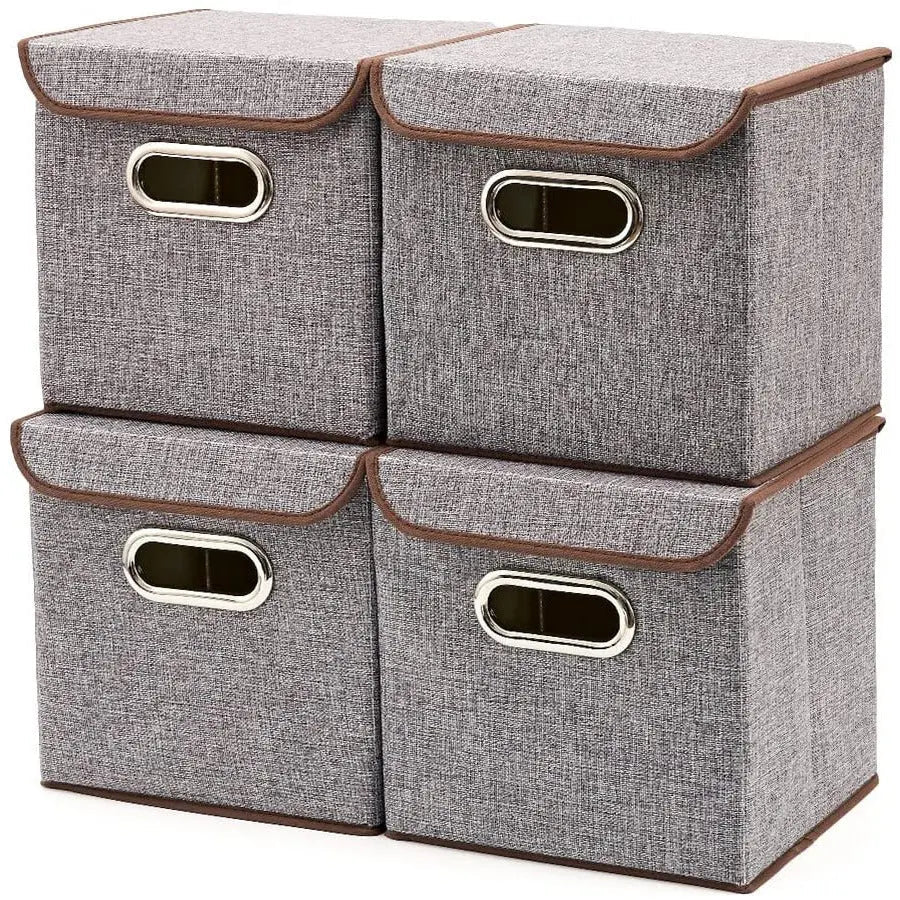
Fabric bins with lids work well for soft items. A set of four foldable fabric storage bins with lids at 25 × 25 × 25 cm each has reinforced handles for pulling out from under a frame, and folds flat when the season turns and the contents come out.
Everything must be completely dry before it goes in. This is the rule that matters most. Under-bed has no ventilation, so anything stored even slightly damp will develop odour and mildew — our guide on getting rid of musty smells covers why stored-damp textiles are one of the most common sources in a house.
Avoid sealing textiles in airtight plastic for months. Trapped moisture has nowhere to go. Breathable containers are the better choice for fabric.
An absorber helps if the room runs humid. A fragrance-free moisture absorber works in enclosed spaces, and fragrance-free matters so stored linen does not pick up a scent.
Label by Contents
"Winter" tells you nothing in eight months. "Queen doona plus two wool blankets" does.
Label the end that faces out, since that is the only part you will see.
Photograph the contents and keep the image on your phone if the containers are opaque. It takes seconds and saves pulling out three boxes to find one thing.
Keep the Dust Down
Under-bed is a dust reservoir, and dust under a bed matters more than dust elsewhere because you spend eight hours a night directly above it.
Vacuum under there when you change the sheets. Pairing the two means it actually happens.
Containers reduce the problem considerably by covering floor area that would otherwise collect dust directly.
Our guide on reducing dust in your home covers why most household dust is textile-generated, and how often to wash your sheets covers the schedule to pair it with.
Where Under-Bed Fits in the Wider Bedroom
Use it for overflow, not as the primary system. If the wardrobe is failing, fix the wardrobe — our wardrobe organisation guide covers that, and how to organise a linen cupboard covers where spare bedding otherwise belongs.
Do the seasonal changeover deliberately. Under-bed is where the swap lands twice a year — our indoor spring reset checklist covers washing and fully drying everything before it goes into storage.
Ready to Use the Space?
Measure the clearance at its lowest point and subtract 2 cm to 3 cm before buying anything. Then store only dry, sealed, low-frequency items, and label by contents so you can find them in eight months. Browse the full Pattan Australia range for storage containers.
Frequently asked questions
What should you store under a bed?
Low-frequency, non-perishable, flat items: out-of-season bedding, seasonal clothing, spare linen, gift wrap and luggage. Avoid anything used weekly, anything perishable, documents, photographs and electronics — dust and humidity fluctuation under a bed are hard on all of those.
How do you measure for under-bed storage?
Measure from the floor to the underside of the bed frame at its lowest point, since a centre rail or slat support is often lower than the outer edge, then subtract 2 cm to 3 cm so containers slide freely. Also measure how far in you can comfortably reach.
Should under-bed storage containers be sealed?
Yes. The floor under a bed collects dust continuously and has almost no airflow, so open baskets become dust collectors holding your belongings. Use closed containers, but avoid airtight plastic for textiles over months, since trapped moisture has nowhere to escape.
Can you store clothes under the bed?
Yes, provided they are completely clean and fully dry, and stored in closed but breathable containers. Anything put away even slightly damp will develop odour and mildew, because under-bed space has effectively no ventilation to dry it out.
How do you stop under-bed storage getting dusty?
Use containers with lids, which cover the floor area that would otherwise collect dust directly, and vacuum under the bed when you change the sheets so the two tasks are paired. Dust there matters more than elsewhere, since you sleep directly above it.
How should you label under-bed storage?
By contents rather than by season, on the end of the container that faces outward — "Queen doona plus two wool blankets" is useful in eight months where "winter" is not. Photographing the contents is worth the few seconds if the containers are opaque.