Cart
0
TL;DR: Choosing an essential oil diffuser mostly comes down to three things — water tank capacity (bigger tanks run longer between refills), room size (a small diffuser struggles to fill a large open-plan space), and how much control you want over timing and mist output. An ultrasonic diffuser doubles as a light humidifier, which is worth factoring in if the room it's going in already tends to run dry, particularly during an Australian winter with heating running.
A diffuser is one of those small home additions where the specs actually matter more than the styling — a beautifully designed diffuser with too small a tank for the room it's in just means refilling it constantly, which gets old fast.
Tank capacity and run time
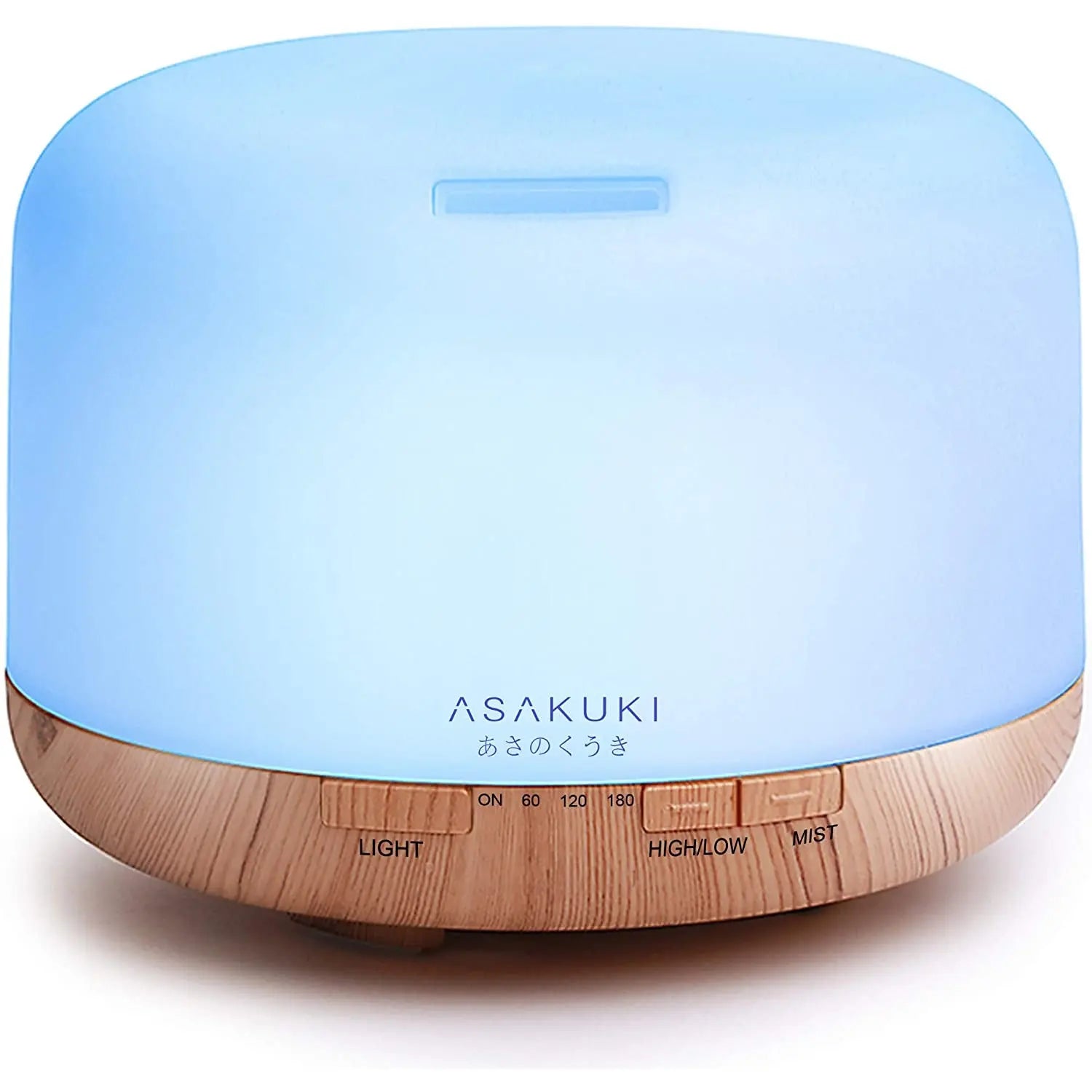
Tank size determines how long a diffuser runs before needing a refill, which matters most if you want it running through a full workday or overnight. The ASAKUKI 500ml Essential Oil Diffuser holds 500ml, which gives it a genuinely long run time compared to smaller desktop diffusers, plus a timer and auto-off safety switch so it doesn't need to be manually checked and turned off.
For a smaller space or a bedside table, a compact option like the Rotating Aroma Humidifier is a simpler, smaller-footprint alternative — worth choosing over a larger diffuser if the room itself is small enough that a big tank would just mean diluted scent sitting unused.
Matching diffuser size to room size
A diffuser rated for a small bedroom will struggle to noticeably scent an open-plan living and kitchen area, and running it constantly to compensate just burns through oil faster without solving the underlying size mismatch. As a rough guide: a compact diffuser suits a bedroom or home office, while a larger-tank model like a 500ml ultrasonic diffuser is better matched to an open-plan living space or a room with higher ceilings.
Ultrasonic diffusers double as light humidifiers
Most ultrasonic diffusers — including the ASAKUKI 5-in-1 above — release a fine water-and-oil mist, which means they add a small amount of humidity to the room as a side effect of diffusing scent. This is genuinely useful in a heated room during an Australian winter, where indoor air tends to dry out, but it's worth knowing it's a mild effect rather than a substitute for a dedicated humidifier if that's the primary goal.
Choosing the right oils
A diffuser is only as good as what's going in it — thin, low-quality oils clog more easily and scent less effectively than proper aromatherapy-grade oils. A starter set like the Floral Essential Oil Set, Top 6 Natural Aromatherapy Oils gives a range of floral scents to experiment with rather than committing to a single large bottle of one scent before knowing what you actually like diffused.
Comparing diffuser types
| Feature | Compact diffuser | 500ml ultrasonic diffuser |
|---|---|---|
| Best room size | Bedroom, desk, small office | Living area, open-plan, larger rooms |
| Run time | Shorter, more frequent refills | Longer between refills |
| Humidifying effect | Minimal | Mild, noticeable in a heated room |
| Extra features | Simple, few controls | Timer, auto-off, colour LED options |
Common mistakes to avoid
- Buying a small diffuser for a large open-plan space and running it constantly to compensate, which wastes oil without actually fixing the coverage problem.
- Using poor-quality or synthetic fragrance oils, which can clog the ultrasonic disc faster than proper aromatherapy-grade oils.
- Skipping regular cleaning — ultrasonic diffusers need an occasional rinse to stop oil residue building up on the disc and affecting mist output.
- Expecting a diffuser to replace a proper humidifier — the humidifying effect is real but mild, and a room that's genuinely too dry needs a dedicated humidifier instead.
Frequently asked questions
How long does a 500ml diffuser tank last?
Run time depends on the mist setting used, but a 500ml tank on a lower intermittent setting can generally run for several hours to overnight before needing a refill — check the specific model's settings for exact figures.
Can I use any essential oil in an ultrasonic diffuser?
Most pure, water-compatible essential oils work fine, but thick or oil-based (rather than water-dispersible) fragrance products can clog the ultrasonic disc over time — stick to oils specifically sold for diffuser use.
Does a diffuser need to run all day to be effective?
No — most diffusers include an intermittent misting setting specifically so they don't need to run continuously, which also helps the tank last longer between refills.
Is a diffuser safe to leave running overnight?
Look for a model with an auto-off feature that shuts down once the water runs out, which removes the need to manually check on it before bed.
What's the difference between a diffuser and a humidifier?
A diffuser's main job is dispersing scent via a fine oil-and-water mist, with humidifying as a mild side effect; a dedicated humidifier is built specifically to add moisture to the air and doesn't require oils to function.