Cart
0
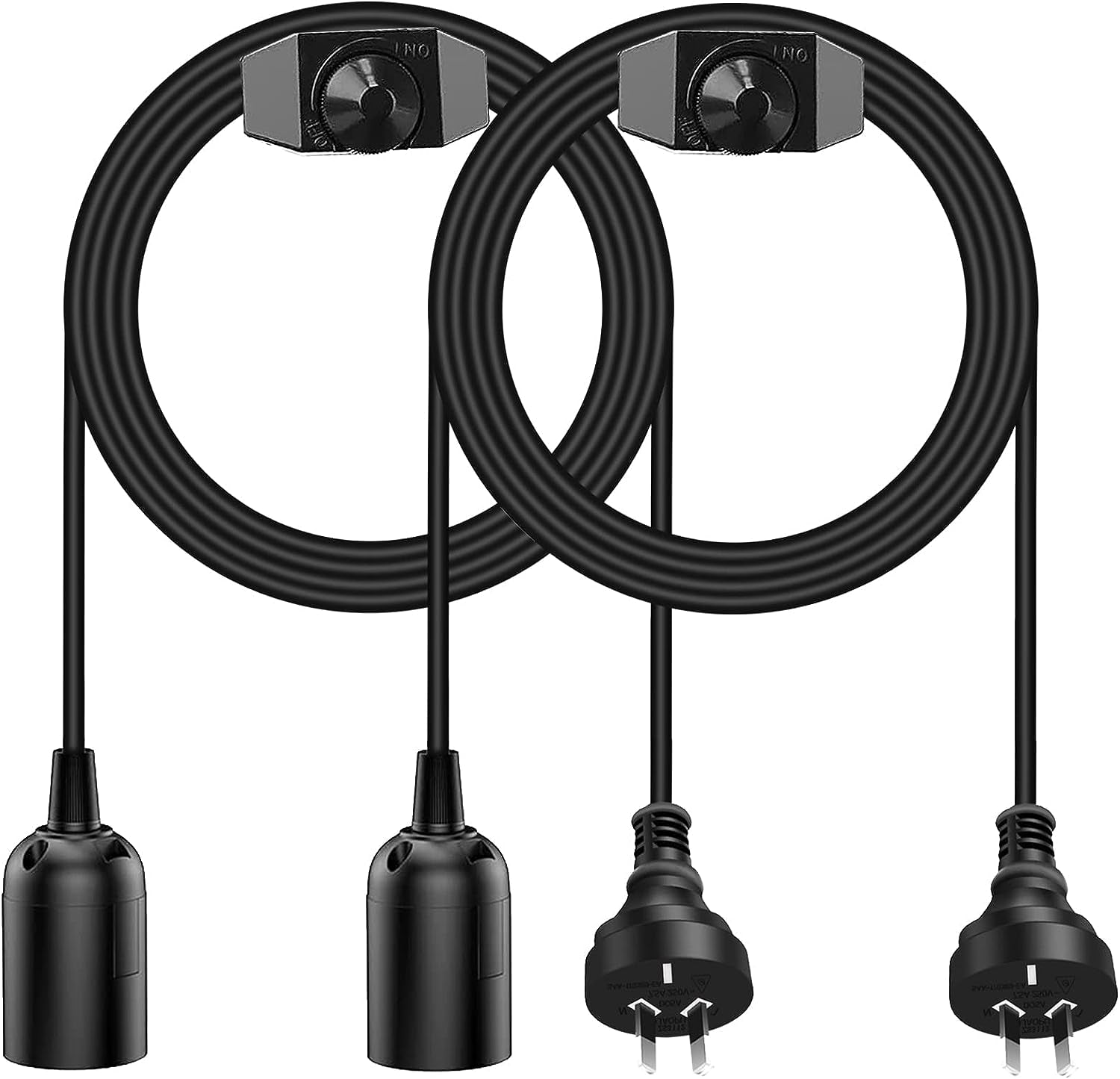
TL;DR: If you are wondering how to dim a lamp without rewiring, the answer is a plug-in inline dimmer cord: a lamp cord with a small dimmer button or dial built into the cable, sitting between the powerpoint and the bulb. Fit a dimmable bulb, plug it into any standard AU powerpoint, and you get adjustable brightness on an existing lamp or pendant light with no house wiring touched at all. It suits most fittings with a standard E27 or E14 socket, and because the whole thing lives outside the wall, no electrician is needed to fit it.
Plenty of lamps and pendant lights only ever have one setting: fully on. That is fine for a reading lamp, but it is not much use when you want a softer glow for the evening or a dimmer mood over the dinner table. Calling an electrician to install a proper wall dimmer for one lamp feels like overkill, and it is not something most people can safely do themselves anyway. The good news is that a plug-in dimmer switch for lamps solves this without any of that, since it replaces the existing cord rather than the wiring behind your wall. This guide covers what an inline dimmer cord is, which bulbs actually work with one, how to fit one, the safety basics, and the one situation where a hardwired wall dimmer is still the better option.
What Is an Inline Dimmer Cord?
An inline (or plug-in) dimmer cord is a length of lamp flex with three things built in: an AU-approved plug at one end, a bulb socket (usually E27 or E14) at the other, and a small dimmer module, either a rotary dial or a touch button, somewhere along the cord. You unplug your lamp's existing cord, fit this one in its place, screw in a dimmable bulb, and plug it straight back into the wall. There is no cutting into house wiring, no working inside a wall cavity, and no touching the switchboard.
This is different from a permanent in-wall dimmer switch, which replaces the switch on your wall and is wired directly into the home's circuit. That kind of hardwired job does require a licensed electrician in Australia, because it involves the fixed wiring behind the wall. An inline dimmer cord sits entirely outside the wall, so it does not carry the same requirement.
For pendant lights, a dimmer cord for pendant light setups usually comes with a longer length, a ceiling hook or canopy fitting, and the same inline dimmer module, so you can hang a light fixture and dim it from the cord rather than a wall switch. Look for cords marked SAA-approved for the Australian market, which confirms they meet local electrical safety standards. The 1.8M Hanging Lamp Cord with Dimmer Switch, DIY Pendant Lamp Kit is a good example: an E27/E26 socket, an inline dimmer, and an AU plug in one ready-to-hang cord for a DIY pendant over a kitchen bench, café table or reading nook.
The same idea works for table lamps that already have their own base but a tired or non-dimmable cord. A Salt Lamp Cord Replacement with Dimmer Switch swaps a worn or fixed-brightness cord for one with a built-in dimmer and an E14 socket, turning a single-setting Himalayan salt lamp into one you can dial up or down.
Which Bulbs Actually Work With a Dimmer Cord?
Not every bulb dims, and this is the step people skip. Incandescent and halogen bulbs dim smoothly on almost any basic dimmer, because they work by reducing electrical current, which the bulb's filament responds to directly. LED bulbs are different: some are built to dim and some are not, and running a non-dimmable LED on a dimmer circuit does not simply fail to dim, it can flicker, buzz, or shorten the bulb's life.
Before buying a bulb for a dimmer cord, check for:
- A "dimmable" label on the packaging or base. If it is not marked dimmable, assume it is not.
- The correct fitting. Match the bulb base to the cord's socket, E27 (standard screw) or E14 (small screw) are the two used across Pattan Australia's dimmer cords.
- Wattage within range. Every dimmer module has a maximum wattage it can handle, and many also have a minimum load. Check the rating printed on the dimmer cord or its packaging and choose a bulb that sits comfortably within that range, since a bulb below the minimum can cause flickering or buzzing even if it is dimmable.
- Warm colour temperature for mood lighting. If the point of dimming is a cosier evening feel, a warm white bulb will read better at low brightness than a cool white one. For more on choosing the right colour, see our guide to warm white vs cool white light.
If you are not sure which fitting your lamp or pendant uses in the first place, our light bulb fitting types guide covers the common Australian bulb bases so you can match the right cord and bulb before you buy.
How to Fit a Plug-In Dimmer Cord
Fitting an inline dimmer cord is a straightforward DIY job, not an electrical installation. Here is the general process:
- Choose the right cord for the job. A longer hanging cord suits a pendant fitting over a table or bench, while a shorter replacement cord suits a table or floor lamp base that already has its own stand.
- Turn off and unplug the existing lamp before you start working on it, and remove the old cord or bulb if you are replacing one.
- Fit a dimmable bulb rated within the wattage range listed on the dimmer cord, using the correct E27 or E14 fitting.
- Thread and secure the cord. For a pendant, run the cord through the ceiling hook or canopy fitting and secure it with the strain-relief clip provided. For a table lamp, seat the socket assembly into the lamp base the same way the original cord sat.
- Plug into a standard AU powerpoint and switch the wall outlet on as normal.
- Test the dimmer through its full range before finishing the setup, turning it from lowest to brightest, so you can confirm the bulb dims smoothly and the fitting is secure before you hang a pendant permanently or tuck a lamp back into place.
Safety Notes to Keep in Mind
- Keep it to dry indoor areas. Standard SAA-approved dimmer cords are rated for normal indoor use, not bathrooms, outdoor areas or anywhere the cord or socket could get wet.
- Do not exceed the maximum wattage printed on the dimmer cord or its packaging. Overloading a dimmer module is a common cause of overheating.
- Let the dimmer module breathe. Avoid tucking the inline dimmer inside enclosed lamp bases, tight furniture gaps or under rugs where heat cannot dissipate.
- Check the cord condition every so often. Stop using any cord that is frayed, cracked, or warm to the touch, and replace it rather than repairing it.
- Keep cords away from small children and pets, particularly with hanging pendant setups where the cord sits within reach.
When You Would Want a Proper Wall Dimmer Instead
An inline dimmer cord is the right call for a single lamp or pendant you can dim from the fitting itself. It is not the right call if you want to dim an existing ceiling light from its original wall switch, or dim several downlights together as one circuit. That is a job for a hardwired, in-wall dimmer, which physically replaces your wall switch and connects into the home's fixed wiring.
Because that work sits inside the wall and switchboard, it is electrical work under Australian regulations and needs to be carried out by a licensed electrician, not a DIY job. If you are set on a permanent, switch-controlled solution for a whole light circuit, that is the scenario where you book an electrician rather than reach for a dimmer cord. For everything else, from a single reading lamp to a pendant over the kitchen table, adding a dimmer without an electrician via an inline cord is usually the simpler and faster path.
Frequently asked questions
Do I need an electrician to fit a plug-in dimmer cord?
No. A plug-in inline dimmer cord sits between the powerpoint and the bulb, outside your home's fixed wiring, so it does not require an electrician. You only need a licensed electrician for a hardwired, in-wall dimmer switch.
Will a plug-in dimmer work with any LED bulb?
No. Only LED bulbs labelled "dimmable" will dim smoothly on an inline dimmer cord. A non-dimmable LED can flicker, buzz or fail early if used on a dimmer, so always check the bulb packaging before buying.
Can I use an inline dimmer cord on a pendant light?
Yes. A longer dimmer cord with a ceiling hook or canopy fitting can be used to hang a pendant light and dim it from the inline module, without any wiring inside the ceiling.
What is the difference between a plug-in dimmer and a wall dimmer switch?
A plug-in dimmer cord is a lamp cord with a dimmer built in, fitted entirely outside the wall. A wall dimmer switch replaces your existing wall switch and is wired directly into the home's circuit, which is licensed electrician work.
Is it safe to use a dimmer cord in a bathroom?
No, not unless the cord is specifically rated for wet or damp areas. Standard SAA-approved inline dimmer cords are designed for dry indoor use, so bathrooms and other damp areas should be avoided.