Cart
0
TL;DR: Caring for bamboo kitchenware comes down to one principle: keep it out of prolonged water and dry it properly. Never put bamboo in the dishwasher, never leave it soaking in the sink, and never dry it lying flat on the bench. Wash it in warm soapy water, rinse, wipe it down, and stand it on edge so air reaches both faces. Oil it with food-grade mineral oil whenever the surface starts looking pale and chalky — roughly every month or two with heavy use. Done consistently, that routine is the difference between bamboo that lasts years and bamboo that splits, warps or goes grey within a season.
Bamboo has become the default material for boards, trays, cutlery organisers and dish racks, and for good reason: it is light, hard-wearing, less absorbent than most timbers, and it looks warm on a bench. It is also the material people most consistently destroy by accident, usually within the first six months, and almost always in the same three ways.
This guide covers what bamboo actually is and why that changes how you treat it, the wash-and-dry routine, how and when to oil, what to do about mould and dark spots in humid parts of Australia, and when a piece is genuinely past saving.
Bamboo Is Not Timber, and That Matters
Bamboo is a grass, not a hardwood. What you buy as a "bamboo board" is made from strips of bamboo culm laminated together under pressure with a food-safe adhesive. That construction gives bamboo its useful qualities — it is harder on the surface than most timbers, it is lighter, and it takes on less water — but it also creates the specific way bamboo fails.
Because it is laminated, bamboo has glue lines running through it. Water that gets into those lines, then heat that expands them, is what causes bamboo to delaminate: the strips separate and the piece comes apart along its length. That is exactly what a dishwasher does. The combination of sustained hot water and a high-heat drying cycle is the single fastest way to ruin a bamboo board.
The second consequence of the laminated structure is that bamboo cannot be sanded back the way solid hardwood can. A deep knife score in a solid walnut board can be sanded out and re-oiled. A deep score in bamboo cuts through the laminate, and sanding only takes you further into it. Light surface refreshing works; deep repair does not.
The Wash and Dry Routine
This is the whole job, and it takes under a minute.
- Wash in warm, soapy water by hand. Use a cloth or a soft brush. Do not use steel wool or a scouring pad, which will scratch the finish and open the surface up to moisture.
- Do it promptly. Do not leave bamboo sitting in the sink under a pile of dishes waiting its turn. Wash it, then move on.
- Rinse and wipe dry immediately with a tea towel. Do not let it air dry wet on the bench.
- Stand it on edge to finish drying. This is the step most people skip and it is the one that prevents warping. A board or tray drying flat holds a film of moisture underneath while the top dries, and the two faces then shrink at different rates. That difference is what makes a board cup. Standing it upright in a rack lets both faces dry evenly.
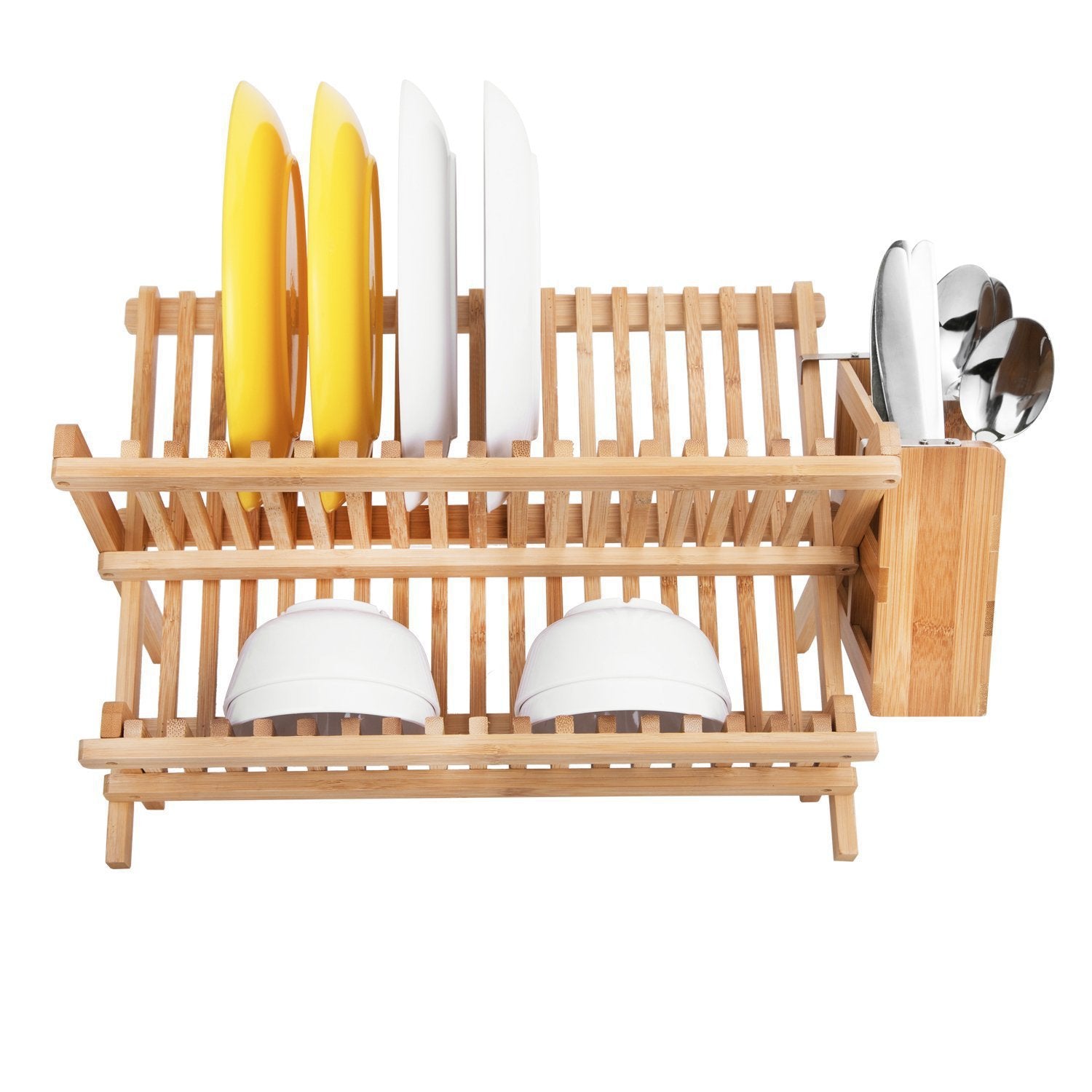
A Bamboo Folding Dish Rack at 41 x 33 x 9.5 cm is a natural place to stand bamboo pieces upright while they dry, and it folds away when the bench is needed. The same drying principle covered in our guide on how to choose a dish drying rack applies here — airflow around both faces is what actually dries something, not time.
What Never to Do
| Do not | Why |
|---|---|
| Put bamboo in the dishwasher | Sustained hot water plus heat drying delaminates the glue lines |
| Leave it soaking in the sink | Water penetrates the laminate and swells the strips |
| Dry it lying flat | Uneven drying between faces causes cupping and warping |
| Put it in the microwave or oven | Rapid moisture loss splits it |
| Leave it in direct sun on a windowsill | UV bleaches it and dries it out unevenly |
| Scrub with steel wool | Scratches open the sealed surface to moisture |
Oiling: When, What and How
Oiling is not optional maintenance for bamboo you use regularly — it is what keeps moisture out of the surface. Unoiled bamboo dries out, goes pale and chalky, and starts to develop fine surface cracks that then take on water.
When. The piece tells you. When the surface looks dull, whitish or chalky rather than warm, it is thirsty. With heavy daily use that tends to be every four to eight weeks. A serving piece that comes out occasionally might go six months.
What. Food-grade mineral oil is the standard choice: it does not go rancid, it has no smell, and it is neutral. A beeswax-and-mineral-oil board conditioner does the same job with a slightly more durable finish. Avoid cooking oils — olive, sunflower, vegetable — because they oxidise and turn rancid, leaving a sticky surface and an off smell.
How. Make sure the piece is completely dry first. Apply the oil generously with a soft cloth, working in the direction of the grain, and cover every surface including the edges and the underside — the edges are where moisture gets in. Leave it to soak in for a few hours or overnight. Wipe back any excess with a clean dry cloth. The piece should look warm and even, not wet or greasy.
Do the whole piece, not just the top face. A board oiled on one side only will still absorb moisture through the other, and the uneven moisture content is what causes it to bow.
Handling Humidity, Mould and Dark Spots
This is the part that matters more in Brisbane, Darwin, Cairns and the north coast than it does in Adelaide or Canberra.
Dark or black spots on bamboo usually mean moisture has been sitting on or in the surface. Caught early, when the marks are only on the surface, they can often be lifted by scrubbing with a paste of bicarbonate of soda and a little water, or by wiping the surface with white vinegar, rinsing, drying thoroughly and then re-oiling. Do this in daylight so you can see whether the mark is actually lifting or just spreading.
If the discolouration goes into the material rather than sitting on the surface, or if it reappears within days of cleaning, the piece has taken on moisture through the laminate and it is time to retire it from food use. Bamboo that has mould growing inside the laminate cannot be reliably cleaned, and a serving piece is not worth the doubt.
Prevention is the real answer in humid climates. Store bamboo somewhere with airflow rather than in a sealed cupboard. Do not stack bamboo pieces flat on top of each other, which traps moisture between them — store them upright, in a rack, or leaning. And oil more often than you would in a dry climate, because the sealed surface is what keeps humidity out.
In dry, heated homes the opposite problem applies. Bamboo left near a heater or in a hot car dries out and cracks. Through a cold Australian winter with the heating running, expect to oil slightly more often than you would in autumn.
Caring for Different Bamboo Pieces
Boards and serving trays get the full routine above: wash, dry standing, oil regularly. A Round Bamboo Serving Tray that mostly carries dry food such as fruit and snacks needs less frequent oiling than a board that gets cut on and washed daily. A Bamboo Sushi Tray, which carries damp food, wants a wipe-down and dry immediately after use rather than being left on the bench.
Utensils and cutlery organisers live inside drawers, which sounds safe but is not. Cutlery put away slightly damp will keep a bamboo organiser permanently humid, and a closed drawer has almost no airflow. The fix is upstream: dry your cutlery properly before it goes in. A Bamboo Cutlery Organiser with a non-slip base should be lifted out and wiped over every few months, and the drawer underneath wiped and left open to air for an hour. Our guide on how to organise a kitchen drawer with dividers covers how to set the drawer up in the first place.
Bathroom bamboo faces the hardest conditions of all — constant steam, splashing, and often poor ventilation. A Bamboo Bathtub Storage Rack sitting across a bath needs to be lifted off and stood somewhere airy after use rather than left in place to sit in the steam, and it wants oiling more often than anything in the kitchen. Run the exhaust fan or open a window after a shower — that does more for bathroom bamboo than any amount of wiping.
When to Retire a Piece
Bamboo has a working life, and pushing past it is a false economy. Retire a piece from food use when:
- The laminate has started to separate and you can see or feel the strips lifting.
- There are deep knife grooves that hold food and cannot be cleaned out.
- Discolouration goes into the material and returns after cleaning.
- It has developed a persistent smell that survives washing and drying.
- It has cracked through rather than just developing surface checking.
A retired board is still useful — as a trivet, a plant stand, a base for a pot plant on a bench — it simply stops being something food goes on.
Ready to Refresh Your Bamboo?
Check your pieces this week: look at the colour, feel the surface, and check the underside and edges for dark marks. Anything pale and chalky wants oiling; anything stacked flat in a cupboard wants moving somewhere with airflow. When you are ready to replace what is past saving, browse the full Pattan Australia range.
Frequently asked questions
Can bamboo go in the dishwasher?
No. Bamboo boards, trays and utensils are laminated from strips glued together, and sustained hot water plus a heat drying cycle breaks down those glue lines. The result is delamination, warping and splitting. Bamboo is hand-wash only.
How often should you oil bamboo kitchenware?
Whenever the surface looks pale, dull or chalky rather than warm. With heavy daily use that is usually every four to eight weeks. Occasional-use serving pieces can go much longer. Use food-grade mineral oil or a beeswax board conditioner, never cooking oil.
Why is my bamboo board warping?
Almost always because it dried unevenly. A board left flat on the bench holds moisture underneath while the top dries, so the two faces shrink at different rates and the board cups. Dry bamboo standing on edge so air reaches both faces equally.
How do you get black spots off bamboo?
If the marks are on the surface, scrub with a paste of bicarbonate of soda and water, or wipe with white vinegar, then rinse, dry thoroughly and re-oil. If the discolouration sits inside the material or comes back within days, the piece has taken on moisture through the laminate and should be retired from food use.
Can you use olive oil on a bamboo board?
Avoid it. Cooking oils such as olive, sunflower and vegetable oil oxidise over time, leaving a sticky film and an off smell. Food-grade mineral oil does not go rancid, which is why it is the standard choice for boards and utensils.
How long does bamboo kitchenware last?
With correct washing, drying and regular oiling, a bamboo board or tray can last years of daily use. Retire it when the laminate starts separating, when knife grooves become too deep to clean, or when discolouration or smell survives a proper clean.