Cart
0
TL;DR: Knowing how to choose a night light comes down to matching three things to the room: how it turns on (motion sensor, always-on, or dusk-to-dawn), how it's powered (battery-operated and stick-anywhere versus a decorative plug-in), and how bright it runs. A hallway or bathroom generally suits a motion sensor night light that only lights up when someone walks past, while a kids' room usually calls for a soft, always-on glow that won't disrupt sleep. Get the placement right — stair landings, hallway-to-bathroom paths and low power points near a cot or bed — and a night light becomes a genuine safety feature rather than just a novelty.
A night light seems like a small purchase until it's three in the morning and you're feeling along a dark hallway wall for a switch. The right one keeps a path lit without flooding the room, helps little ones (and adults) navigate safely to the bathroom, and can double as gentle mood lighting in a nursery or bedroom. The wrong one either stays too dim to be useful, drains batteries constantly by staying on all night, or throws out enough light to disrupt sleep. This guide walks through the main sensor types, the difference between battery-operated and decorative styles, how to judge brightness, and where to actually position a night light for the best safety benefit room by room.
Motion-Sensor vs Always-On vs Dusk-to-Dawn: Which Type Do You Need?
Night lights generally fall into three categories based on how they switch on, and picking the right one matters more than the light itself.
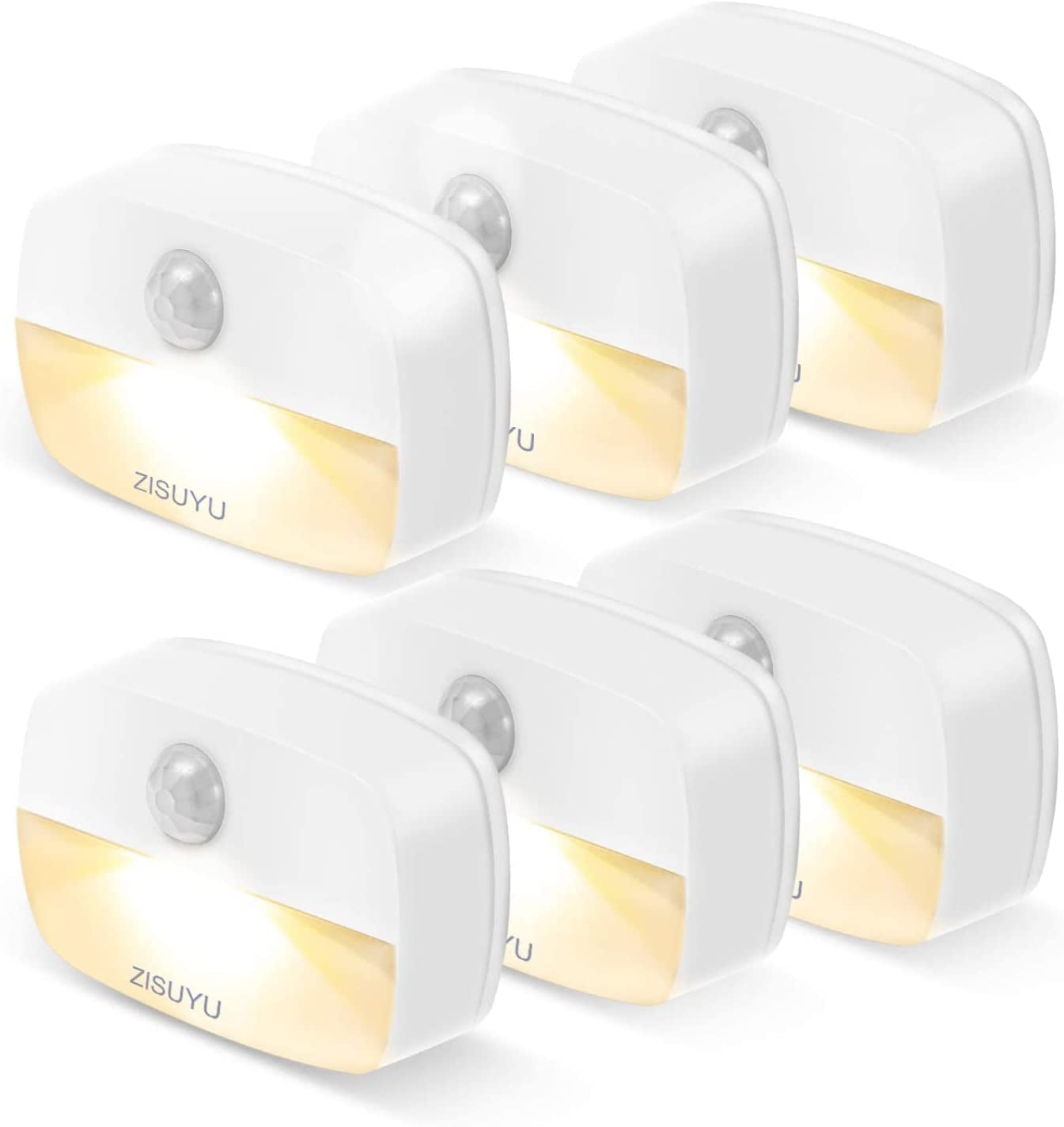
Motion-sensor night lights stay off until they detect movement nearby, then switch on for a set period — usually somewhere between fifteen seconds and a couple of minutes — before turning off again. They're the most practical option for spaces you pass through rather than linger in, such as a hallway, a bathroom, or the top and bottom of a staircase, because they only use power when someone is actually there. The Motion Sensor Stick-On LED Night Light, Battery Operated, 6 Pack is a straightforward example of this type, designed to mount along a hallway, staircase, or bathroom without any wiring.
Always-on night lights stay lit continuously, usually at a low, steady glow. These suit a room where you want a constant, gentle point of light through the night — a nursery, a young child's bedroom, or a shared kids' room where someone might wake at any hour and need to see their surroundings straight away without waiting for a sensor to trigger.
Dusk-to-dawn night lights use a built-in light sensor rather than a motion sensor, switching on automatically once the room gets dark and switching off again at first light. This is a good middle ground for a bathroom or hallway that gets used unpredictably through the night, since the light is already on rather than waiting for movement, but it draws more power over a full night than a motion-triggered option.
Battery-Operated Stick-Anywhere Lights vs Decorative Mood Lighting
Beyond how a night light switches on, it's worth thinking about how it's powered and what job it's actually doing in the room.
Battery-operated, stick-anywhere night lights are built for practicality. Because they don't need a nearby power point, they can go exactly where they're most useful — partway up a staircase, inside a wardrobe or closet, or along a hallway wall — rather than wherever the nearest outlet happens to be. This flexibility is a big part of why a battery-operated, stick-on model works well distributed across several spots in a home rather than relying on a single plug-in unit near one power point.
Decorative, mood-lighting night lights serve a different purpose. Rather than being purely functional, they're designed to be looked at as much as looked by — think a soft-glow lamp on a bedside table or dresser that adds a calming visual element to a bedroom or nursery while still providing enough light to navigate by. The 3D Moon Lamp Night Light with Touch Sensor is a good example of this category, offering a touch-controlled glow that works as a calming bedside feature in a kids' room as much as a practical light source. If you're weighing up ambient lighting more broadly, our guide on how to choose LED strip lights covers another popular way to add soft, mood-driven light to a room.
Brightness Levels: Keeping It Gentle Enough for Sleep
The biggest mistake with night lights is choosing one that's too bright. A night light's job is to provide just enough light to move around safely, not to illuminate the room the way a lamp or overhead fitting would.
For a bedroom, nursery, or anywhere someone is trying to sleep, look for a soft, warm-toned glow rather than a crisp white or blue-tinted light — warmer light is generally considered less disruptive to the body's wind-down cues than cooler light. Many stick-on and motion-sensor models are designed with this kind of gentle, ambient brightness specifically because they're meant to sit in a room overnight without waking anyone who's asleep.
For a hallway, staircase, or bathroom, a slightly brighter, more functional light makes sense, since the priority there is safe footing rather than ambience. Even so, a night light in these spaces still shouldn't be so bright that it's jarring when someone's eyes have adjusted to darkness — the goal is enough contrast to see the edge of a step or the bathroom doorway, not full illumination. If a fitting has adjustable brightness or multiple light modes, it's worth testing it in the dark before settling on a permanent spot, since brightness that looks fine in a lit room can feel very different at three in the morning. If you're also reviewing the main light fittings in these rooms, our guide to light bulb fitting types covers how to match a bulb to an existing fixture.
Best Placement for Safety: Stairs, Hallway and Bathroom
Where a night light goes matters just as much as which type you choose. A few placement guidelines that make the biggest difference to safety:
- Stairs: Position a light at both the top and bottom of a staircase where possible, angled so it highlights the edge of the top and bottom steps rather than just the general stairwell. This is where trips are most likely, particularly for anyone moving through half-asleep.
- Hallway to bathroom: Light the path itself, not just the bathroom door. A stick-on light partway along the hallway wall, at a low height, helps define the route without needing to switch on a brighter overhead light that fully wakes everyone up.
- Bathroom: A motion-sensor night light near the doorway or vanity means the room lights up automatically on entry, which is particularly useful for kids or anyone who doesn't want to fumble for a switch in the dark.
- Kids' room: Place an always-on or dusk-to-dawn light away from the direct sightline of the bed, ideally low down or in a corner, so it provides reassurance and visibility without shining straight at a sleeping child's face.
- Low to the ground, where practical: For hallway and stair applications, a light positioned lower on the wall generally does a better job of illuminating the floor and step edges than one mounted near the ceiling.
A Room-by-Room Quick Guide to Choosing a Night Light
Different rooms tend to call for a different combination of sensor type, power source and brightness. This quick reference pulls the above together.
| Room | Recommended type | Why it works |
|---|---|---|
| Hallway | Motion-sensor, battery-operated, stick-anywhere | Lights the path only when needed, no wiring required |
| Staircase | Motion-sensor, placed top and bottom | Highlights step edges exactly when someone is on the stairs |
| Bathroom | Motion-sensor or dusk-to-dawn | Hands-free light on entry, low enough not to fully wake you |
| Kids' room | Always-on or decorative mood lighting | Constant, soft reassurance through the night |
| Nursery | Decorative mood lighting, warm and dim | Calming glow that supports settling and feeds without harsh light |
Frequently asked questions
How do I choose a night light for a hallway?
Look for a battery-operated, motion-sensor night light that sticks on without wiring, so it can be positioned exactly where the hallway needs it. Motion-sensor models are ideal here since they only switch on when someone is actually walking through.
What's the difference between a motion sensor night light and an always-on night light?
A motion-sensor night light stays off until it detects movement, then lights up briefly before switching off again. An always-on light stays lit continuously at a low glow, which suits a room where someone might need light immediately without waiting for a sensor.
Is a motion sensor or dusk-to-dawn night light better for a bathroom?
Both work well. A motion-sensor light saves power by only activating on entry, while a dusk-to-dawn light is already on when you walk in, which can suit unpredictable overnight bathroom trips. Either is a reasonable choice depending on preference.
What brightness is best for a kids' room night light?
A soft, warm-toned, dim glow works best for a kids' room, since the goal is reassurance and basic visibility rather than full illumination. Overly bright or cool-toned light can make it harder to settle back to sleep.
Do battery-operated night lights need a power point?
No. Battery-operated, stick-anywhere night lights don't need a nearby power point, which means they can be placed on stairs, inside cupboards, or along a hallway wall wherever they're most useful, rather than being limited to a fixed outlet location.